Content
Dominican Republic Food: 15 Must-Try Dishes For First-Time Visitors


Okay, so here's the thing nobody tells you before you fly into Punta Cana.
You book the trip to the beaches. You spend the first afternoon with your feet in the sand, thinking yeah, this was a great idea. And then someone hands you a plate of something called mangú and suddenly the beach is the second-best part of your trip.
Dominican Republic food does that to people. Sancocho, tostones, chimichurri burgers at midnight it sneaks up on you and refuses to leave. It just does not happen to enough visitors because most of them never leave the resort.
That happens to a lot of people. It just does not happen to enough of them.
Dominican food is not what most travellers expect when they land in the Caribbean. It is not coconut-everything, it is not spicy seasoning, it is not the generic rice-and-beans you half-remembered from that Caribbean restaurant back home. It is something older and richer and far more interesting a cuisine that was built by three completely different worlds colliding on one island: the Taíno people who were here first, the Spanish who arrived in 1492 and rewired everything, and the African communities who were brought here against their will and ended up giving Dominican cooking its deepest flavours.
The result is a table full of dishes that feel both ancient and completely alive. Food that people argue about. Food that families make from memory, not recipes.
So this is that guide. The one that actually tells you what to eat, where to eat it, what to pay, and why it matters. The Dominican Republic welcomed roughly 11.6 million visitors in 2025, according to the Ministry of Tourism. Most of those people ate at their resort. They left without tasting the country they came to visit.
The food alone is worth the trip. But if you are planning your first visit and want everything the Dominican Republic actually offers, the 27 waterfalls, the humpback whales, the oldest colonial city in the Americas, the beaches that do not appear in the resort brochure, our guide to the best things to do in the Dominican Republic has the day trips, beaches, and experiences worth building your itinerary around. This guide handles the eating. That one handles everything else. Together, they give you the kind of first trip you will not forget.
Getting to the real food means staying somewhere you can actually walk out the door and find a neighbourhood. That is exactly what we help with at Epic: hotels and flights across the Dominican Republic at up to 30% less than Booking.com, so more of your budget goes toward the trip, not the transaction. Book your stay first, then keep reading because you are going to want to try every single one of these. Sign up with Epic and get $25 off your first booking.
What Makes Dominican Food Different From Other Caribbean Cuisines?
This misconception typically stems from travellers who, having visited Cuba or Puerto Rico, expect the Dominican Republic to offer an identical flavor profile.
That is simply not the case.
Dominican food is built on depth, not heat. If you land expecting scotch bonnet peppers or jerk-level spice, you are going to be surprised. Dominican cooks do not reach for heat they reach for time. Long braises, slow-cooked beans, a seasoning base called sofrito (sautéed garlic, onion, tomatoes, bell peppers) that goes into almost every savory dish before anything else happens. The flavors are layered and rich, and by the time a pot of beans or braised chicken has been sitting on the stove for two hours, it tastes like something that cannot be rushed because it cannot.
The other thing that makes Dominican food genuinely distinct is the plantain. Plantains appear in this cuisine in more forms than I have seen in almost any other. Green plantains get boiled and mashed into mangú, sliced and twice-fried into tostones, or pounded with garlic and pork rinds into mofongo. Ripe plantains get fried soft and sweet into maduros. The plantain is to Dominican cooking what pasta is to Italian food. It is at every table, in every form, and it defines the texture of the whole cuisine.
Practical takeaway: if you love Cuban food, Dominican food will feel familiar but earthier and more herb-forward. If you need spice, you can find hot sauces but the dishes themselves will not bring it.
What Is the National Dish of the Dominican Republic?
1. La Bandera Dominicana
It is called La Bandera Dominicana. "The Dominican Flag."
The name comes from the plate itself: white rice, red beans stewed in a tomato-herb sauce, and braised meat, usually chicken all arranged together in a way that roughly mirrors the red, white, and blue of the Dominican flag. Tostones on the side. A simple salad. That's it.
I know that sounds simple. It is not simple.
Walk into any comedor in the Dominican Republic between noon and 2 PM and look around the room. Almost every table has the same plate. That is not a coincidence; that is La Bandera. It is the everyday national meal, the equivalent of what a bowl of rice and curry means in South Asia or what a baguette sandwich means in France. It is the baseline.
What makes it worth going out of your way to find is the execution. A properly cooked La Bandera has beans that have been simmered low and slow until they are almost silky, chicken braised in sofrito until the meat falls apart when you look at it wrong, and rice cooked in a heavy-bottomed pot long enough to develop concón that thin, golden, crackling layer on the bottom of the pot that every Dominican will reach for first and that no resort buffet will ever give you, because producing concón requires time and attention and a real iron pot, not a hotel chafing dish.
If you eat nothing else in the Dominican Republic, eat this.
Where to find it: Any comedor a small, family-run lunch counter. Look for a handwritten whiteboard menu, plastic chairs, a TV on the wall showing something nobody is watching. Do not order this at a resort. You will not get the real thing.
What to pay: RD$250–RD$450, which is roughly USD $4–7. (All prices are approximate and reflect 2026 market rates. Exchange rate: 1 USD ≈ RD$58–60 Dominican Pesos.) If someone charges you more than $10 for La Bandera, you are in a tourist restaurant and you should know that.
What Do Dominicans Eat for Breakfast?
Dominican breakfast is one of the most underrated meals in the Caribbean. Most visitors walk past it on the way to the hotel buffet. That is a mistake.
2. Mangú and Los Tres Golpes

The classic Dominican breakfast is mangú and it is one of those dishes that looks completely unassuming on the plate and then quietly becomes the thing you think about on the flight home.
It does not look like much when it arrives. A heap of grey-green mash, a pile of dark pickled onions on top, a slice of something fried on the side. Nothing about the presentation suggests you are about to eat something that has been on Dominican breakfast tables for generations. But the first forkful of mangú and onion together tends to stop people mid-conversation.
Here is what it actually is: green plantains, peeled, boiled until soft, then mashed with water and butter and oil until the texture lands somewhere between polenta and the world's most savory mashed potato. The pickled red onions on top are not a garnish. They are structural. The vinegar cuts through the richness of the plantain in a way that makes the whole thing click without the onions, mangú is heavy; with them, it is balanced. Every Dominican who has ever watched a tourist push the onions aside has silently suffered.
The full Dominican breakfast version is called Los Tres Golpes — "The Three Hits." The mangú comes with fried Dominican salami, which is darker and saltier and considerably more interesting than anything sold under the salami label back home. It comes with a fried egg. And it comes with queso frito — white cheese pan-fried until the outside crisps up and the inside stays soft and slightly squeaky. The whole plate is heavy and savory and unambiguously a meal, not a light start to the day.
Mangú is thought to have West African roots, carried over during the slave trade, where mashed root vegetables were a staple across several cultures. The name itself supposedly traces back to an American soldier during the 1916–1924 US occupation who tasted it and said "Man, good!" Food historians have been arguing about that etymology for years without resolution, but the story stuck. What is not contested is that mangú is one of the few dishes that is genuinely, specifically Dominican ; it exists nowhere else in quite this form, and no other country has claimed it.
Where to find it: Everywhere street carts, local diners, hotel breakfast menus. The best versions come from the formica-table spots where the coffee arrives in a small cup and the television is always on and nobody is paying attention to it.
What to pay: RD$150–RD$300, which is roughly USD $2.40–$4.75 for a full Los Tres Golpes plate.
What Is the Most Important Dish to Try Beyond the Basics?
3. Sancocho
If La Bandera is the national everyday dish, sancocho is the dish Dominicans make when something matters. It is a slow-cooked stew thick, dark, bone-deep that combines multiple cuts of meat with root vegetables like yuca and yautía and sweet potato, plus plantain and corn, all cooked in a spice base of oregano, cilantro, and garlic until the broth absorbs everything and starts tasting like something you cannot identify as any single ingredient but rather as all of them at once.
The deluxe version is called Sancocho de Siete Carnes: seven meats, four animals pork, beef, chicken, and goat. It gets made for weddings, celebrations, holidays, and Sunday family gatherings when everyone is coming over. It also gets made, according to deeply held Dominican belief, for the morning after a very good evening out, because sancocho is considered the hangover cure of last resort, the thing that will fix whatever the night broke.
The best versions do not come from upscale restaurants, though some Santo Domingo spots do have a respectable version. They come from kitchens where someone has been cooking since before you woke up. Many comedores only make sancocho on weekends. If you are there on a Saturday or Sunday morning and you see a crowd of locals at a small spot, find out what they are eating.
Where to find it: Weekend markets and local restaurants in Santiago and Santo Domingo; rural spots on Saturdays and Sundays.
What to pay: RD$380–RD$630, roughly USD $6–10.
What Is the Most Popular Street Food in the Dominican Republic?
4. Chimichurri Burger (Chimi)
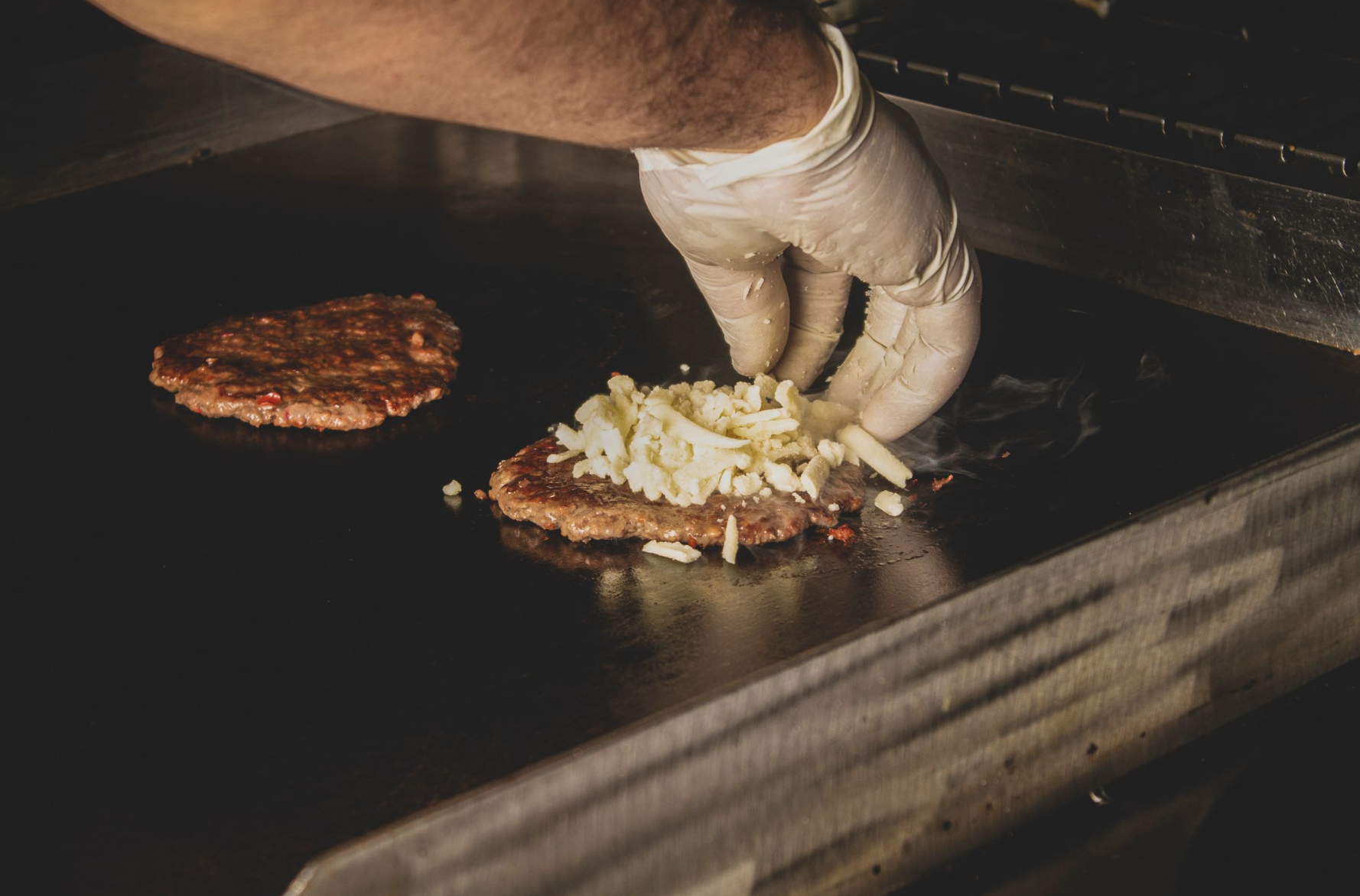
Not the Argentine herb sauce — the Dominican street burger, which has nothing to do with the Argentine sauce except for borrowing half its name. The chimichurri here is a ground beef patty cooked on a hot griddle, loaded into a soft pan de agua bun with shredded cabbage, sliced tomatoes, onions, and a pink Dominican sauce made from mayonnaise, ketchup, and Worcestershire. It is almost always eaten standing up at a street cart. It is almost always eaten after 10 PM. It is almost always better with a cold Presidente beer.
The chimi showed up in the 1970s and has become so embedded in Dominican food culture that it has its own economy. There are street carts in Santo Domingo that have been running the same spot for decades, with lines that form every night. In the neighbourhoods of Naco, Piantini, and Los Prados, finding a chimi cart after dark is approximately as difficult as finding air.
5. Empanadas, Pastelitos, and Quipe
.png)
The second pillar of Dominican street food is fried pastry. Empanadas are big, folded, filled with seasoned beef or chicken or cheese, eaten any time of day. Pastelitos are the smaller, flakier version of the finger food you find at every party, school canteen, and breakfast spot.
And then there is the quipe, which is the thing that stops people cold when they learn where it comes from. A quipe is a deep-fried bulgur wheat roll filled with ground beef, essentially a kibbeh, the Lebanese and Syrian dish that arrived in the DR with waves of Middle Eastern immigration in the 19th century. The immigrants are long gone, absorbed into Dominican life. Their food stayed. Most Dominicans eating a quipe today have no idea it is Middle Eastern. It is just Dominican food now, which is how good food always works.
What Are the Best Seafood Dishes to Try in the Dominican Republic?
Here is something that surprises people: the Dominican Republic is an island, but traditional inland cooking is not particularly seafood-heavy. The coast is a different story entirely.
6. Pescado Frito
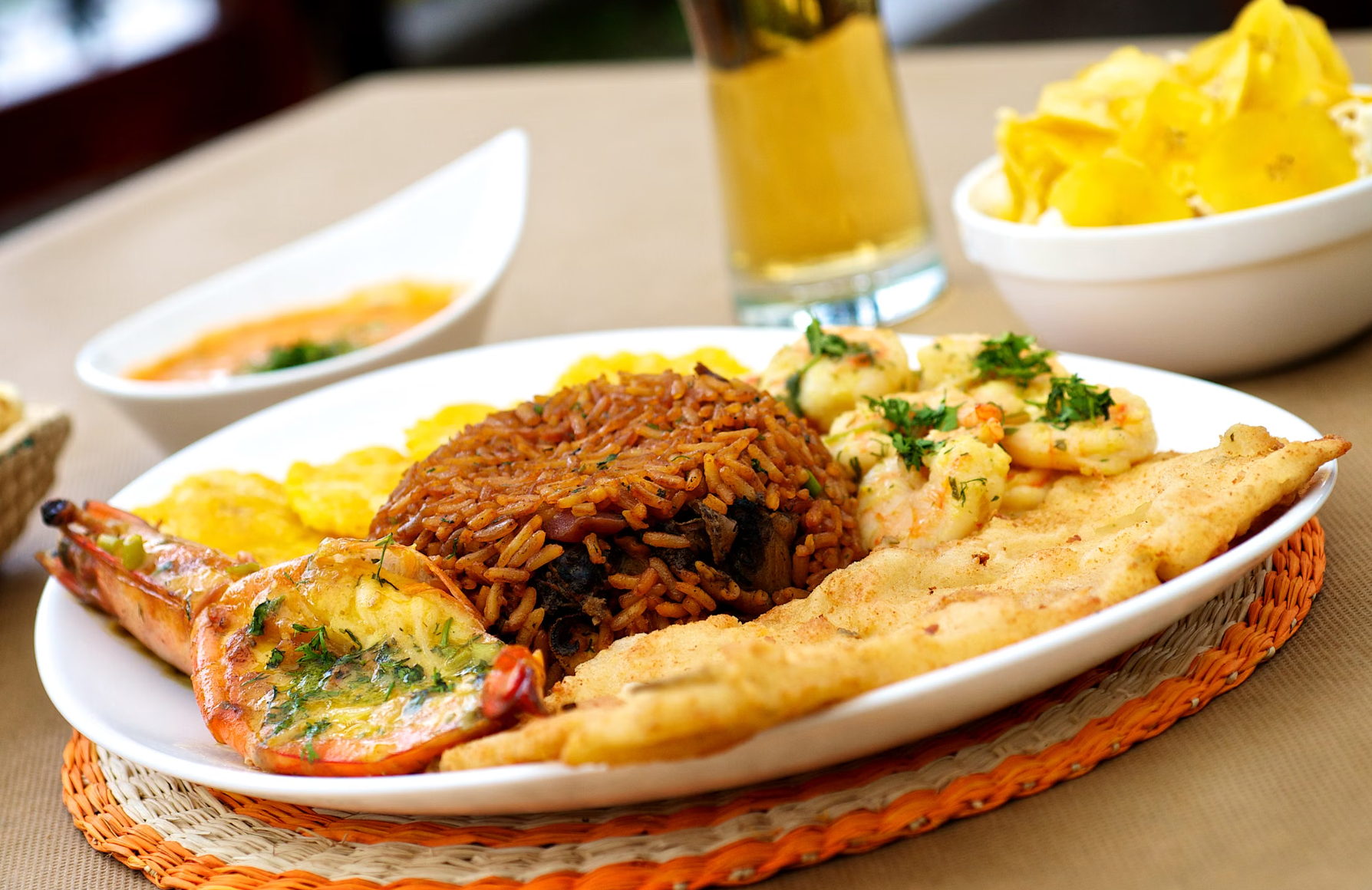
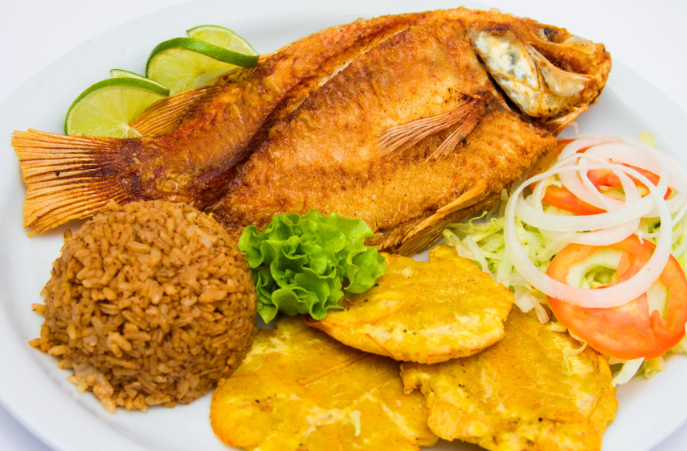
Pescado Frito is the dish you eat at the beach and literally at the beach, at one of those wooden-table shacks where the chairs are in the sand and the fish came in that morning. A whole red snapper or grouper, seasoned, deep-fried until the skin is crackling and gold and the inside stays white and moist, served with lime wedges and tostones and a simple salad. Macao Beach near Punta Cana has a stretch of these spots. They are not hard to find. They are very hard to leave.
7. Mofongo

Mofongo is fried green plantain pounded in a wooden mortar (pilón) with garlic and chicharrón (crispy pork skin) until it becomes this dense, garlicky, slightly smoky mass that gets shaped into a dome and served alongside or soaking in a rich meat broth or surrounded by sautéed shrimp. It originated in Puerto Rico, shares clear DNA with the West African dish fufu, and arrived in the Dominican Republic where it got adapted, particularly in coastal towns, into something with fresh seafood that feels completely local now.
8. Pescado con Coco
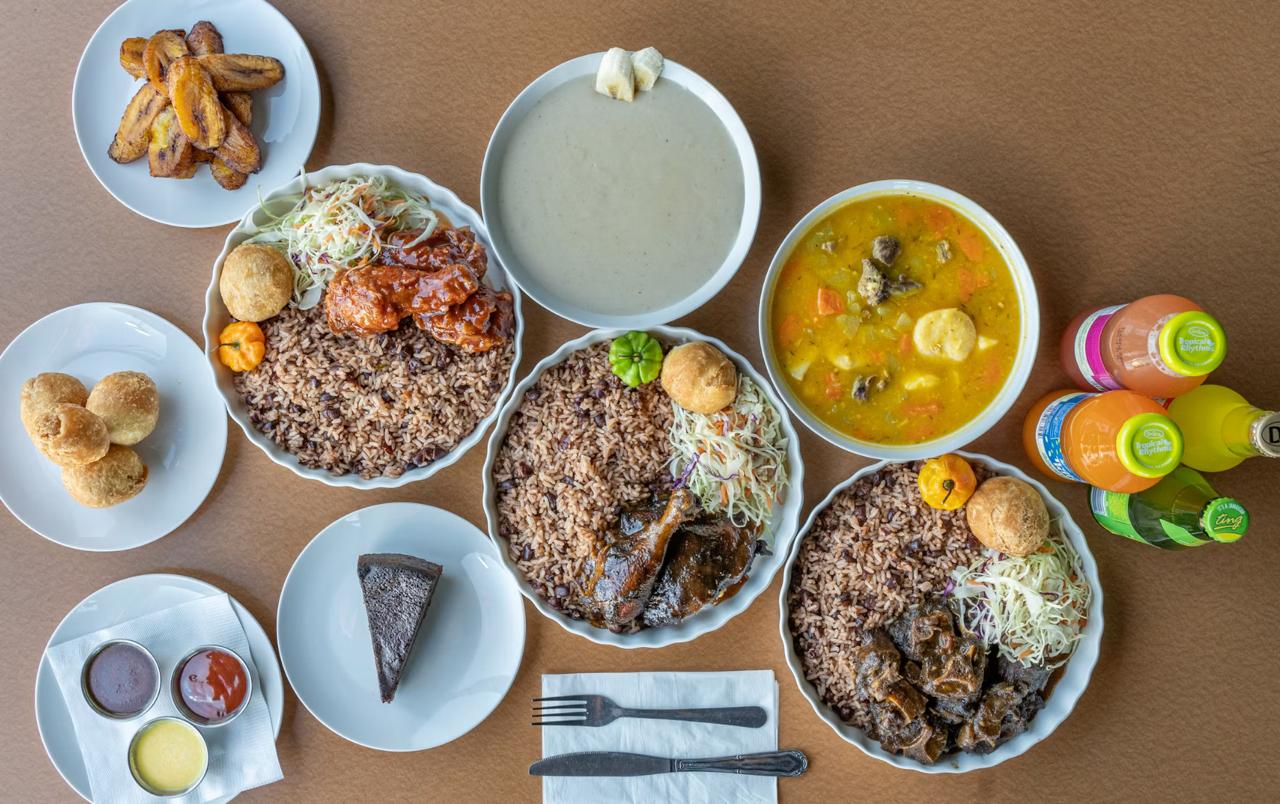
Pescado con Coco (fish braised in coconut sauce) shows up along the northern and eastern coasts, particularly in areas with stronger Afro-Caribbean community ties. It is lighter and more elegant than fried fish, excellent over white rice, and the kind of dish that makes you want to extend your trip by three days.
Where to go: Beach towns over resort restaurants, every time. Bayahibe, Cabarete, Las Terrenas, and Macao Beach are all strong for seafood.
What to pay: RD$500–RD$900 (roughly USD $8–14) for a full pescado frito plate at a local spot.
What Is Locrio de Pollo and Why Does It Matter?
9. Locrio de Pollo
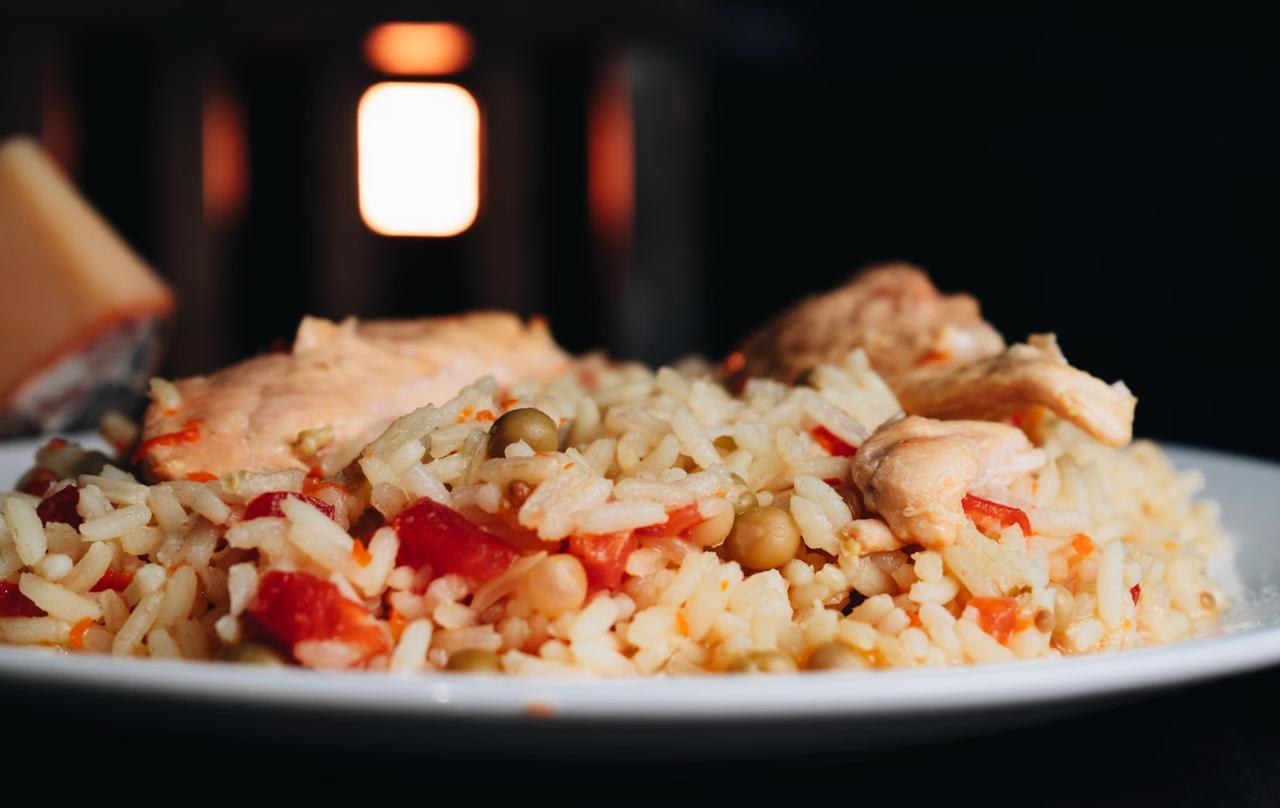
Locrio is what happens when Dominican cooks take the Spanish idea of paella, strip out everything fussy about it, and rebuild it with sofrito and iron pots and whatever protein is in the house.
A locrio is a one-pot rice dish seasoned rice cooked together with a protein, vegetables, and spices until everything absorbs into each other. The word locrio is exclusively Dominican according to the Royal Academy of the Spanish Language, and the dish can be made with nearly any protein: salami, pork, rabbit, dried herring, shellfish, or sardines. The most common version is Locrio de Pollo chicken and rice and it is the version you will see on almost every comedor menu alongside La Bandera.
What makes the Dominican version distinct is the technique. Cooks sear marinated chicken in caramelized sugar before adding sofrito, sweet potatoes, spices, chicken broth, and rice all simmered together in one pot until the rice is tender and has absorbed everything around it. The sugar caramelization step is not sweetening the dish. It is building color and depth in the base before anything else goes in.
Locrio is historically a humble dish born from what was accessible on the island, a way of making something genuinely elevated from limited ingredients. Every family has their own version. The arguments about whether to include olives, capers, or habichuelas on the side have been running for generations and will not be settled here.
Where to find it: Any comedor serving lunch. Often the better choice is if the concón looks particularly good that day.
What to pay: RD$200–RD$380 (approximately USD $3–6).
What Is Bistec Encebollado and When Should You Order It?
10. Bistec Encebollado
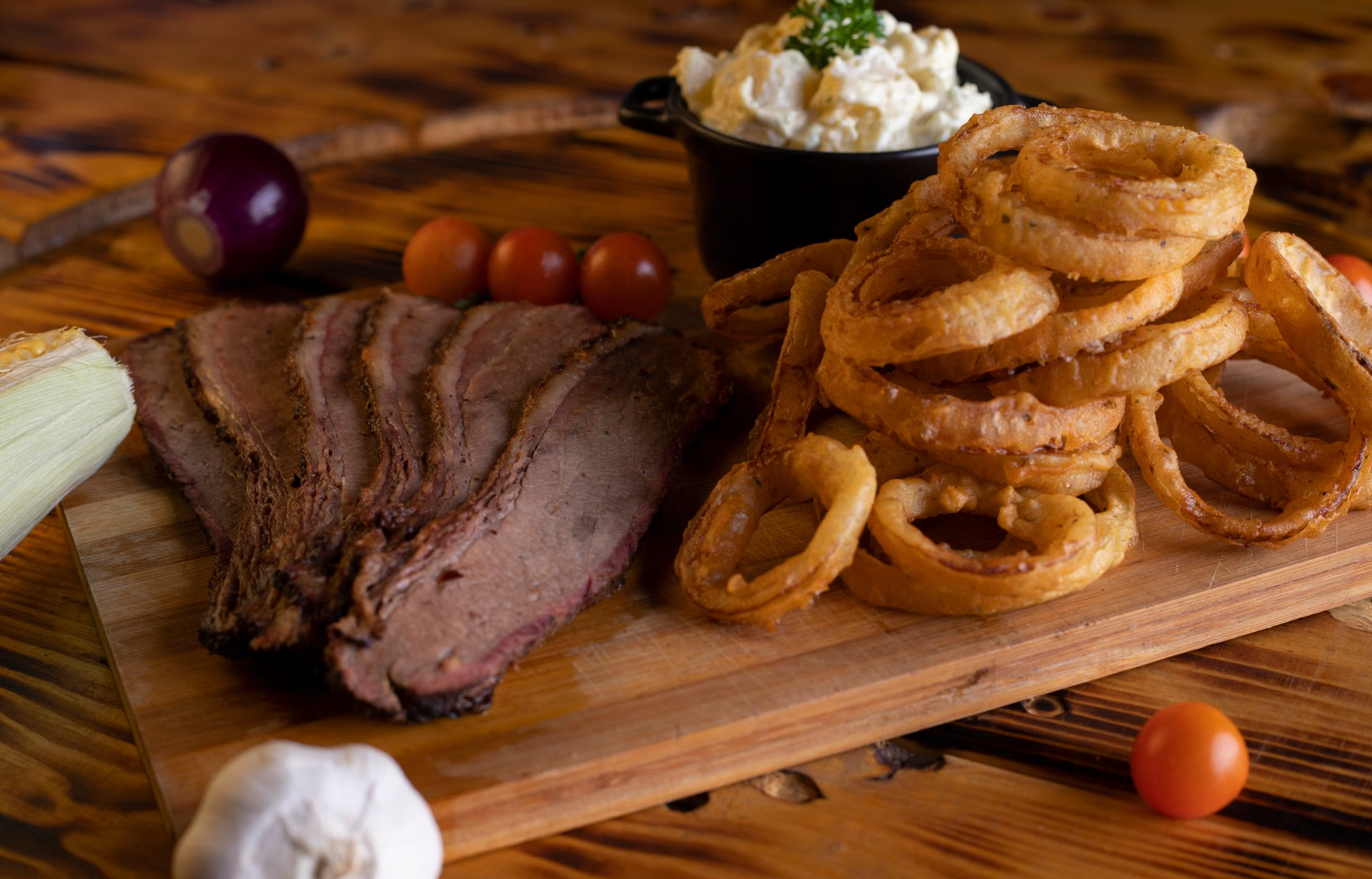
Bistec encebollado is the dish that fills Dominican kitchens on Wednesday nights when nobody has time for a two-hour braise.
Book your next hotel for up to 30% less
It translates literally to "steak with onions" which undersells it significantly. The Dominican version uses soy sauce, which gives it a dark, glossy, umami-rich colour you cannot get from anything else and separates it from Cuban or Puerto Rican versions of the same dish. Thin-cut beef is marinated in garlic, oregano, lime juice, and soy sauce, seared fast over high heat, and finished with onions that cook in the beef drippings until they are soft and jammy.
Unlike sancocho or pernil, which appear at special occasions, bistec encebollado is what Dominican families eat on a Wednesday night fast, filling, and pairing well with every Dominican side dish. It arrives with rice, beans, tostones, and sliced avocado. Every component is doing something. None of them are unnecessary.
Where to find it: Local restaurants at dinner, particularly in Santo Domingo and Santiago.
What to pay: RD$300–RD$500 (approximately USD $4.75–8).
What Is the Best Street Food for Meat Lovers Beyond the Chimi?
11. Pica Pollo
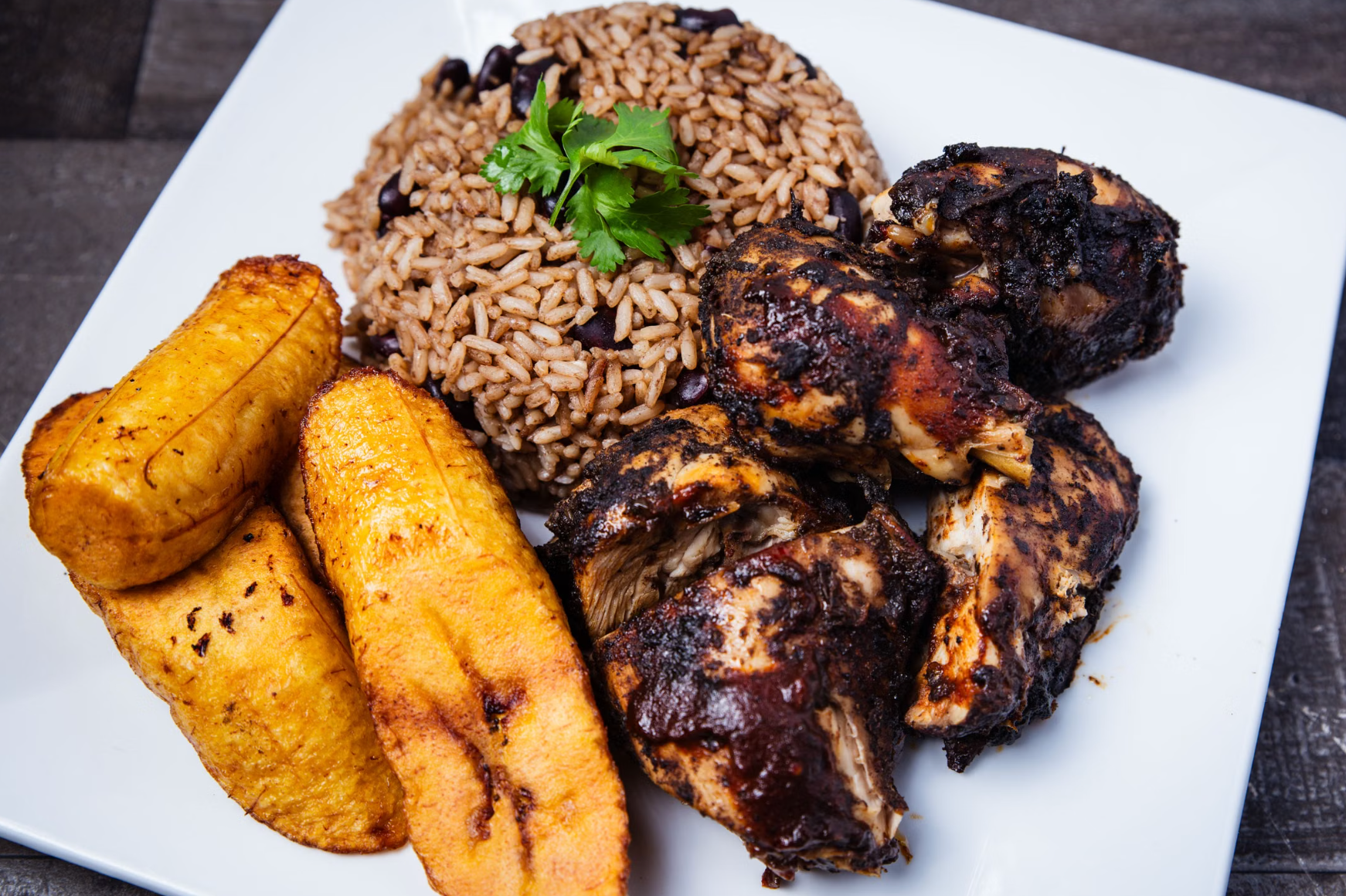
Pica pollo Dominican fried chicken, and before you say you already know what fried chicken is, you do not know this one.
The chicken gets soaked in a combination of garlic, oregano, lime juice, and soy sauce, the same flavour base that runs through much of Dominican cooking, and then fried at high heat until the outside is deeply golden and shatteringly crisp while the inside stays completely moist.
Pica pollo is sold from dedicated spots, usually identifiable by the smell before you can see the sign. It is eaten with tostones and a small cup of the pink Dominican sauce, the same rosada that goes on the chimi burger. It is a late-afternoon and evening dish, not a lunch one, and the best spots have lines because they only fry to order.
The quality ceiling here is dramatically higher than what the name "street fried chicken" suggests. A well-made pica pollo at a street spot will genuinely compete with any sit-down restaurant dish in this guide.
Where to find it: Dedicated pica pollo spots throughout the country, particularly in cities. Look for the frying smell and the line.
What to pay: RD$150–RD$300 (approximately USD $2.40–4.75) for a solid portion.
What Is Chivo Guisado and Where Do You Find the Best Version?
12. Chivo Guisado
.png)
Chivo guisado, stewed goat is the dish the northwestern Cibao region of the Dominican Republic considers its flagship. It takes some seeking out and is worth every bit of the effort.
The stew is built the same way as most Dominican braises: sofrito base, slow heat, time but goat gives it something earthier and more complex than chicken or beef. The chivo guisado in this region is particularly prized because the goats graze on wild oregano, which means the meat carries the herb's flavor before any cooking begins. You can add oregano from a jar. You cannot replicate what happens when an animal has been eating it for months.
The meat is bone-in, which matters: the bones contribute to the broth in a way boneless cuts cannot, and by the time the dish is ready the liquid has reduced into something thick and intensely savory that you will want to pour over rice or soak up with bread.
If your trip takes you anywhere near the Cibao Valley or the northern interior, this is the dish to track down.
Where to find it: The Cibao region, Santiago, and dedicated goat restaurants (chivería) across the country. Not common in tourist areas.
What to pay: RD$400–RD$700 (approximately USD $6.35–11).
What Are Tostones and Maduros, and What Is the Difference?
13. Tostones
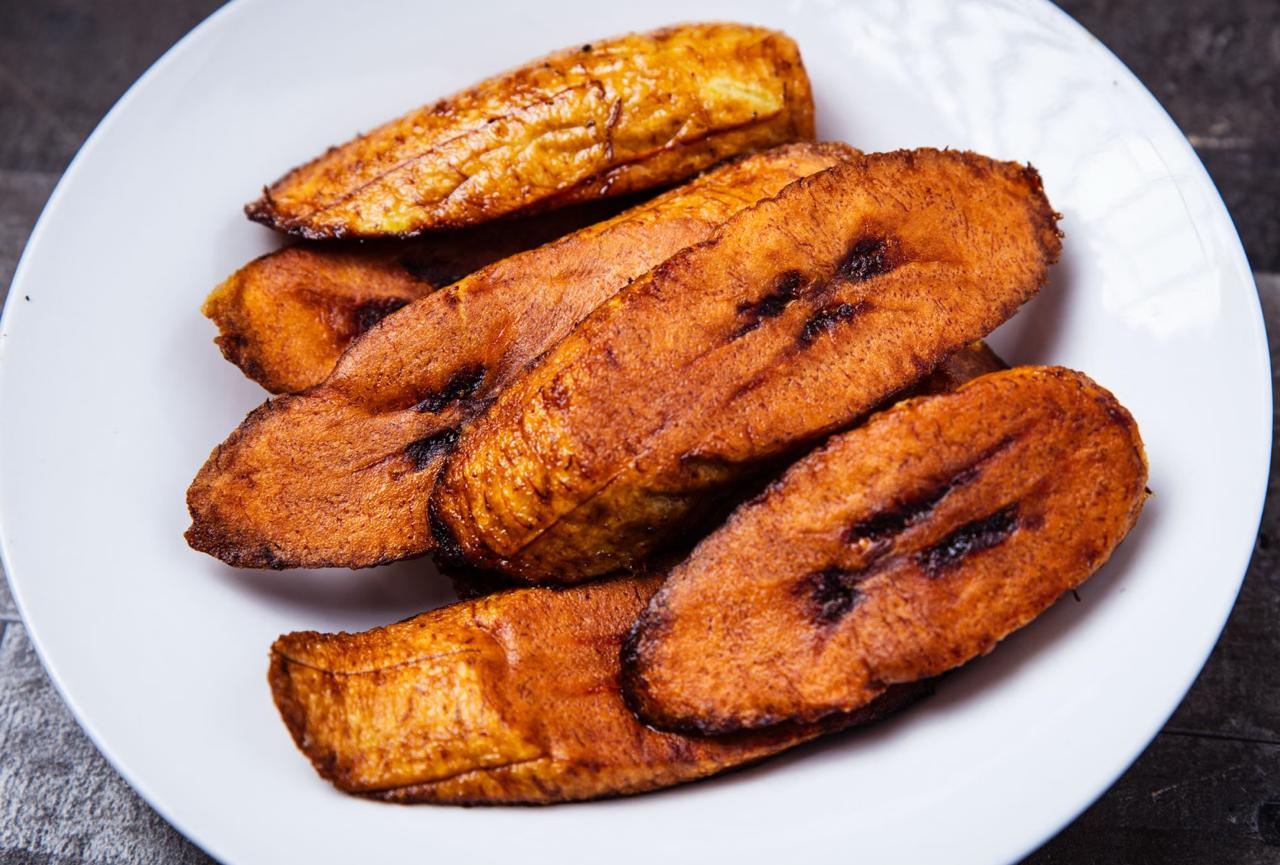
These are not side dishes. They are the Dominican Republic's answer to bread on every table, at every meal, eaten without thinking because they are always there and always good.
Tostones are twice-fried green plantains. A green plantain gets sliced into rounds, fried once until just softened, flattened with the bottom of a glass or a dedicated tostonera, then fried again at higher heat until the outside is deeply crisp and the inside is dense and starchy. The result has no sweetness; green plantains taste nothing like ripe ones. The texture is somewhere between a thick chip and a dense fritter. They are eaten with everything: alongside La Bandera, under pescado frito, dipped in pink sauce next to a chimi, or plain with a cold Presidente because it is hot and you are near the ocean.
14. Maduros
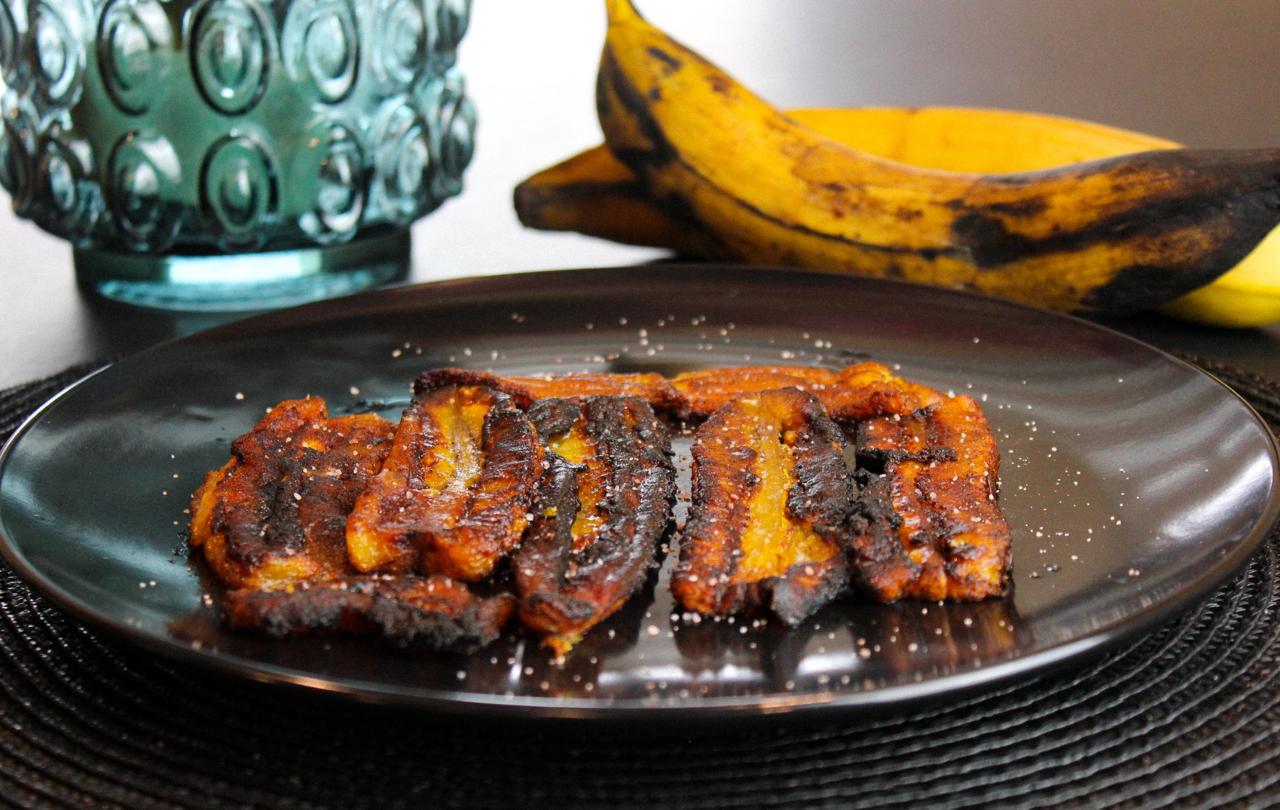
Maduros are the opposite: ripe plantains, fried slowly at lower heat until the natural sugars caramelize and the outside goes dark and almost sticky-sweet while the inside stays soft. They appear on the same plate as savory dishes without anyone thinking twice, because in Dominican cooking the contrast between sweet maduros and salty braised meat is not an accident. That is the point.
You will not need to seek either of these out. They will find you. But knowing the difference and knowing which one to reach for based on what is on your plate is the kind of detail that separates a traveler who ate in the Dominican Republic from one who actually tasted it.
Where to find them: Everywhere. Every comedor, every beach shack, every street cart.
What to pay: RD$80–RD$180 (approximately USD $1.25–2.85) as a side.
What Can Vegetarians and Diet-Conscious Travellers Actually Eat?
More travellers than you might expect arrive in the Dominican Republic with dietary restrictions — and the meat-forward reputation of Dominican food is enough to make some of them nervous before they even land.
That reputation is not entirely wrong, but it is more complicated than the stereotype. A solid chunk of the Dominican food canon is naturally plant-forward or easy to adapt:
- Mangú — fully plant-based when ordered without the fried egg and salami accompaniments
- Tostones — twice-fried green plantains, vegan by default, no modifications needed
- Moro de Habichuelas — rice and beans cooked together in one pot with onions, peppers, herbs, and spices. No animal protein in the base recipe.
- Maduros — fried ripe plantains. Sweet, soft, vegan.
- Habichuelas Guisadas — stewed beans in tomato sauce, the standard side dish, typically made without meat
- Locrio de Setas — a mushroom-based version of locrio, found in some Santo Domingo restaurants
For gluten-avoiders, the baseline Dominican table is quite friendly: rice, beans, plantains, fresh fruit, and grilled meats are all naturally gluten-free. The risk areas are fried pastries (empanadas, quipes the bulgur ones especially) and dishes using bouillon cubes, which are used constantly in Dominican cooking and can contain wheat derivatives. When in doubt, ask.
For pescatarians, the coast is your friend. Inland, options narrow, but plantain dishes, egg-based Dominican breakfasts, and bean-forward sides carry you through.
What Desserts and Drinks Should First-Time Visitors Try?
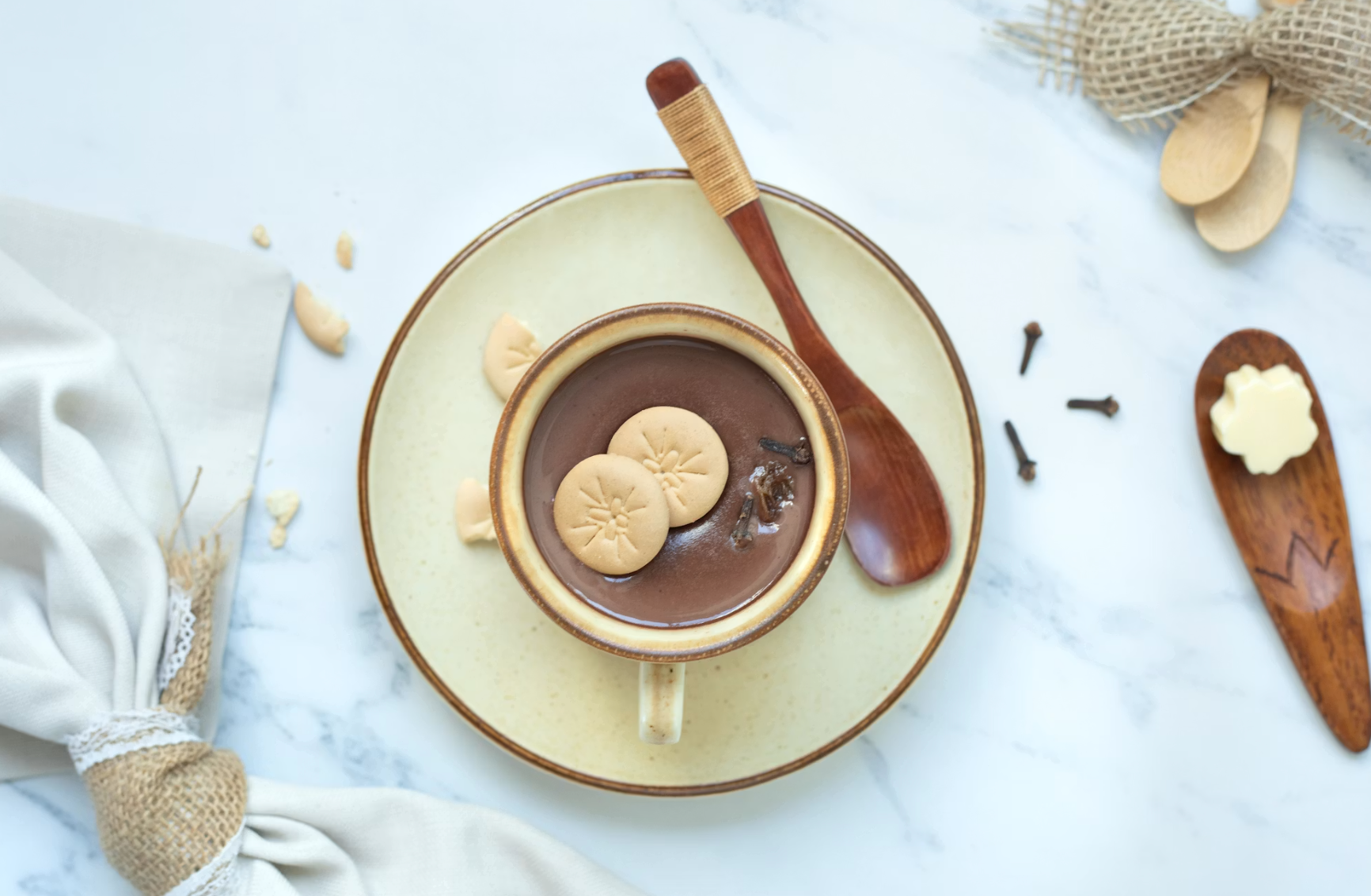
15. Habichuelas con Dulce is one of the strangest and most wonderful things you can eat in the Dominican Republic: red bean pudding. It is a dessert served during Lent and Easter made from cooked kidney beans blended with coconut milk, evaporated milk, sugar, white sweet potato (batata), cinnamon, cloves, and raisins, all finished with sweet milk cookies (galletas de leche) on top. Every Dominican family makes it differently. Every Dominican family believes their version is the best. And the combination of beans and sweetness, which sounds objectively wrong, is actually one of those things that just works in a way you cannot fully explain until you have had it.
Tres Leches (the three-milk cake) and Quesillo (a Dominican flan creamier and lighter than Cuban flan, made with whole eggs) are the everyday desserts you will find on most restaurant menus and worth ordering without overthinking.
On drinks, here is what you actually need to know:
- Morir Soñando — "to die dreaming." Fresh orange juice, evaporated milk, sugar, and ice, combined in a specific order that keeps the milk from curdling. It sounds odd. In 90-degree humidity, it is the most refreshing thing you will drink all week.
- Mamajuana — rum, red wine, and honey infused with tree bark and roots, traditionally sold in old rum bottles. Warming, slightly medicinal, and the story is that it was originally a fertility tonic. It is now mostly how Dominicans end a very good night.
- Chinola juice — fresh passion fruit juice. Available everywhere, costs almost nothing, excellent.
- Presidente beer — the national lager. Crisp, light, cold. Correct with everything.
How Much Does Eating Local Actually Cost in the Dominican Republic?
More than most travel guides will say plainly: eating local is dramatically, embarrassingly cheaper than eating at your resort.
The Dominican Peso sits at roughly 63 pesos to one US dollar as of January 2026. Here is what that looks like when you turn it into actual meals:
A family of four can eat a full, properly cooked Dominican lunch at a comedor the real La Bandera, with concón, with silky beans, with the right braised chicken for roughly what one cocktail costs at the pool bar. That is not a knock on resorts. It is just math. And knowing that math means you have no excuse not to get out and eat the real thing at least a few times.
What Do Dominicans Eat for Dinner?
This one surprises people: dinner in the Dominican Republic is lighter than lunch.
The midday meal is the anchor of the day. Dinner at home is often leftovers from lunch, a lighter rice dish, or sopa soup. In local restaurants, the evening menu tends toward bistec encebollado), pollo guisado (braised chicken), or chofán Dominican fried rice. The chofán story is good: it arrived with Chinese labourers who came to the island in the 1860s, got absorbed into Dominican cooking over generations, and is now so embedded in the food culture that most people eating it do not think of it as Chinese food at all. It is just food.
In coastal towns, dinner pivots toward seafood. In the cities, particularly Santo Domingo, dinner runs late, restaurants fill after 9 PM, and the atmosphere shifts into something louder and more social, with grilled meats, cold Presidente, and whatever merengue is on the speakers.
Where to eat dinner: Local restaurants in Santo Domingo's Colonial Zone for the widest variety. Any beach town for seafood. Ask your hotel where locals eat in the evening, not where they send tourists.
What to pay: RD$300–RD$600 (approximately USD $4.75–9.50) for a full dinner plate at a local restaurant.
A Practical Eating Plan for Your First Three Days
Day one is for orientation.
Eat breakfast at a local spot near your hotel; order mangú, not a buffet. For lunch, ask your concierge where the nearest comedor is. Order La Bandera. Eat the concón. This is your baseline. Once you have had a real La Bandera, you will immediately recognize the resort version for what it is.
Day two is for the streets.
In the morning, find a street vendor selling chinola juice and drink it. During the day, eat tostones whenever you see them. In the evening and I mean late evening, after 9 or 10 find a chimichurri cart. Order a chimi. Buy a Presidente from whatever store is next to the cart. This is the move.
Day three is for the deep cuts.
If it is a weekend, find sancocho. If you are in Santo Domingo, eat in the Colonial Zone or visit Mercado Modelo. Try a morir soñando. Order mamajuana after dinner and ask the person who serves it what it is made of you will get a story. At some point, ask a local where their family eats on Sundays. Some will just tell you. Some will actually take you there.
Warm weather is year-round here, but the right month depends on what you want most, whether that is dry beach days, whale season, or the lowest prices. Our guide to the best time to visit the Dominican Republic breaks it down month by month so you can match your dates to the trip.
Plan Your Dominican Republic Trip the Smarter Way
The food in this guide ranges from under two dollars to about fourteen dollars for a full plate of fresh seafood on the beach. None of it requires a resort. All of it requires being somewhere you can actually walk out the door and find a neighbourhood.
That is where we come in.
At Epic, we book hotels and flights across the Dominican Republic, boutique guesthouses in Las Terrenas, locally connected properties in Santo Domingo's Colonial Zone, and hotel options near Punta Cana that put you within walking distance of actual restaurants rather than inside a buffet compound at up to 30% less than Booking.com.
For context on what that means in real money: the average couple staying 7 nights in Punta Cana saves roughly $400–$460 on accommodation alone when booking through Epic vs. standard retail travel sites. A family of four typically saves closer to $580–$600 per trip. Book two Caribbean trips a year, and that gap adds up to somewhere between $800–$1,200 annually for most people, enough to cover the entire food budget for both trips, and then some.
The whole point of travelling somewhere with food this good is to actually eat it at a comedor, at a beach shack, or at a late-night chimi cart. We want to help you stay somewhere that makes all of that possible, without paying resort prices to get there.
Frequently Asked Questions
1. What's the best Dominican food?
That depends on what you are after, but if there is one dish that defines the cuisine it is La Bandera Dominicana: white rice, stewed red beans, and braised chicken, eaten at lunch by most Dominicans five days a week regardless of where they live or what they earn. It is not flashy. It is the kind of dish that tastes like someone has been cooking it since early morning, because they have. If La Bandera is the answer to "what is the best everyday Dominican dish," then sancocho is the answer to "what is the best Dominican dish full stop" a slow-cooked bone stew made with multiple meats and root vegetables that Dominicans make for weddings, Sundays, and the morning after a very good night out. Between those two, you have the full range of what Dominican food actually is.
2. What is a typical Dominican breakfast?
The classic Dominican breakfast is mangú mashed green plantains topped with pickled red onions, served as part of a plate called Los Tres Golpes, which translates to "The Three Hits." The three hits are the mangú itself, fried Dominican salami, and queso frito (white cheese pan-fried until the outside crisps), usually with a fried egg alongside. It is heavy, savory, and copletely filling the kind of breakfast that makes sense in a country where lunch is the main meal of the day and the morning starts early. You will find it everywhere from street carts to hotel breakfast menus, but the best versions come from small local diners where the coffee arrives in a small cup and nobody is paying attention to the television in the corner.
3. What are 5 good to-go Dominican foods?
The Dominican street food scene is built for eating on the move. These five travel well:
Empanadas — folded fried pastry filled with seasoned beef, chicken, or cheese. Available from street vendors all day, cheap, filling, and impossible to eat just one.
Pastelitos — the smaller, flakier cousin of the empanada. The finger food of the Dominican Republic is found at every street cart, school canteen, and roadside stop.
Chimichurri burger (chimi) — a Dominican street burger with a ground beef patty, shredded cabbage, and a pink mayonnaise-ketchup sauce in a soft bun. Technically an evening food — the best carts open after 9 PM — but worth planning your night around.
Pica pollo — Dominican fried chicken marinated in garlic, oregano, and soy sauce before hitting the oil. Served in a paper bag with tostones. Exactly what you want after a long day.
Tostones — twice-fried green plantain rounds, crispy outside, dense inside, eaten plain or dipped in the pink rosada sauce. They go with everything and are sold everywhere. If you are hungry and do not know what to order, order tostones.
4. Is Dominican food spicy?
No, and this is probably the most common misconception about the cuisine. Dominican food is not spicy. At all. The flavour in Dominican cooking comes from depth, long braises, slow-cooked beans, and a sofrito base of garlic, onion, tomatoes, and bell peppers that goes into almost every dish before anything else happens. None of that produces heat. If you sit down at a Dominican restaurant expecting the scotch bonnet burn of Jamaican food or the pepper heat of some other Caribbean cuisines, you will not find it in the dish itself. Hot sauce is available on the table at most local spots if you want it, but you will have to reach for it. The food will not come for you.
5. Can vegetarians eat well in the Dominican Republic?
Better than the reputation suggests. Mangú, tostones, maduros, moro de habichuelas, and stewed beans are all naturally plant-based and appear on almost every menu. The challenge is in inland areas, where the default assumption is that everyone eats meat. On the coast and in Santo Domingo, your options expand considerably. The one thing to watch: bouillon cubes are used heavily in Dominican cooking and may contain animal derivatives, so dishes that look vegetarian on the surface are not always fully so.

Mithra Ghosh is a Dubai-based content writer and SEO copywriter with 2+ years of experience crafting search-optimised content across crypto, Web3, and digital finance. She combines strong editorial instincts with a deep understanding of blockchain ecosystems and on-chain trends.
At Epic, she writes about the growing world of crypto-native travel helping readers understand how holding and spending digital assets can unlock smarter, cheaper ways to see the world.


Found a destination you like? Book it for up to 30% less.


Found a destination you like? Book it for up to 30% less.