Content
The 17 Best Beaches in the Dominican Republic (2026)
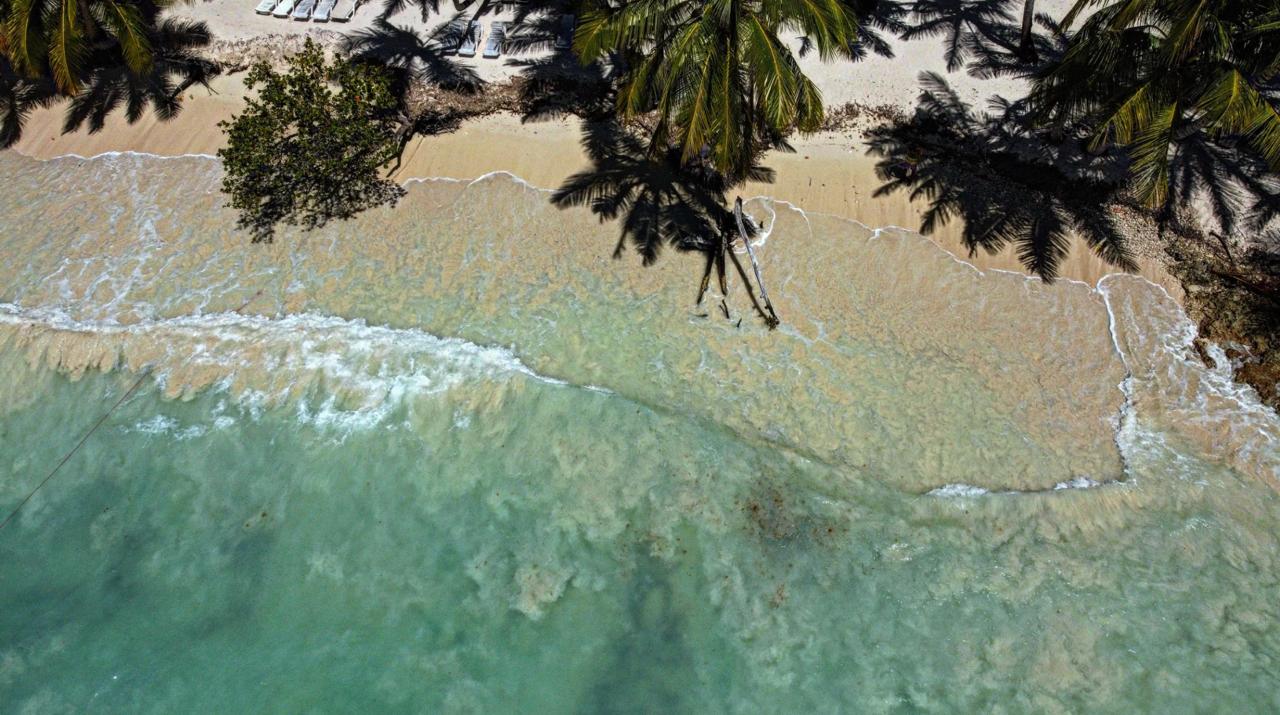

When people search for the best beaches in the Dominican Republic, they usually have Punta Cana in mind. But the full list stretches across two oceans, five coastlines, and over 200 miles of shoreline most visitors never reach.
The north coast runs along the Atlantic with real waves and surf conditions. The south and east face the Caribbean: calm, warm, reef-protected. Samaná offers limestone cliffs and jungle rivers. The southwest has Bahía de las Águilas, described by travellers as the most beautiful beach they've ever seen.
The Dominican Republic welcomed 11.6 million visitors in 2025, more than any other Caribbean destination. The same room often shows up at different prices across platforms.
Want a summary of the best 17 beaches in the Dominican Republic? Watch this 2 minute video below. For a more comprehensive overview, keep reading.
Book your Dominican Republic escape on Epic for up to 30% less than Booking.com. New to Epic? Sign up with your email to claim your $25.
Quick Picks: The Right Beach for Your Trip
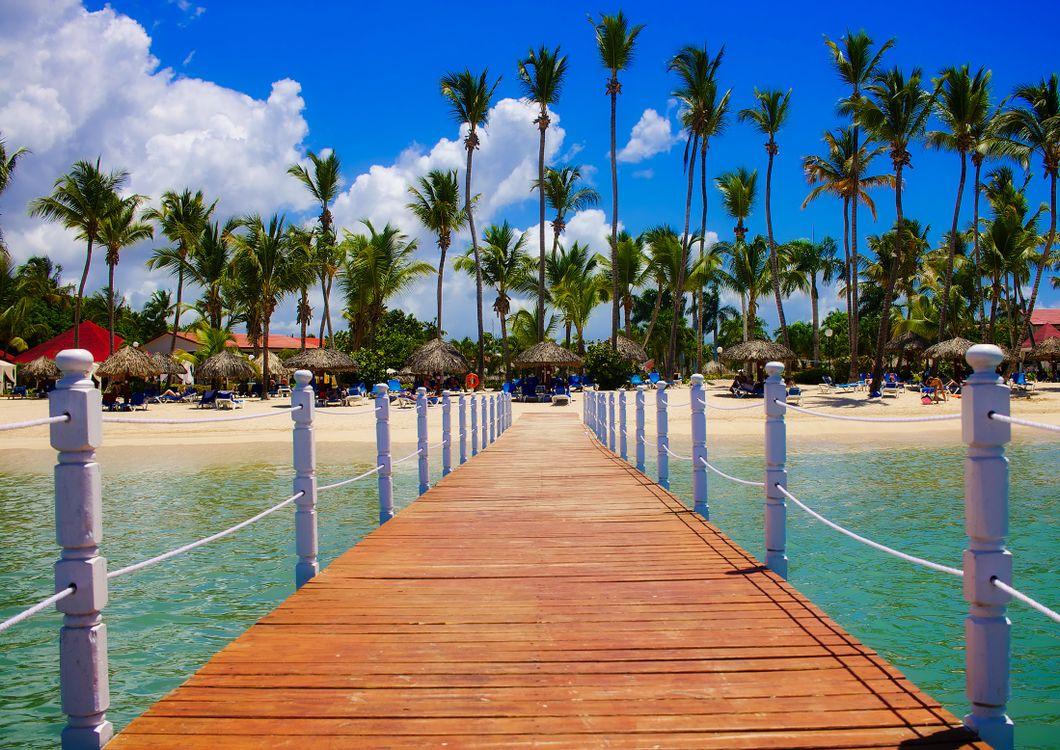
Going beyond the beach? The Dominican Republic has more going on inland and in its cities than most people expect. Our guide to the 15 best things to do in the Dominican Republic covers whale watching in Samaná, canyoning at Damajagua, colonial Santo Domingo, and the day trips worth building an itinerary around. It's useful context before you decide which region to base yourself in.
Punta Cana Beaches: From Bávaro to the Wild End of Cap Cana
Punta Cana is where most people start, and for good reason. The eastern coastline holds 40+ km of beaches that sit inside a natural reef system, which keeps the water calm, warm, and beginner-friendly year-round. It remains the country's most popular beach base and is still growing: Punta Cana drew 12.2% more stopover visitors in February 2026 than in the same month in 2025.

- Bávaro Beach is the anchor. Over three kilometres of powdery white sand, protected by an offshore reef that flattens the water to something close to a lagoon. It is not untouched, far from it, but it is maintained to a standard that justifies its reputation. Arrive before 9 a.m. for the light and the quiet. By midday, beach vendors, jet skis, and resort guests will have filled it out.
- Macao Beach, 15 minutes north of Bávaro, is the complete opposite. No resort gates here. Macao is public, backed by a small cluster of local restaurants, and has genuine Atlantic swell that pulls surfers in year-round. ATV tour groups use its southern end; the northern stretch is quieter and rockier. If you are staying in an all-inclusive and want one afternoon that feels different, Macao is the obvious day trip.
- Juanillo Beach sits inside the gated Cap Cana development and offers one of the cleanest, most sheltered strips in the entire country. Upscale beach clubs line the sand. Access as a non-resident is possible through day-pass arrangements at clubs like Sugarcane Beach Club or by visiting one of the restaurants. Water clarity here is exceptional.
- Playa Blanca, also near Cap Cana, is smaller and quieter, shallow, protected, and excellent for children. Both Juanillo and Playa Blanca benefit from the geography of Cap Cana's sheltered bay, which is one reason they consistently avoid the sargassum problems that affect more exposed Punta Cana beaches (more on that below).
- Uvero Alto, in the far northeast corner of the Punta Cana region, feels like a different destination. Fewer resorts, less traffic, and critically less seaweed exposure because the coast curves slightly away from the dominant Atlantic swell that carries sargassum south.
Samaná Peninsula Beaches: The Dominican Republic's Most Dramatic Coastline
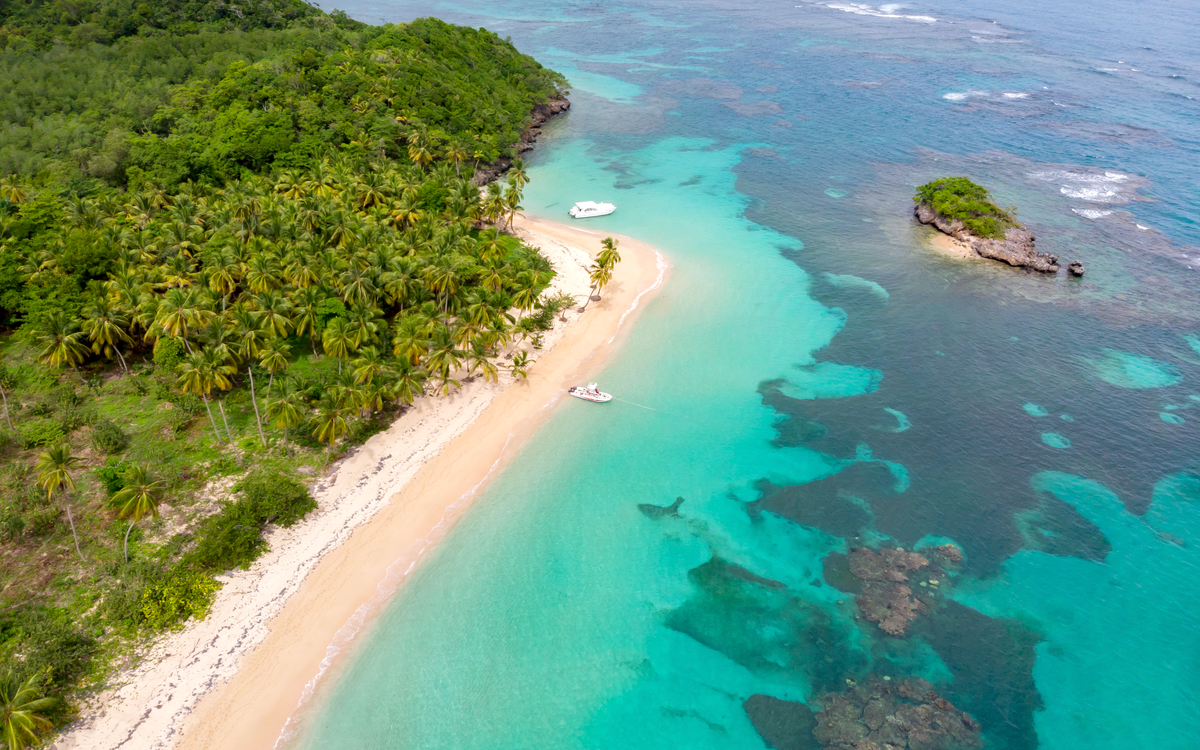
If Punta Cana is the Caribbean postcard, Samaná is the thing you did not expect to find. The northeastern peninsula is where the landscape becomes genuinely dramatic, limestone cliffs dropping into the sea, rivers cold enough to make you gasp, humpback whales surfacing 200 metres offshore from January to March.
When Is the Best Time to Visit Dominican Republic Beaches?
- Playa Rincón sits at the eastern edge of the peninsula, accessible by a 20-minute boat from Las Galeras or a rough 4×4 track. Condé Nast Traveller has placed it in the top 10 beaches in the world on multiple occasions, and it earns it. Off-white sand, palm trees that actually lean rather than being planted for effect, and a freshwater river that empties into the sea at the far end, creating natural pools. A few local restaurants operate from shacks at the beach entrance. No hotels. No lifeguards. Bring water and cash.
- Playa Cosón, near Las Terrenas, is four miles of sand that takes 90 minutes to walk end-to-end. European expats and Dominican families have built a quiet community around its restaurants and small hotels, and it remains one of the better options for travellers who want both beauty and amenities without the Punta Cana scale.
- Las Terrenas town beach, technically Playa Las Terrenas, is the social hub of the peninsula. Bars spill onto the sand, sunset is a communal event, and the mix of European, Dominican, and backpacker crowds gives it an energy unlike anything else on the island. Walk east for quieter stretches.
- Cayo Levantado, the famous Bacardi Island from 1970s television commercials, sits offshore in Samaná Bay. Public boat taxis leave from the port of Santa Bárbara de Samaná roughly every hour and take about 15 minutes. Two-thirds of the island is occupied by the Luxury Bahía Príncipe resort; the public third has three stretches of white sand, a few bars, and views back toward the mountains. January to March is whale-watching season in the bay. Book a morning excursion from Samaná town before heading to Cayo Levantado, and you get both in one day.
Eating well in Punta Cana goes well beyond the all-inclusive buffet. The region has a strong local food scene: fresh seafood, beachside fish shacks, and Dominican staples worth seeking out. Our Dominican Republic food guide covers what to eat, where to find it, and the dishes that are worth leaving the resort for. It's helpful context for any beach day that takes you off the resort strip, like a day trip to Macao.
North Coast Beaches: Puerto Plata, Cabarete, and Playa Grande
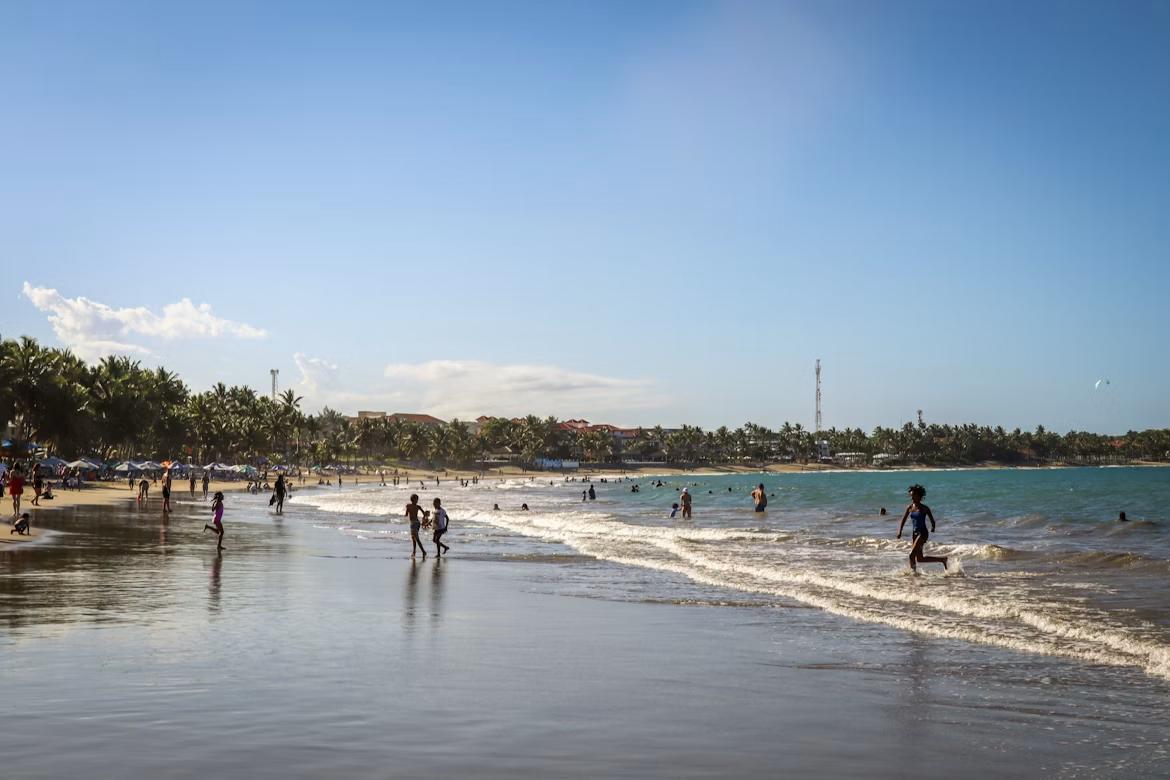
The North Coast and the Amber Coast run along the Atlantic, which means two things: the waves are real, and the wind is reliable. Both attract a different kind of traveller. If you plan to base yourself up here, our guide to the best things to do in Puerto Plata covers the city, its Spanish fortress, and the nearby beaches worth building a day around.
- Playa Dorada, outside Puerto Plata, holds the Blue Flag certification and is one of the most family-friendly beaches on the island. A calm, reef-protected bay, golden sand, and a cluster of resorts within walking distance of Puerto Plata city centre. Water sports outfitters operate from the beach for kitesurfing lessons.
- Kite Beach, Cabarete, is globally recognised as one of the top five kiteboarding destinations on earth. The trade winds come in from the east and are so consistent that professional riders have been training here for thirty years. Beginners and intermediate surfers use the calmer morning water; the kites go up from noon when the wind peaks. Schools, rental shops, and a full strip of beachfront restaurants make Cabarete one of the north coast's most complete beach towns.
- Playa Encuentro, a short drive from Cabarete toward Sosúa, is where the same energy redirects toward surfing. You pass through a strip of roadside vendors and a tropical woodland before the Atlantic opens up in front of you. Surf schools operate from the beach. Conditions are for intermediate to advanced swimmers, not a calm beach.
- Playa Grande is where the north coast sheds all pretence of being a resort. Massive cliffs on either side, strong Atlantic surf, almost no infrastructure. It is one of the largest and most visually striking beaches in the country. A public beach golf course sits on the clifftop. Go to look and to walk; check conditions before swimming.
- Playa Sosúa sits in a protected crescent bay between two headlands, which makes it one of the best snorkelling beaches accessible directly from shore. The reef starts at waist depth, holds good visibility, and is alive enough to be worth a mask and fins. The beach town is casual, local restaurant scene that spills to the waterfront.
The Southeast: Bayahibe and the Gateway to Saona
- Bayahibe is the counterweight to Punta Cana's scale, an old fishing village on the southeast coast that grew into a low-key beach town without losing its character. Boats still leave from the same stretch of sand that ferries day-trippers out to Saona and Catalina islands inside Cotubanamá National Park. The beach faces the Caribbean from a sheltered position, which is why it stays 97-99% seaweed-free year-round while exposed Atlantic beaches battle sargassum. The water is calm, shallow, and clear enough that Bayahibe doubles as one of the country's best diving and snorkelling bases. Come for the village feel and the island access; stay because the swimming is reliable when half the coast isn't.
The Untouched Southwest and East: Bahía de las Águilas and the Emerging Miches Region

These two areas represent the Dominican Republic's present and future simultaneously, one completely undeveloped and protected by law, the other just crossing the threshold from unknown to the next big thing.
Book your next hotel for up to 30% less
- Bahía de las Águilas, inside Jaragua National Park in the far southwest, is the beach that experienced travellers tend to describe as the best they have ever seen. Eight kilometres of white sand inside a UNESCO biosphere reserve, with no hotels, no restaurants, no beach chairs, no mobile signal. The water colour, a turquoise so intense it looks manipulated, is the result of the protected reef system and the absence of any runoff from development. Boat access from Cabo Rojo costs approximately 3,200 Dominican pesos (around USD $53) for the round trip. Bring everything you need: food, water, shade. The silence and the colour are what people fly across the world to find.
- Miches and Playa Esmeralda are the biggest story in Dominican beach tourism right now. Four major resort properties opened along this previously undeveloped coastline in 2024–2025: Secrets Playa Esmeralda (adults-only), Dreams Playa Esmeralda, Zemi Miches by Hilton, and Viva Miches by Wyndham. The beach itself, facing a lagoon-green sea, with mountains directly behind, still feels far removed from the Bávaro resort strip. It is the answer to the question every experienced traveller eventually asks: where in the Dominican Republic can I go that most people haven't gone yet? The infrastructure is now there to make it comfortable. The crowds haven't followed.
Which Dominican Republic Beaches Have a Seaweed Problem?
This is the question every traveller should be asking in 2026. Sargassum seaweed is a brown alga that floats across the Atlantic from the Sargasso Sea, carried by ocean currents into the Caribbean. It has been growing as a problem across the entire Caribbean for the past decade, and 2025 was the worst year on record, with levels tracked 40% above the previous peak set in 2022, with the eastern Caribbean experiencing concentrations 200% above historical averages. A large sargassum mat was detected in the central Atlantic in December 2025, signalling an elevated risk for summer 2026.
The key facts for choosing a beach:
Peak sargassum season runs May through August. If you are travelling during this window, Bayahibe, Cap Cana, and Bahía de las Águilas are your most reliable options for clear water. Most major resorts in Punta Cana run daily beach-cleaning crews starting before sunrise, and many use offshore floating barriers to intercept seaweed before it reaches the sand so an all-inclusive in Bávaro during summer is not a disaster, but it is variable.
When Is the Best Time to Visit Dominican Republic Beaches?
The short answer: December through April, during the dry season.
December to April delivers the best combination of clear skies, calm seas, low humidity, and minimal seaweed. Hotel prices peak around Christmas and mid-February (Valentine's). January and February in Samaná add the bonus of humpback whale season: roughly 10,000 whales use the bay for mating and calving, making it one of the most reliable whale-watching windows in the Atlantic.
May to July sees the start of the rainy season, with afternoon showers rather than all-day rain, and rising sargassum. Prices drop. The north coast (Cabarete, Playa Grande) tends to hold up better on sargassum during this window because the Atlantic current patterns differ from the east coast.
August to September is the peak of both heat and sargassum, and sits inside hurricane season. The Dominican Republic does not get direct hurricane hits frequently, but storms in the Atlantic can bring disrupted weather and increased seaweed even without making landfall.
October and November are the underrated months. Sargassum retreats, prices are at their lowest, the rains are pulling back, and the resorts have space. November in particular is excellent for the quality of experience.
If you want the finer detail, seaweed timing coast by coast, the cheapest weeks to book, and how each region shifts through the year, our full guide to the best time to visit the Dominican Republic covers it all.
Still weighing up when to travel? Our monthly guides to the best places to travel in June, July, and August 2026 can help you compare the Dominican Republic against other destinations for those months.
Practical Logistics: How to Actually Get to the Best Beaches
Several of the most beautiful beaches in the country require effort to reach. Here is what you actually need to know.
Playa Rincón (Samaná): Take a boat from Las Galeras harbour with local fishermen, approximately 800–1,200 pesos ($13–20 USD) per person depending on group size. Alternatively, ask your accommodation about shared group boats. The journey time is around 20 minutes.
Cayo Levantado: Public boat taxis from Samaná port (Avenida Marina). Boats leave roughly every hour, cost around 500–700 pesos per person, and take 15 minutes.
Bahía de las Águilas: Drive to Cabo Rojo, then take a boat from the dock for approximately 3,200 pesos round trip ($53 USD). Some tour operators in Barahona or Santo Domingo offer day trips that include the boat. The road to Cabo Rojo is drivable in a standard rental car (tarmac, no 4×4 needed), though the final section to the dock is unpaved.
Macao Beach (from Punta Cana): Approximately 25 minutes by taxi from the Bávaro hotel zone. Budget around 800–1,000 pesos one-way. Many ATV tour operators include Macao as part of a half-day circuit.
Bahía de las Águilas access tip: The beach opens from approximately 8 a.m. The boat operators return by 4–5 p.m. Do not miss the last boat. There is nothing else out there.
All beaches in the Dominican Republic are legally public. Hotels cannot block access to the shoreline, even in front of their property. This matters for beaches like Bávaro and Juanillo, where you can arrive independently, set up in an area outside the resort's designated zone, and use the water freely.
Book Your Dominican Republic Trip for Less
The Dominican Republic has 92,000+ hotel rooms across its coastline, which means pricing is competitive, but it also means you can overpay easily if you are booking through the wrong platform.
Most travellers overpay for hotels in the Dominican Republic, not because good deals don't exist, but because the platforms they use aren't showing them. Epic works differently. We pull live rates from more than 100 travel suppliers and bring them together in one place, so on many Dominican Republic properties you'll find prices up to 30% lower than booking.com. How much you save depends on the hotel, the dates, and availability, but checking more sources gives you a better shot at a lower rate on the same room.
The booking experience is the same one you already know. Pay by Visa, Mastercard, Apple Pay, or Google Pay. Pick your dates, confirm, done.
New to Epic? Book Dominican Republic hotels and flights → and get $25 off your first booking.
Frequently Asked Questions
1. What is the nicest beach in the Dominican Republic?
Playa Rincón in Samaná is consistently rated among the most beautiful in the world for its wild, unspoilt character and dramatic cliff backdrop. For pure resort convenience and consistent calm water, Bávaro Beach is the most polished. Bahía de las Águilas wins on sheer remoteness and turquoise intensity. The honest answer is that it depends on whether you want beauty with infrastructure or beauty without.
2. What part of the Dominican Republic has the best beaches?
Punta Cana has the highest concentration of resort-quality beaches within easy reach. Samaná has the most dramatic and least commercialised coastline. The southwest (Cab Rojo area) has the single most pristine beach (Bahía de las Águilas). The north coast (Cabarete, Puerto Plata) is best for watersports and surfers. Each coast is genuinely excellent for different reasons.
3. What beach in the Dominican Republic has no seaweed?
Bayahibe maintains a 97–99% seaweed-free rate year-round due to its sheltered Caribbean-facing location and strong resort management. Cap Cana beaches (Juanillo, Playa Blanca) are similarly clean. Bahía de las Águilas, being inside a national park with no development and a protected bay, is virtually unaffected. On the Atlantic coast, risk is highest from May through August.
4. When is the best time to visit the Dominican Republic beaches?
December through April is the dry season, with the best combination of low sargassum, calm seas, and minimal rain. January to March in Samaná adds humpback whale season as a bonus. October–November offers excellent conditions at low-season prices.
5. Is Punta Cana the best beach in the Dominican Republic?
It is the most accessible and most developed, which makes it the best choice for first-time visitors, families, and anyone who wants full resort infrastructure. But experienced travellers who have been to Punta Cana often rate Playa Rincón, Bahía de las Águilas, or Playa Cosón as more memorable beach experiences. Punta Cana is exceptional at what it does; it just does a specific thing.

Mithra Ghosh is a Dubai-based content writer and SEO copywriter with 2+ years of experience crafting search-optimised content across crypto, Web3, and digital finance. She combines strong editorial instincts with a deep understanding of blockchain ecosystems and on-chain trends.
At Epic, she writes about the growing world of crypto-native travel helping readers understand how holding and spending digital assets can unlock smarter, cheaper ways to see the world.


Found a destination you like? Book it for up to 30% less.


Found a destination you like? Book it for up to 30% less.