Content
10 Barcelona Beaches: Rules, Hidden Spots & How to Avoid Crowds (2026)
.png)

Barcelona's beaches are the reason many visitors book trips. Beyond the city limits, the Catalan coast stretches for more than 95 kilometres. There are quiet coves behind nature reserves south of the airport. There are fishing hamlets with two restaurants and no vendors. There are cliff-backed bays reachable by a 45-minute train ride that feel nothing like the resort strip a few stops back. Barceloneta is the most famous, and it earns that reputation; it also absorbs the full weight of the 16 million visitors Barcelona received in 2025, most of whom stop reading the map exactly there.
If you want the full picture (crowd ratings, metro directions, what each beach actually costs, and the rules that carry real fines), keep reading. This guide covers all ten city beaches, the 2026 rules that catch tourists off guard, and where the coastline gets quiet, both inside the city and within an hour of it. We have included honest crowd ratings, metro directions, and seasonal timing throughout.
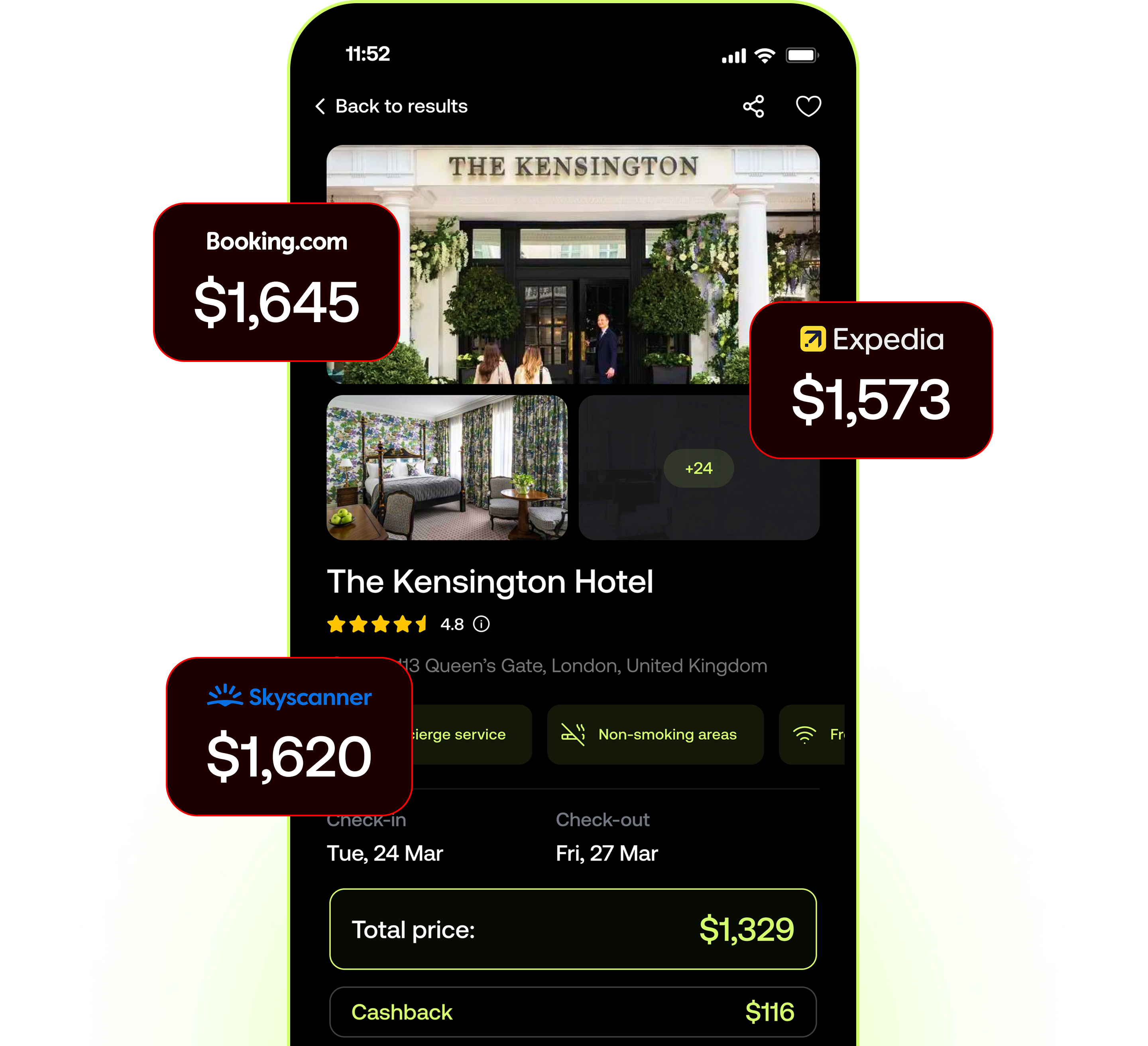
At Epic, you can book hotels near any of these beaches for up to 30% less than Booking.com, paid with Visa, Mastercard, Apple Pay, Google Pay or 200+ cryptocurrencies. Sign up with your email and claim $25 off your first booking.
Barcelona's 10 Beaches at a Glance

Before diving into each one, here's the fast comparison. Beaches run southwest to northeast along the coastline in this order:
1. Platja de Sant Sebastià
Sant Sebastià sits at the southwestern end of the beach strip, tucked in front of the W Barcelona hotel's sail-shaped tower. It is the oldest bathing site on the Barcelona coastline; the original Sant Sebastià baths operated here in the 19th century, making it the place where the city first developed a relationship with the sea as a leisure destination rather than a working waterfront.
Today, it is one of the cleaner, better-maintained stretches on the strip. Most visitors walking from the Gothic Quarter stop at Barceloneta without continuing southwest, which keeps Sant Sebastià marginally less crowded than its neighbour despite being nearly as central. The water here sits in a small natural bay that buffers it from open-sea swell, which means calmer conditions for swimming on days when other beaches have choppy water.
The Club Natació Atlètic-Barceloneta sports club operates here and sells day passes to its outdoor pools, spa, and courts, a useful option on days when the beach itself is packed. The callisthenics park nearby is a permanent fixture of Barcelona beach culture and draws a consistent crowd of locals at any hour.
2. Platja de Sant Miquel

Sant Miquel occupies the stretch directly in front of the Barceloneta neighbourhood, technically a separate beach from Barceloneta. The two are functionally continuous, and most visitors treat them as one. The distinction matters because Sant Miquel has a marginally different character: it sits closer to the fishing quarter's residential streets, and the crowd tends to include more Barcelona residents using it as a neighbourhood beach rather than a destination.
The beach is narrower here than farther northeast, which means density increases faster on busy days. On a Saturday in August, personal space is limited. On a Tuesday morning in late September, it is one of the most pleasant stretches of sand on the strip, quiet enough to hear the water, close enough to the Barceloneta market to pick up food on the way.
The southwestern end of Sant Miquel has an informal nudist and LGBTQ+ area in front of the swimming clubs, less well-known than Mar Bella's designated zone but consistently used as such.
3. Platja de la Barceloneta
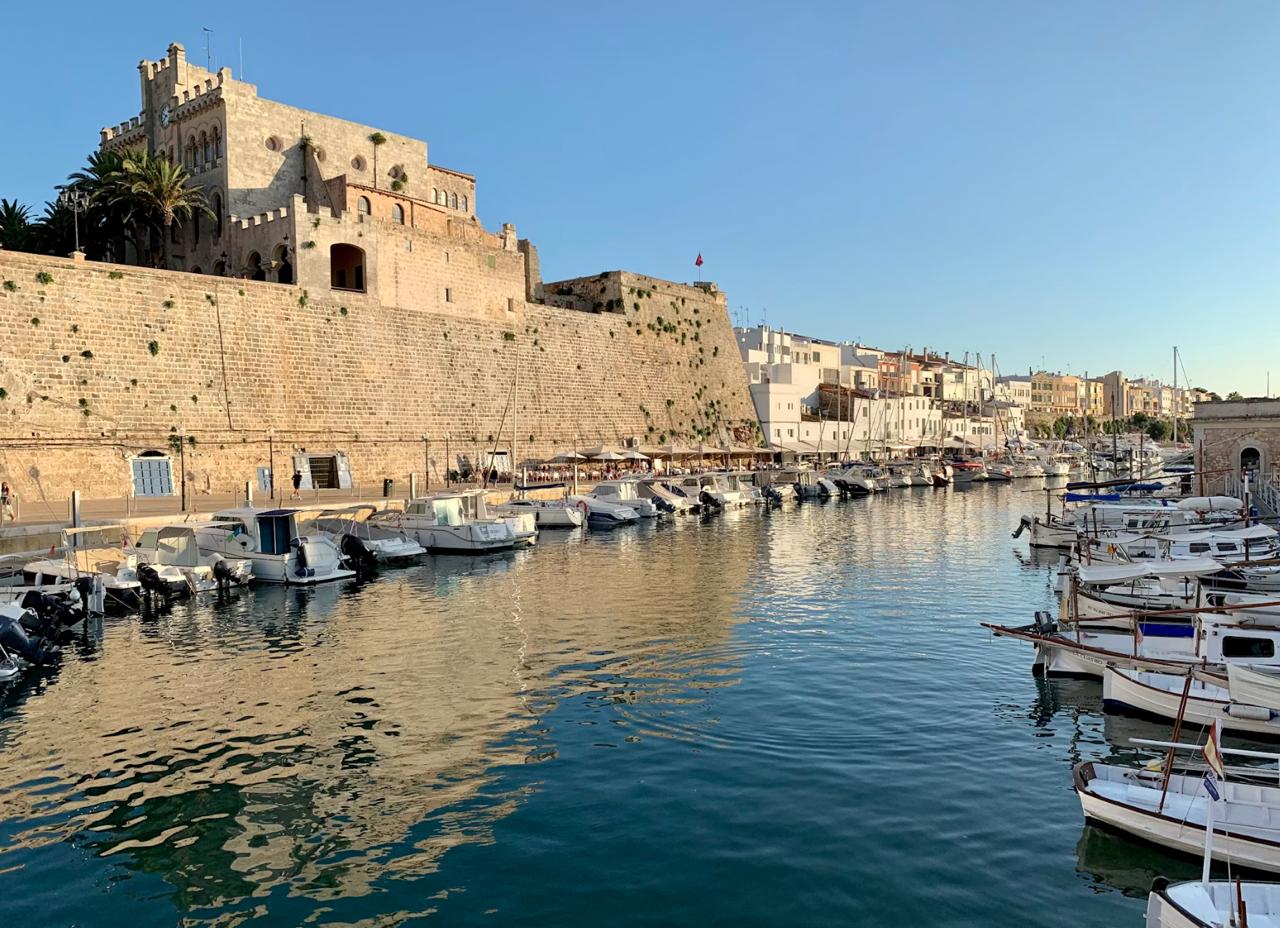
The one everyone knows. Barceloneta is 1,100 metres of sand running north from the Olympic Port, backed by the Passeig Marítim promenade and flanked on its western edge by the neighbourhood of the same name. In peak season, it is the most visited urban beach in Spain; sunbeds arrive early, vendors circulate from mid-morning, and the water fills with swimmers, which makes it difficult to judge distance.
None of this makes it a bad beach. It makes it a specific kind of beach, one that rewards visitors who arrive early, leave before midday, and treat it as an experience to absorb rather than a place to spend a full afternoon. Watching Barceloneta at 7 am, when the sand is still cool, the light is horizontal across the water, is genuinely one of the better things Barcelona has to offer. Arriving at noon in August, expecting solitude, is a category error.
The neighbourhood behind the beach is worth more time than the beach itself. The grid of narrow streets was built in the 18th century to house the fishing families who were displaced when the Ciutadella fortress was constructed. The architecture is dense and human-scaled, the seafood restaurants are numerous, and the ones set back from the promenade cost significantly less than those with direct sea views for equivalent quality.
4. Platja del Somorrostro
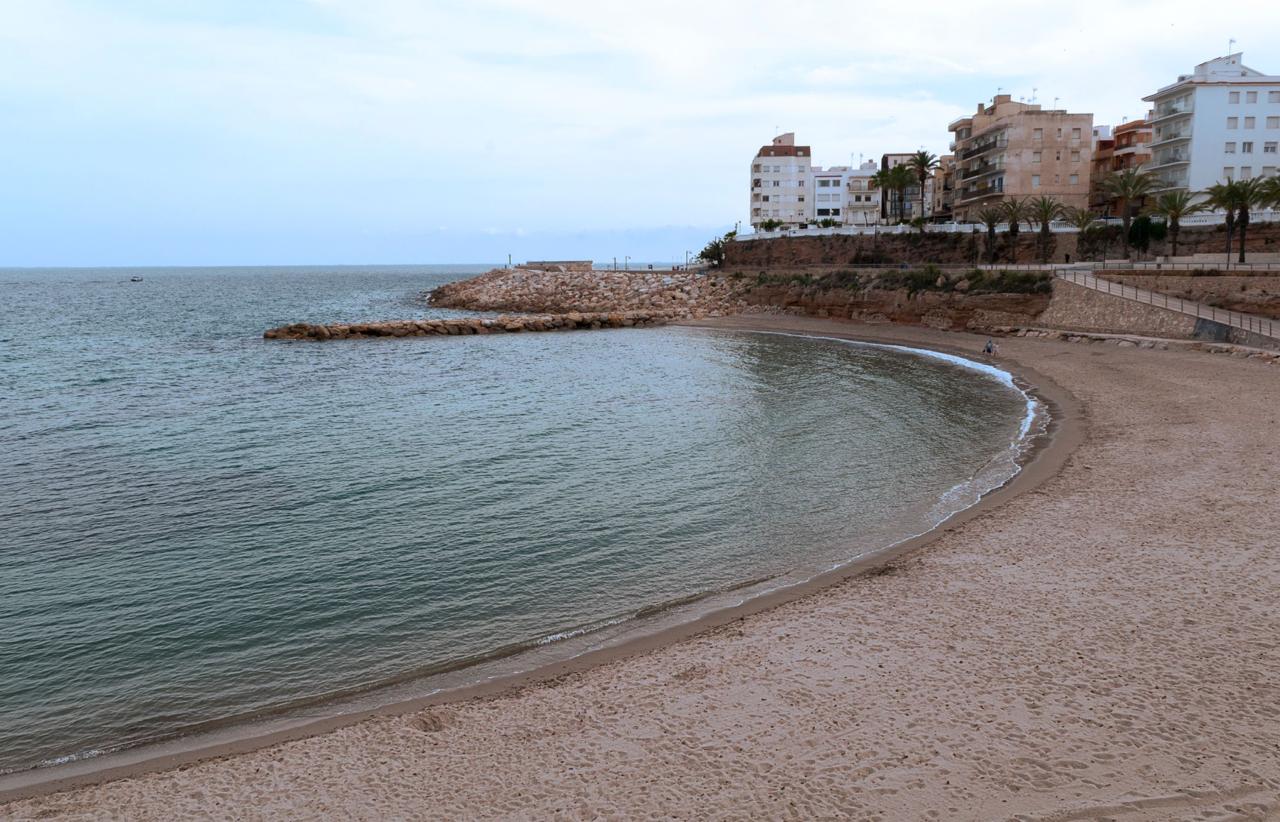
Somorrostro sits immediately north of the Olympic Port and carries a history that most visitors walk past without knowing. For most of the 20th century, this stretch of coastline was occupied by the Somorrostro shanty settlement, a community of 15,000 people living in extremely difficult conditions who were eventually relocated as the city redeveloped the waterfront ahead of the 1992 Games. The beach that exists today was built on that history.
As a beach, Somorrostro is one of the more active on the strip. The callisthenics park here is larger than average and consistently busy with locals. Beach volleyball courts operate throughout the summer with organized and informal games running throughout the day. The crowd tends to be younger and more local than Barceloneta vendor activity is moderate, and the beach itself is maintained to a high standard.
It is not a beach for visitors looking for quiet. It is a beach for visitors who want energy, sport, and the version of Barcelona beach culture that is less about sun loungers and more about movement.
5. Platja de la Nova Icàrria
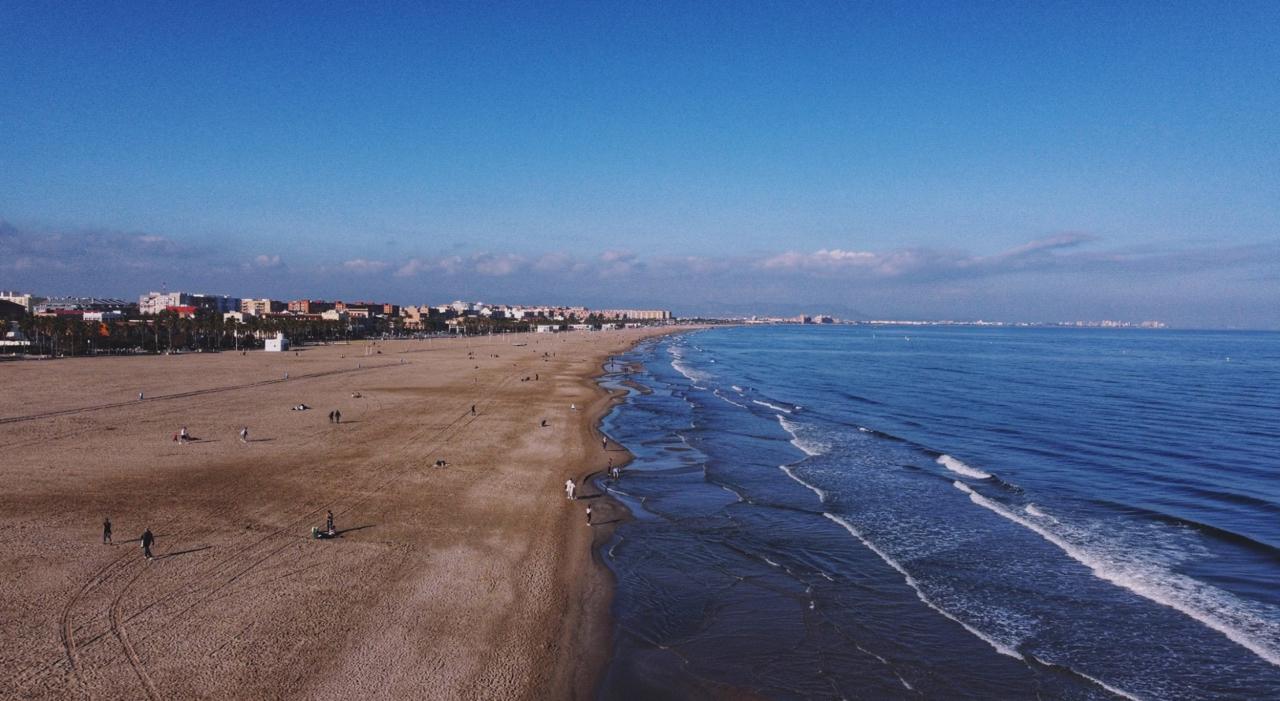
Nova Icàrria is the clearest example of what Barcelona's 1992 Olympic transformation produced at its best. Built specifically for the Games, the beach was designed with public use as the explicit priority: wide sand, excellent accessibility infrastructure, consistent facilities, and a calm seabed gradient that makes it the safest entry-level swimming beach on the strip.
The name comes from the working-class neighbourhood of Icàrria that previously occupied this stretch of waterfront before the Olympic redevelopment. Something of that neighbourhood character persists; Nova Icàrria attracts families, residents from the surrounding Poblenou district, and visitors who have moved past the tourist part of the beach and find somewhere that functions more like a local beach than a destination.
The seabed here slopes more gently than at Barceloneta or Bogatell, which is particularly relevant for families with young children or less confident swimmers. The beach has a certified accessible bathing support point, one of the few on the Barcelona coastline with beach wheelchairs, adapted showers, and lifeguards trained in assisted bathing.
The beachfront restaurants on Nova Icàrria's promenade are known for paella. This is not a coincidence; the beach was built for public enjoyment, and the restaurants that followed reflect that intent. Prices are lower than the equivalent offering at Barceloneta.
6. Platja del Bogatell

Bogatell is the beach that Barcelona residents recommend to each other and that most visitors never reach. It sits 2.5 kilometres northeast of Barceloneta, close enough to reach on foot in 30 minutes, far enough that the tourist flow largely evaporates before reaching there.
The numbers make the case clearly. Bogatell is the widest beach on the Barcelona strip at 89 metres deep and 578 metres long. On a day when Barceloneta is operating at capacity with towels touching each other from the waterline to the promenade wall, Bogatell has room to spread out. The crowd composition shifts here too; surveys of beach users consistently show a higher proportion of Barcelona residents at Bogatell than at any other city beach, which changes the atmosphere.
There are no persistent vendors at Bogatell. This single fact may be the most useful thing in this guide for visitors who found the vendor activity at Barceloneta disruptive. The beach has full facilities, showers, changing rooms, sun lounger rentals, a sports area, a beach bar, and the Rambla del Poblenou running behind it is one of the most genuinely liveable streets in the city, with restaurants and bars that serve the neighbourhood rather than the tourist circuit.
7. Platja de la Mar Bella
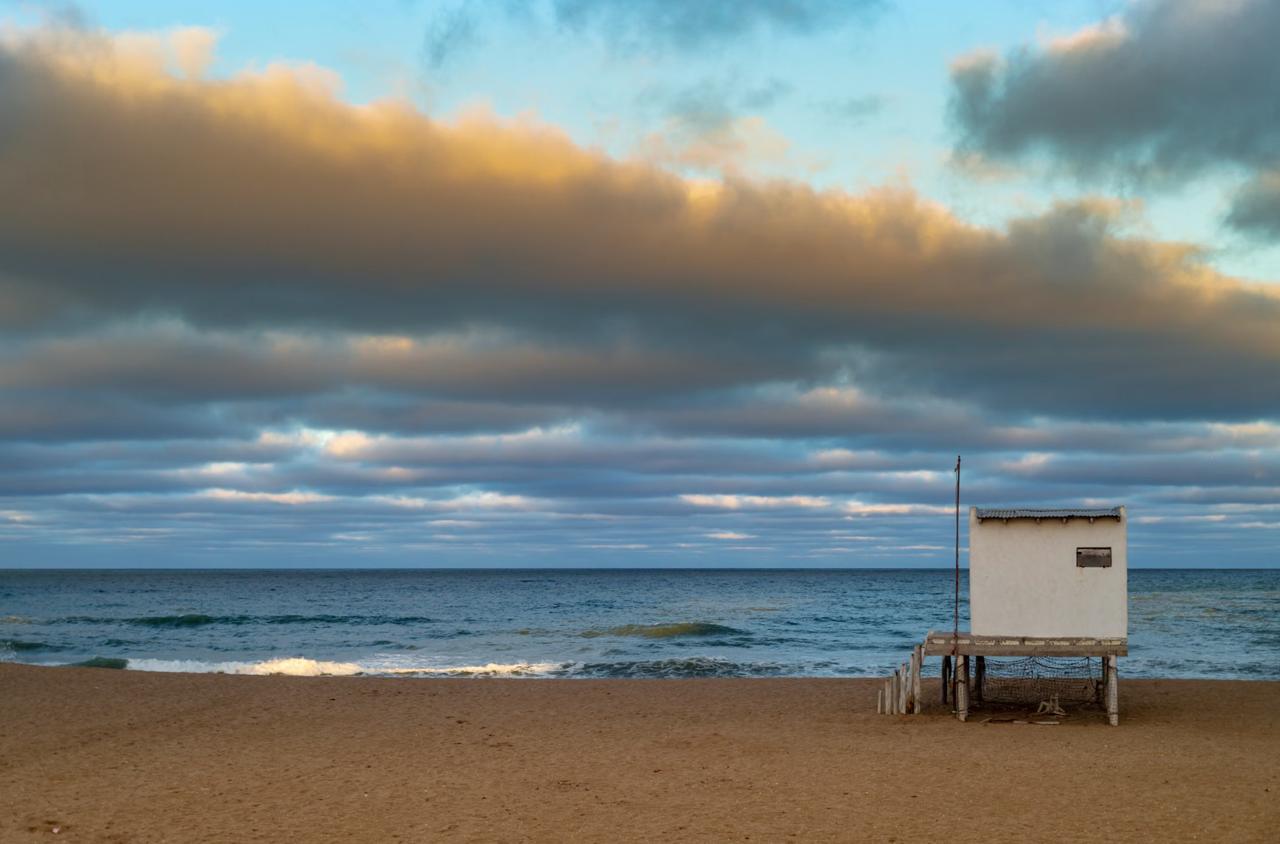
Mar Bella has a specific identity that it has held for decades and that the city has formalised rather than discouraged. The northern section of the beach is Barcelona's official naturist zone, the longest-running designated nudist area on the city's coastline, and the beach as a whole is strongly associated with Barcelona's LGBTQ+ community. It is welcoming to everyone regardless of what they wear or who they come with, and the atmosphere reflects that.
Beyond its social character, Mar Bella is one of the more functionally rich beaches on the strip. The Base Nàutica Municipal water sports centre operates from here year-round, offering sailing, kayaking, and windsurfing tuition and equipment rental. A certified diving centre runs courses and guided dives from the beach. The sports area is well-equipped and consistently used.
The beach sits in a slightly exposed position compared to the more sheltered southwestern stretches, which produces choppier conditions on windy days, good for watersports, less ideal for casual swimming. The wooden watchtower at the beach's centre is a well-known meeting point and visible from a distance.
8. Platja de la Nova Mar Bella
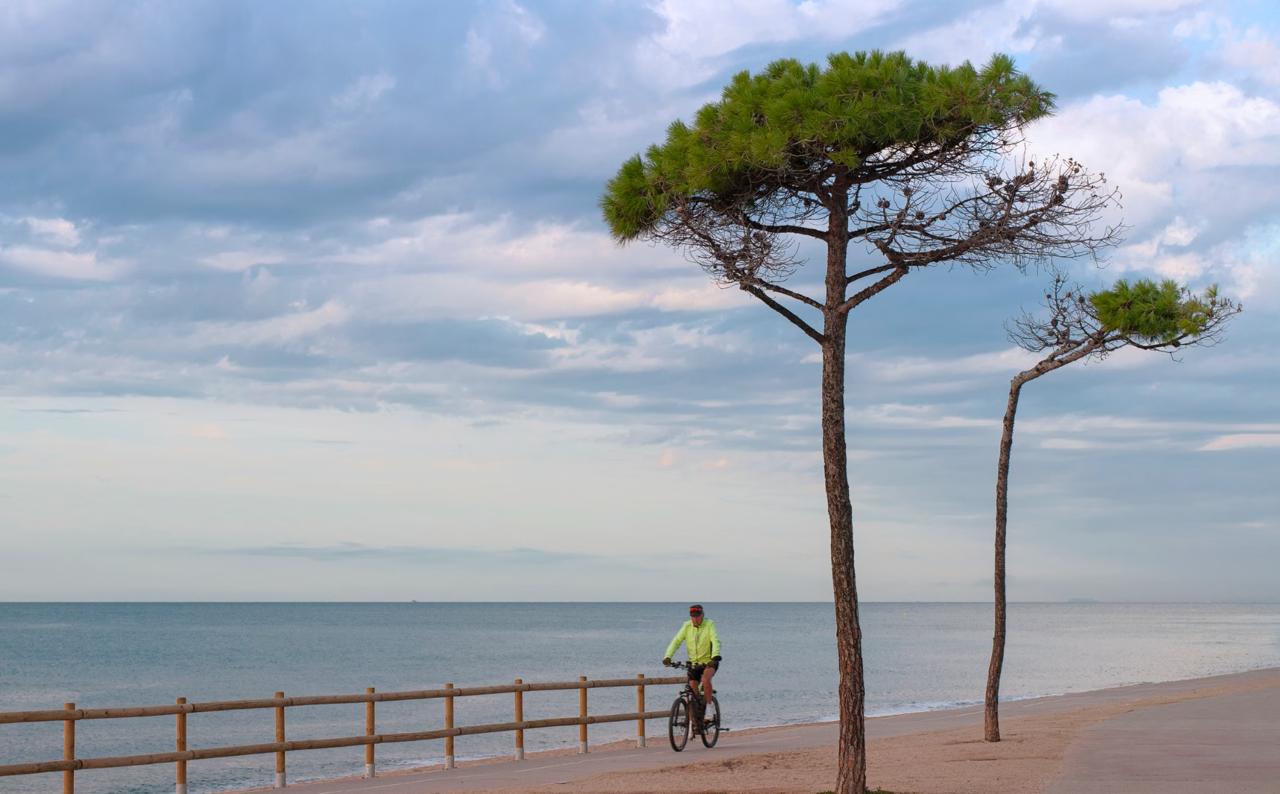
Nova Mar Bella is the quietest city beach in Barcelona. It is immediately adjacent to Mar Bella and shares its relaxed informality, but it receives fewer visitors and has a more contained, neighbourhood feel. The sea here is slightly less exposed than at Mar Bella, which means calmer swimming conditions on most days.
The beach is practically sized, not a long walk from end to end, with straightforward facilities and the Poblenou neighbourhood immediately behind it is one of Barcelona's most interesting residential districts. The former industrial quarter has been converted into a creative and tech workspace. Over the past fifteen years, the result is a neighbourhood with good restaurants, independent coffee, and a street life that has nothing to do with tourism.
Nova Mar Bella is the beach to recommend to someone who has been to Barceloneta once and wants to understand what Barcelona beach life actually looks like for the people who live here.
9. Platja del Llevant
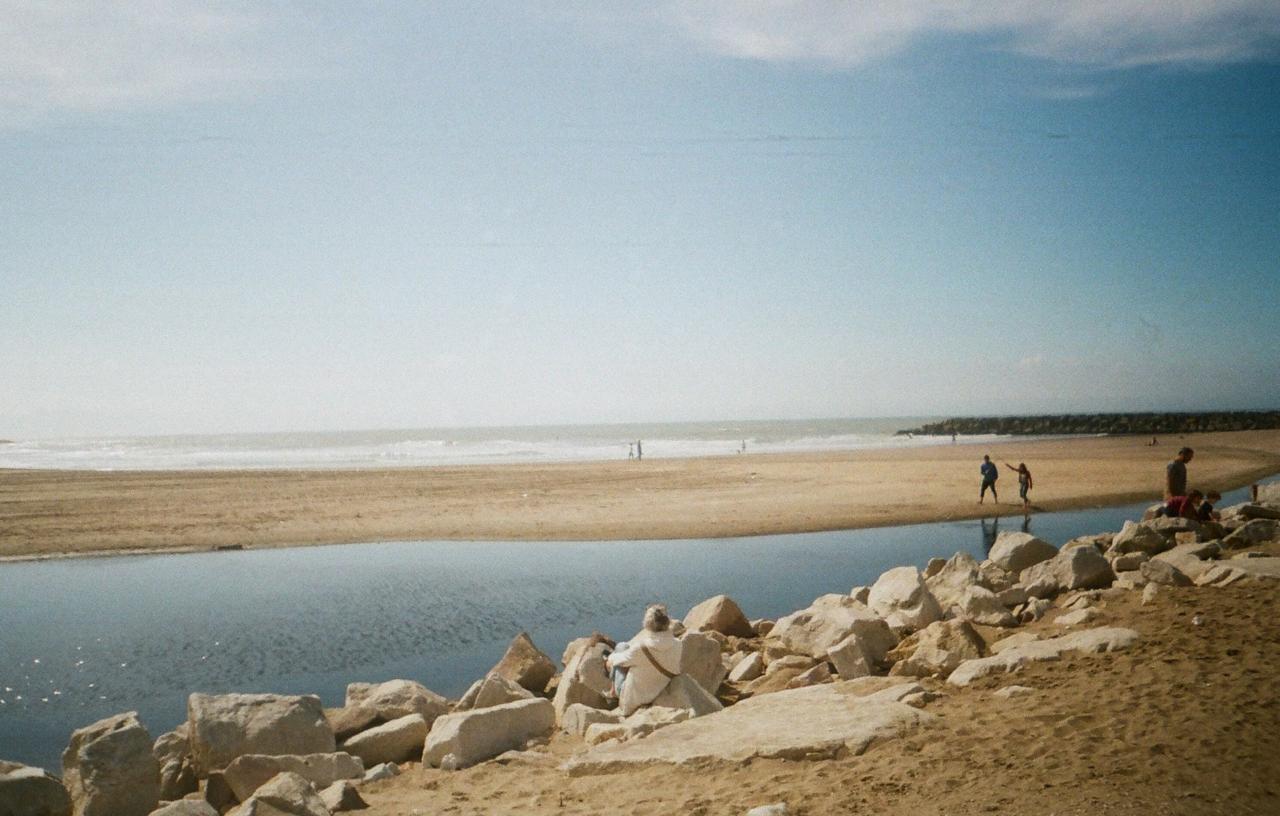
Llevant sits at the northeastern edge of Barcelona's continuous beach strip and has a distinction that makes it immediately relevant to a specific group of visitors: it is the only city beach where dogs are permitted during high season. A designated dog-friendly area is here from June through September, separated from the main beach. Outside that zone, the rest of Llevant functions as a standard city beach, well-maintained, equipped with full facilities, and significantly less crowded than anything to its southwest.
The accessible bathing service here is among the best on the city's coastline. Barcelona has invested in beach accessibility infrastructure across multiple sites, and Llevant is one of the primary points for adapted bathing support, beach wheelchairs, and accessible shower facilities for visitors with reduced mobility.
The beach has a more residential character than anywhere southwest of Bogatell. The crowd is almost entirely local.
10. Zona de Bany del Fòrum
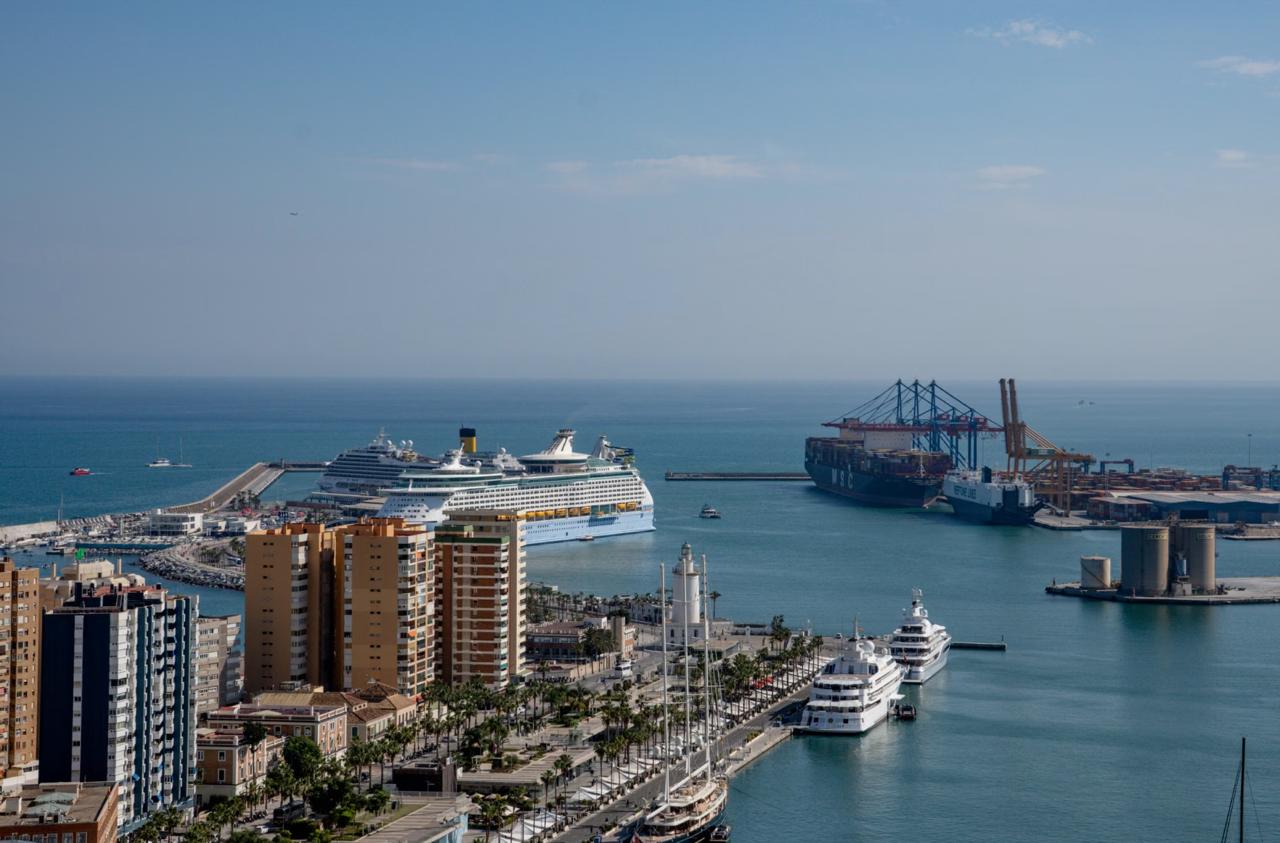
The Fòrum bathing area is unlike anything else on the Barcelona coastline, and describing it as a beach is technically inaccurate, as there is no sand. What it offers instead is a 375-metre saltwater bathing area enclosed by a concrete platform, set against the dramatic backdrop of the Fòrum's photovoltaic, one of the largest solar installations in Europe.
Book your next hotel for up to 30% less
It was built as part of the broader Fòrum redevelopment in the Diagonal Mar district and was the first site on the Barcelona coastline where dogs were permitted. That designation has since moved to Llevant's dedicated zone, but the Fòrum area remains one of the most dog-tolerant spots on the strip in practice.
The appeal is specific: calm, enclosed water with no waves, unusually easy to access by public transport, almost no crowds even in peak summer, and a striking piece of contemporary architecture overhead. It is not the place to go for a classic beach day. It is exactly the right place for a swimmer who wants to get in the water without navigating a crowded sandy beach, or for a visitor interested in what Barcelona's recent urban development actually looks like at street level.
The adjacent Diagonal Mar park and the Forum complex itself are worth combining with a visit. This corner of the city is frequently overlooked on standard tourist itineraries and tends to reward the curiosity of visitors who get there.
For any of these day trips, you can use Epic to find stays in Sitges, Castelldefels, and along the Maresme coast, compare what's available, and book beach-adjacent accommodation at rates up to 30% less than Booking.com.If you're planning a multi-day Barcelona trip with a day at the coast, run both searches side by side: beach-adjacent stays often come in well under central Barcelona hotels, which carry a premium location charge. New to Epic? Sign up with your email and claim $25 off your first booking.
What Are the Barcelona Beach Rules in 2026?
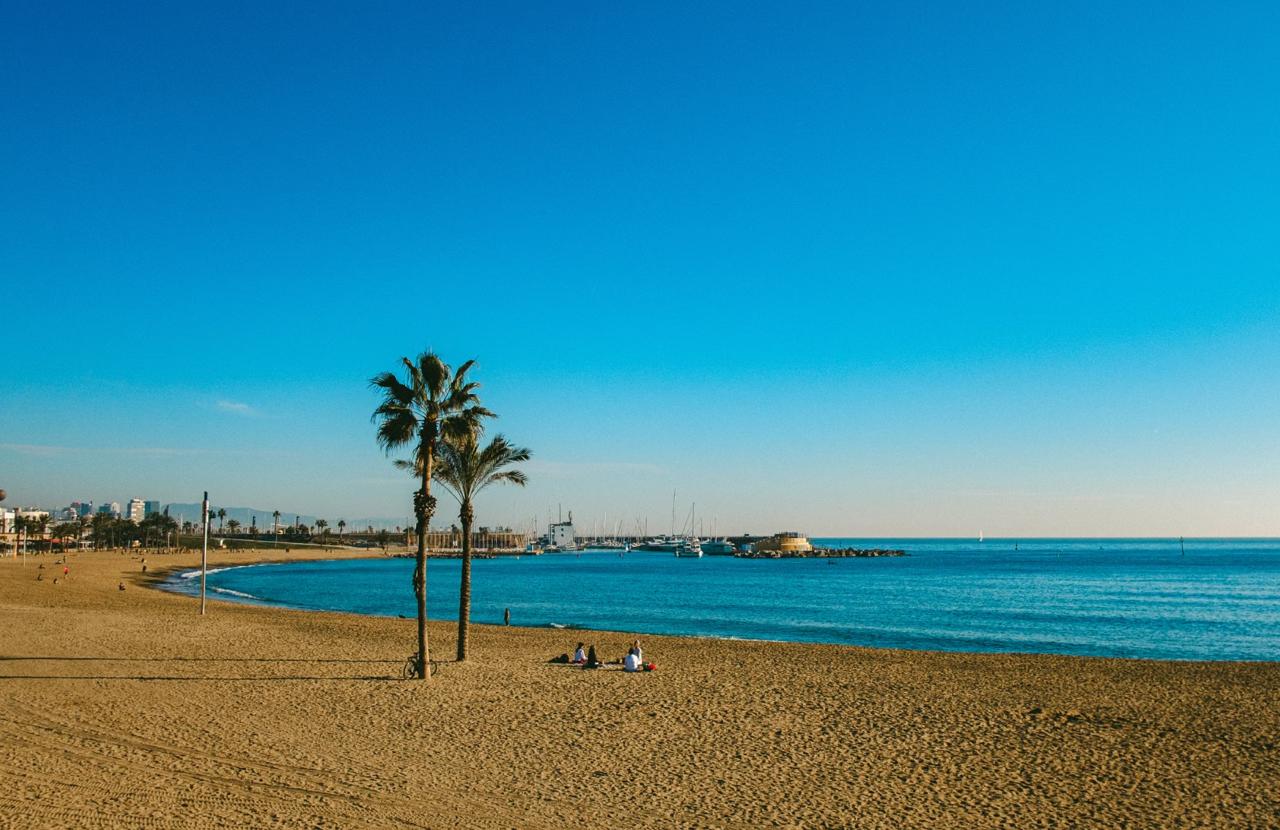
This section exists because it should appear in every guide, and almost none include it clearly. Several of the regulations below carry real fines and are actively enforced. Ignorance does not void the penalty.
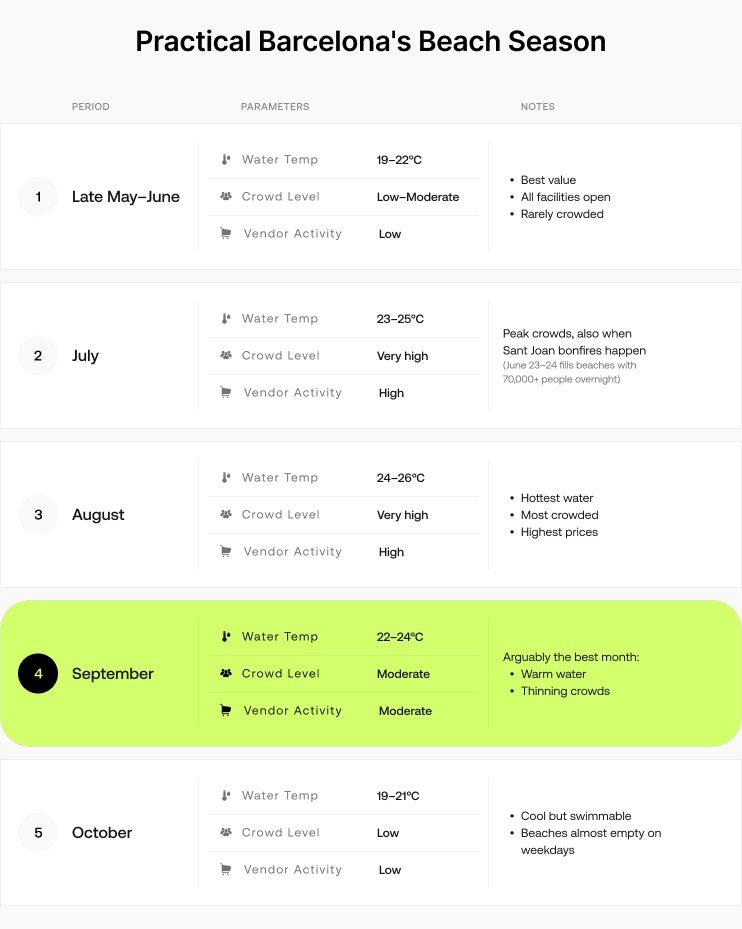
Barcelona's beach season runs from late May through October. Each period has its own rhythm:
Late May – June
- Water temperature: 19–22°C
- Crowd level: Low–Moderate
- Vendor activity: Low
- Best for: Budget travellers; all facilities open; beaches rarely crowded; excellent value
July
- Water temperature: 23–25°C
- Crowd level: Very high
- Vendor activity: High
- Best for: Peak energy seekers; also when Sant Joan bonfires happen (June 23–24), filling beaches with 70,000+ people overnight
August
- Water temperature: 24–26°C (hottest of the year)
- Crowd level: Very high
- Vendor activity: High
- Prices: Peak accommodation rates
- Best for: Warmest swimming; full facilities; requires early arrival to beat crowds.
September
- Water temperature: 22–24°C
- Crowd level: Moderate
- Vendor activity: Moderate
- Best for: Widely considered the best overall month; warm water with thinning crowds; clear shift after first week
October
- Water temperature: 19–21°C
- Crowd level: Low
- Vendor activity: Low
- Best for: Solitude seekers; practically empty weekday beaches; cool but swimmable; air remains warm
September hits the sweet spot: warm water, moderate crowds, and maintained facilities without peak-season chaos. If your trip is fixed to July, the beach experience is still excellent if you choose less central beaches and arrive early. October rewards visitors who prioritise peace over peak warmth.
A note on the tourist tax that affects accommodation planning: Barcelona's overnight tourist tax increased significantly in April 2026. Holiday apartment stays now carry a levy of €12.50 per person per night, up from €6.25. A four-night stay for two adults in a short-term rental now adds €100 in tax alone. Hotel rates vary but are subject to the combined Catalan regional tax plus Barcelona's municipal surcharge, which reached €5 per person per night in 2026 and is scheduled to increase further toward €8 by 2029. This is directly relevant to accommodation budgeting. We cover how to offset this cost in the final section.
The Info Platges app (free, from Barcelona City Council) is the most practical tool for day-of-beach planning. It shows real-time flag status, water temperature, jellyfish alerts, lifeguard hours, and facility availability for every city beach.
When Is the Best Time to Swim at Barcelona Beaches?
Barcelona's beach season officially runs from late May through October, but the practical swimming window and crowd curve don't follow the same pattern.
September is widely considered the best month to enjoy Barcelona's beaches. If your trip is fixed in July, though school breaks, annual leave, or simply because that's when you're going, the beach experience is still excellent if you choose the right stretch. For destinations where July is genuinely peak season rather than a compromise. Water temperatures are at or near their annual peak in late September (warm water lags air temperature by several weeks), and the increase in tourists drops significantly after the first week of the month. Hotel prices in Barcelona typically fall 20–30% compared to August.
On the overnight Sant Joan celebration (June 23–24), this is Barcelona's largest annual beach event. Bonfires are lit along the entire coastline, fireworks continue until dawn, and the beach bars stay open through the night. Attendance regularly exceeds 70,000 people. This is extraordinary to witness once; it is not a situation for anyone who came to Barcelona primarily to swim.
How to Get to Barcelona's Beaches
Every Barcelona city beach is reachable on Metro Line 4 (the yellow line). This is the most relevant transit fact for visitors, and it is worth stating simply:
- Barceloneta, Sant Sebastià, Sant Miquel: Barceloneta station (L4)
- Somorrostro, Nova Icàrria: Ciutadella-Vila Olímpica station (L4)
- Bogatell: Bogatell station (L4)
- Mar Bella, Nova Mar Bella: Llacuna station (L4) or Bogatell (10-min walk)
- Llevant: Selva de Mar station (L4)
- Fòrum / Diagonal Mar: El Maresme-Fòrum station (L4)
A single metro journey costs €2.55 with a T-Casual 10-trip card (significantly cheaper per trip than single tickets). The T-Casual card works across metro, bus, and tram if you're moving between beaches or returning to the city for lunch.
A word on beach safety: Barcelona is frequently cited as one of Europe's highest-risk cities for pickpocketing. The beach adds a specific dimension to this risk: there is no practical way to secure valuables while swimming. The most effective approach is to leave anything irreplaceable at your accommodation. If that isn't possible, visit with a group and take turns in the water. Commercial beach lockers are available at several points along the promenade, though they fill quickly on busy days. Bogatell and the northeastern beaches have lower reported theft rates than Barceloneta.
Is Barcelona Getting Too Crowded to Visit?
This question has become unavoidable in travel planning. The honest answer is that it depends on where you go and when.
Barcelona received 16 million visitors in 2025, a figure that has grown consistently year over year. The city's response has included the tourist tax, limits on cruise ship berths (reducing the port's terminals from seven to five by 2030), caps on guided tour group sizes in historic areas, and new restrictions on short-term rentals. These are structural responses to a real problem: housing costs in the Barceloneta neighbourhood and surrounding areas have risen sharply as residential properties have been converted to tourist accommodation.
The anti-overtourism protests of 2024 and 2025 were organized primarily around housing and affordability concerns rather than opposition to individual tourists. They are a relevant context for visitors to understand, not a reason to avoid the city. The practical implication is straightforward: travelling outside peak season, staying in licensed accommodation, and choosing less central beaches distributes your visit more evenly across the city's capacity and the local economy.
Shoulder season (May to June, September to October) is genuinely less crowded at every beach. Mid-week visits in any season produce noticeably thinner crowds than weekends. And the northeastern beaches, Bogatell, Mar Bella, Nova Mar Bella, and Llevant, receive a fraction of the visitors that Barceloneta handles, with substantially similar facilities. October visits produce a noticeably different experience: almost empty beaches on weekdays, water still warm from the summer, and hotel prices 20 to 30% below August rates. If you are open to pushing the trip even later in the year, our guide to the best places to travel in November 2026 covers several southern European destinations that are at their best once the peak crowds have cleared.
Planning to stay near the beach? In Epic, you can book flights and hotels for up to 30% less than Booking.com. You can pay using Visa, Mastercard, Apple Pay, Google Pay or 200+ cryptocurrencies. New to Epic? Sign up with your email and claim $25 off your first booking →
Frequently Asked Questions
1. What is the best beach in Barcelona?
For visitors who want space, cleanliness, and a local atmosphere, Bogatell is the strongest overall choice. For families with young children, Nova Icàrria offers the gentlest seabed slope and the best accessibility facilities. For a first visit where the Barcelona beach experience is part of the point, Sant Sebastià delivers Barceloneta's iconic setting with noticeably lower vendor activity and a cleaner environment.
2. Are Barcelona beaches crowded?
Barceloneta and the three beaches immediately northeast of it (Sant Miquel, Somorrostro) are extremely crowded in July and August, particularly between 11 am and 5 pm. Bogatell, Mar Bella, Nova Mar Bella, and Llevant are measurably quieter across all seasons. For anyone arriving between late June and early September, a 20-minute walk or one additional metro stop northeast is one of the highest-value decisions you can make.
3. Can you swim at Barcelona beaches?
Yes, from late May through October. The Barcelona City Council operates a formal bathing season with lifeguards, facilities, and flag-status monitoring from the Info Plates app. Water temperatures reach their warmest point in late August and September (24–26°C). The beaches carry EU Blue Flag certification for water quality, which is assessed and renewed annually.
4. Is there a nudist beach in Barcelona?
Mar Bella has an officially designated naturist section at its northern end, the longest-running nudist area on the Barcelona coastline. The broader beach is not exclusively welcoming to all visitors regardless of what they choose to wear. Nova Mar Bella, adjacent to it, is also accepted as a naturist-friendly space in practice.
5. Is it safe to leave your belongings at Barcelona beaches?
No safe option exists for leaving valuables unattended at any Barcelona beach. Leave phones, passports, and bank cards at your accommodation. If you must bring valuables, go with at least one other person and take turns swimming.

Mithra Ghosh is a Dubai-based content writer and SEO copywriter with 2+ years of experience crafting search-optimised content across crypto, Web3, and digital finance. She combines strong editorial instincts with a deep understanding of blockchain ecosystems and on-chain trends.
At Epic, she writes about the growing world of crypto-native travel helping readers understand how holding and spending digital assets can unlock smarter, cheaper ways to see the world.
Found a destination you like? Book it for up to 30% less.

Found a destination you like? Book it for up to 30% less.