Content
Things to Do in Montreal: 10 Must-Do Experiences in 2026

When people plan the best things to do in Montreal, they usually stop at street level. But the city has a city beneath it: 32 kilometres of climate-controlled tunnels connect 10 metro stations, 1,700 boutiques, 200 restaurants, and a hockey arena, all underground. Guinness World Records recognises it as the largest pedestrian underground network on the planet.
Most visitors miss it entirely. The surface version is already strong: cobblestone streets dating to 1642, a mountain within the city limits, the world's largest jazz festival with two-thirds of its 350+ concerts free, and a food scene with three dishes that exist nowhere else. But the city holds layers that reward visitors who look past the obvious.
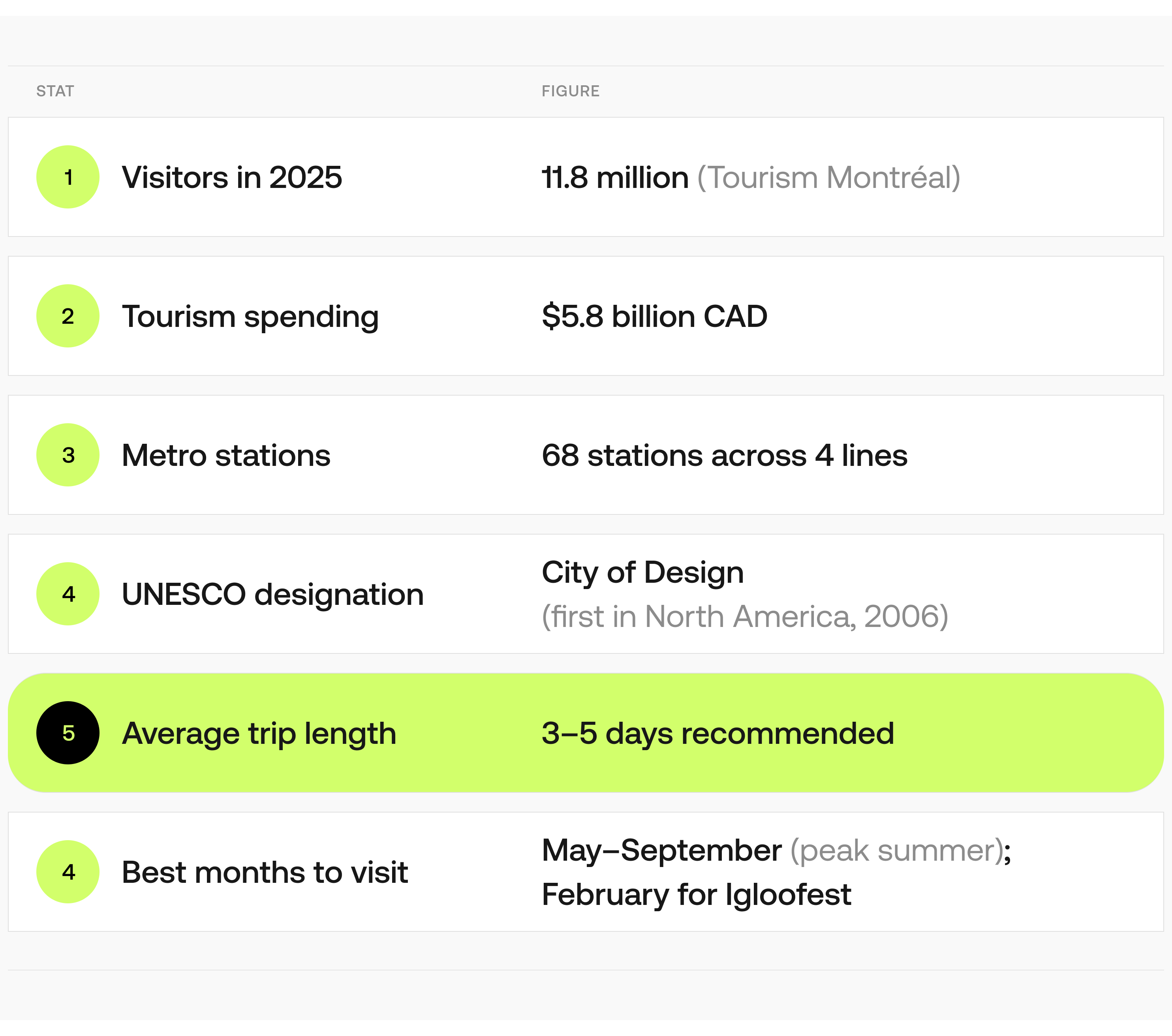
Montreal drew 11.8 million visitors in 2025, a 7.3% increase. In 2026, the 50th anniversary of the 1976 Olympic Games runs through summer with special programming, and the Jazz Festival's 46th edition (June 25–July 4) features centennial tributes to Miles Davis, John Coltrane, and Tony Bennett.
This guide covers 10 experiences worth your time, costs, and how to build a realistic itinerary.
Want a summary of the 10 best things to do in Montreal? Watch this 2 minute video below. For a more comprehensive overview, keep reading.
At Epic, you can book hotels and flights across Montreal for up to 30% less than Booking.com, paid by Visa, Mastercard, Apple Pay, Google Pay or 200+ cryptocurrencies. Sign up with your email and claim $25 off your first booking.
What Is Montreal Most Known For?
Montreal is best known for its French-speaking culture in North America, its festival calendar (led by the world's largest jazz festival), its food scene built around poutine, smoked meat, and Montreal-style bagels, and its distinctive neighbourhoods. It was the first city in North America to be designated a UNESCO City of Design and consistently ranks as one of the continent's most liveable cities.
A Quick Look at Your Visit
1. Walking Old Montreal at Your Own Pace
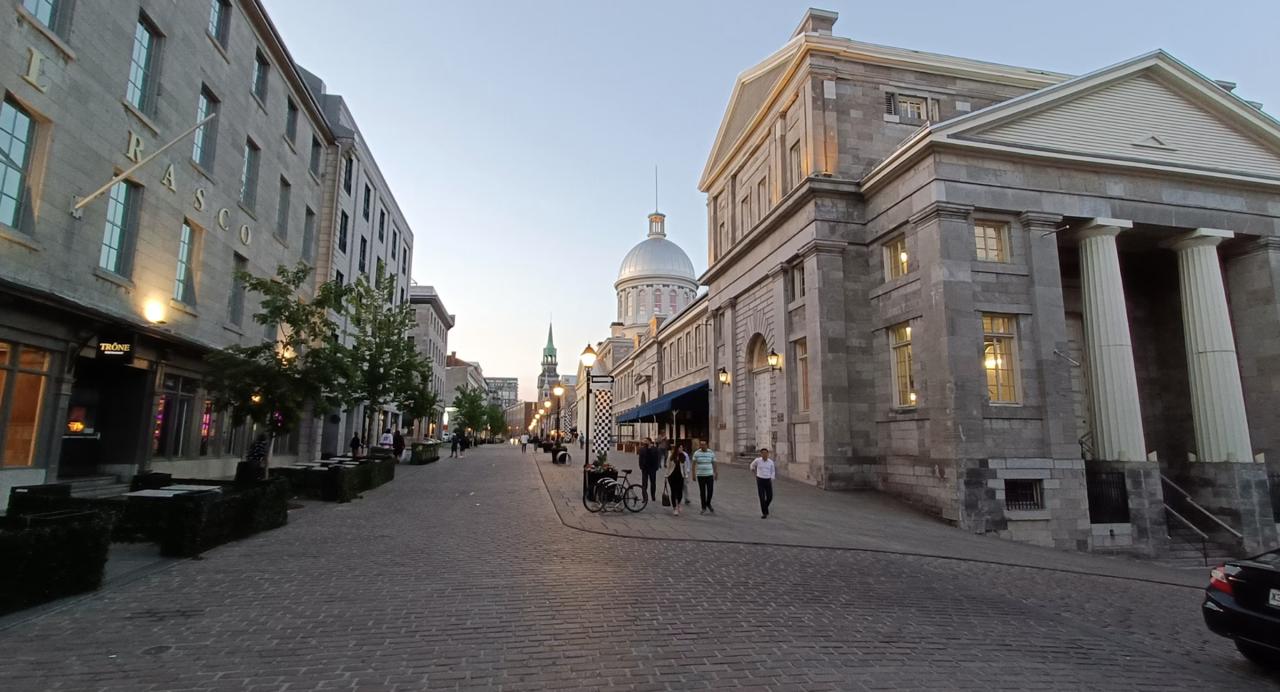
Old Montreal, Vieux-Montréal, is where the city began in 1642, and the bones of that history are still visible in every limestone facade and cobblestone lane. This is the neighbourhood that earns Montreal comparisons to European cities, and it earns them honestly.
Start at Place Jacques-Cartier, the central square where street performers set up from late spring through early fall. Walk down toward the waterfront, and you hit the Old Port, a 2.5-kilometre stretch along the St. Lawrence with cycling paths, a clock tower, a Ferris wheel (La Grande Roue stands 60 metres tall with climate-controlled gondolas), and a marina that fills up on warm evenings. From there, wander up toward Notre-Dame Basilica.
One thing to flag: the Musée d'art contemporain de Montréal (MAC) has been closed for a major renovation of its permanent home at Place des Arts. Its collection content is being shown in a temporary space within the Montreal Museum of Fine Arts. Check the current status before planning your route around it.
2. Notre-Dame Basilica
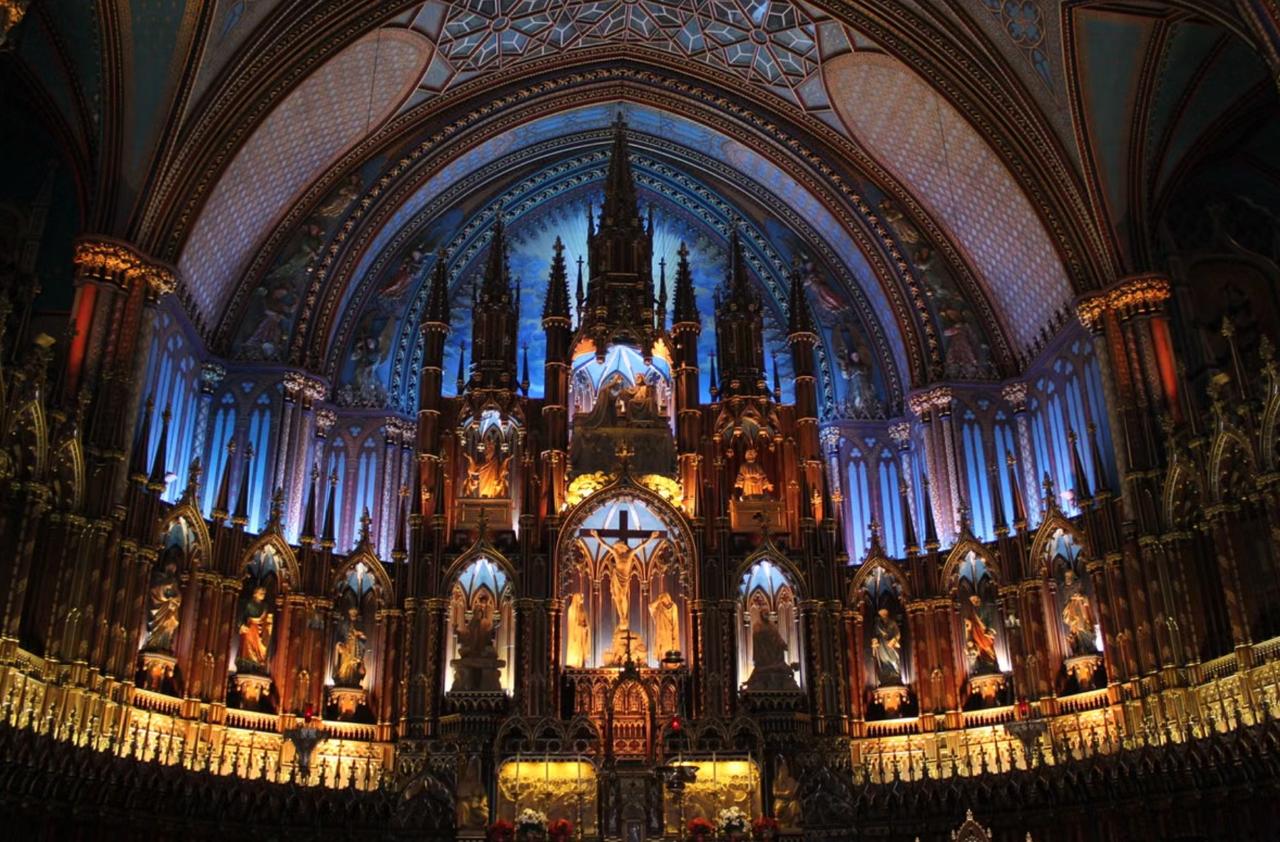
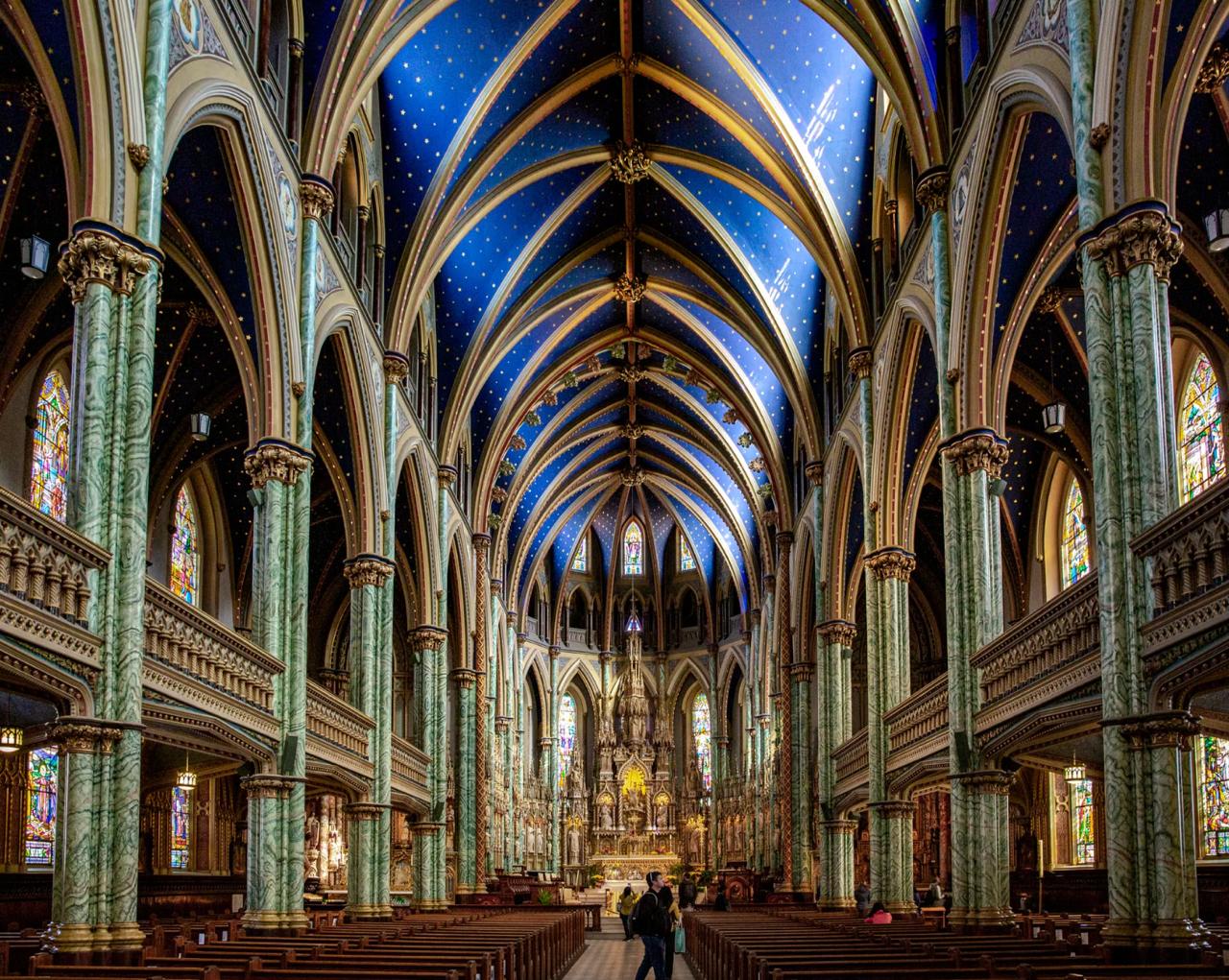
Notre-Dame Basilica is one of the most photographed interiors in Canada. The vaulted ceiling in deep blue and gold, the ornate wood carvings, and stained-glass panels depicting scenes from the early history of Montreal justify the daytime visit on their own. Adult entry is CAD $16, with reduced rates for seniors, students, and children.
After hours, the basilica runs AURA, an immersive light and sound show that transforms the interior into a roughly 45-minute audiovisual experience projected directly onto the architecture. It runs on selected evenings and sells out in advance. If your stay overlaps with an AURA night, booking ahead is the right call.
The basilica is managed by the Sulpician Fathers and is an active place of worship, so there are some restrictions on timings. Check the schedule at basiliquenotredame.ca before you go.
3. Mount Royal: The City's Defining Viewpoint
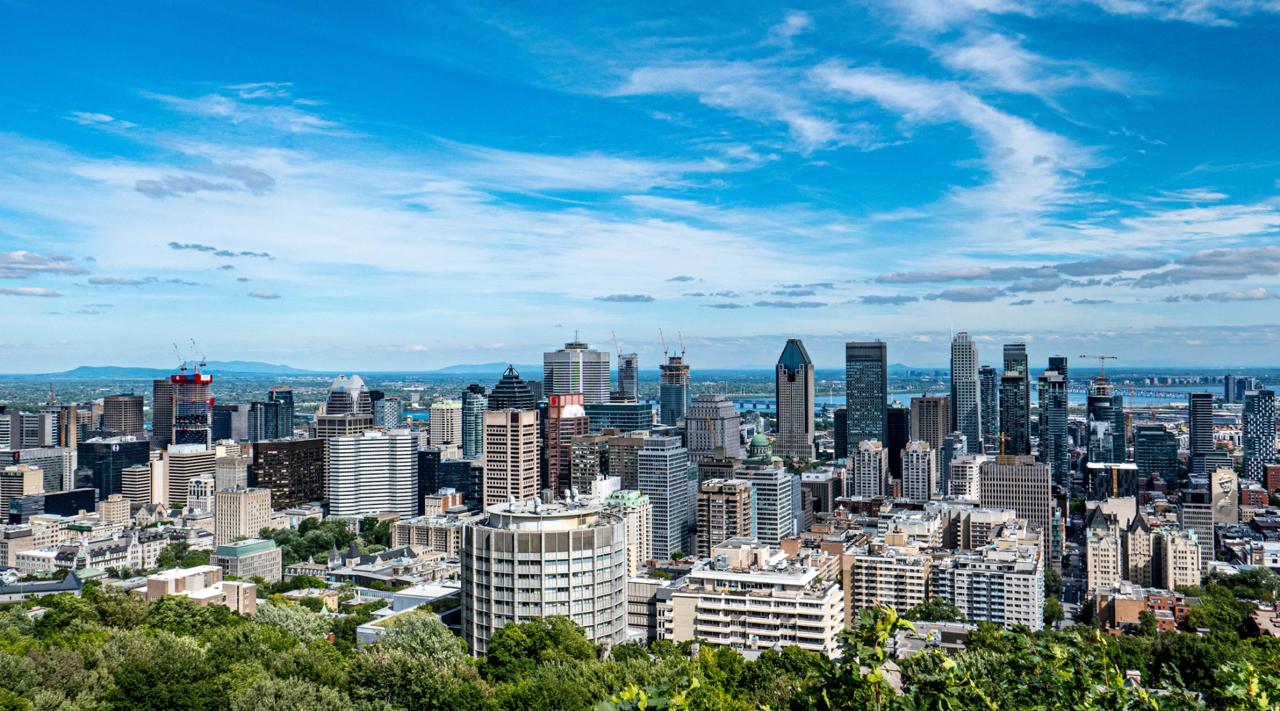
Mount Royal is the hill from which Montreal takes its name. It sits roughly 30 minutes by walk from downtown, rises to 233 metres, and offers a panoramic view of the city. The Kondiaronk Belvedere lookout genuinely surprises people who haven't seen it before. The skyline is wider than expected, the St. Lawrence visible in the distance, and on a clear day, you can see across to the South Shore.
The park was designed by Frederick Law Olmsted, the same landscape architect behind New York's Central Park. It covers 200 hectares and functions as the city's green lung, with jogging trails, cross-country ski routes in winter, picnic areas, and Beaver Lake, where you can rent row boats in summer.
On Sunday afternoons, the area around the George-Étienne Cartier Monument beneath the mountain hosts the Tam-Tams: a free, informal drum circle that has been happening weekly for over 40 years. Part percussion event, part outdoor market, part social gathering. It is one of the more purely Montreal things you can do.
4. The International Jazz Festival

The Festival International de Jazz de Montréal is now in its 46th year, with over 350 shows, 3,000 performers, and more than 2 million guests expected across its run from June 25 to July 4, 2026. Two-thirds of those shows are free.
The outdoor stages at Place des Festivals in the Quartier des Spectacles are open to anyone who turns up. No tickets, no registration. The indoor shows at Théâtre Maisonneuve, Club Soda, and Le Gesù require tickets, and the marquee concerts sell out quickly. The 2026 edition is particularly notable: it marks the centennial year of Miles Davis, John Coltrane, and Tony Bennett, all born in 1926, with dedicated tribute concerts for each.
The Guinness World Records recognises this as the largest jazz festival on the planet. Even if you aren't a dedicated jazz listener, the atmosphere it creates across the neighbourhood with restaurants extending their patios, impromptu performances spilling onto side streets, and the general feeling that the city has decided to spend 10 days celebrating is something worth being around.
If you're planning your summer trip and haven't locked in dates yet, our guide to the best places to travel in July 2026 covers a full range of options useful if your Montreal trip extends or you're building a broader summer itinerary.
5. The Montreal Food Experience
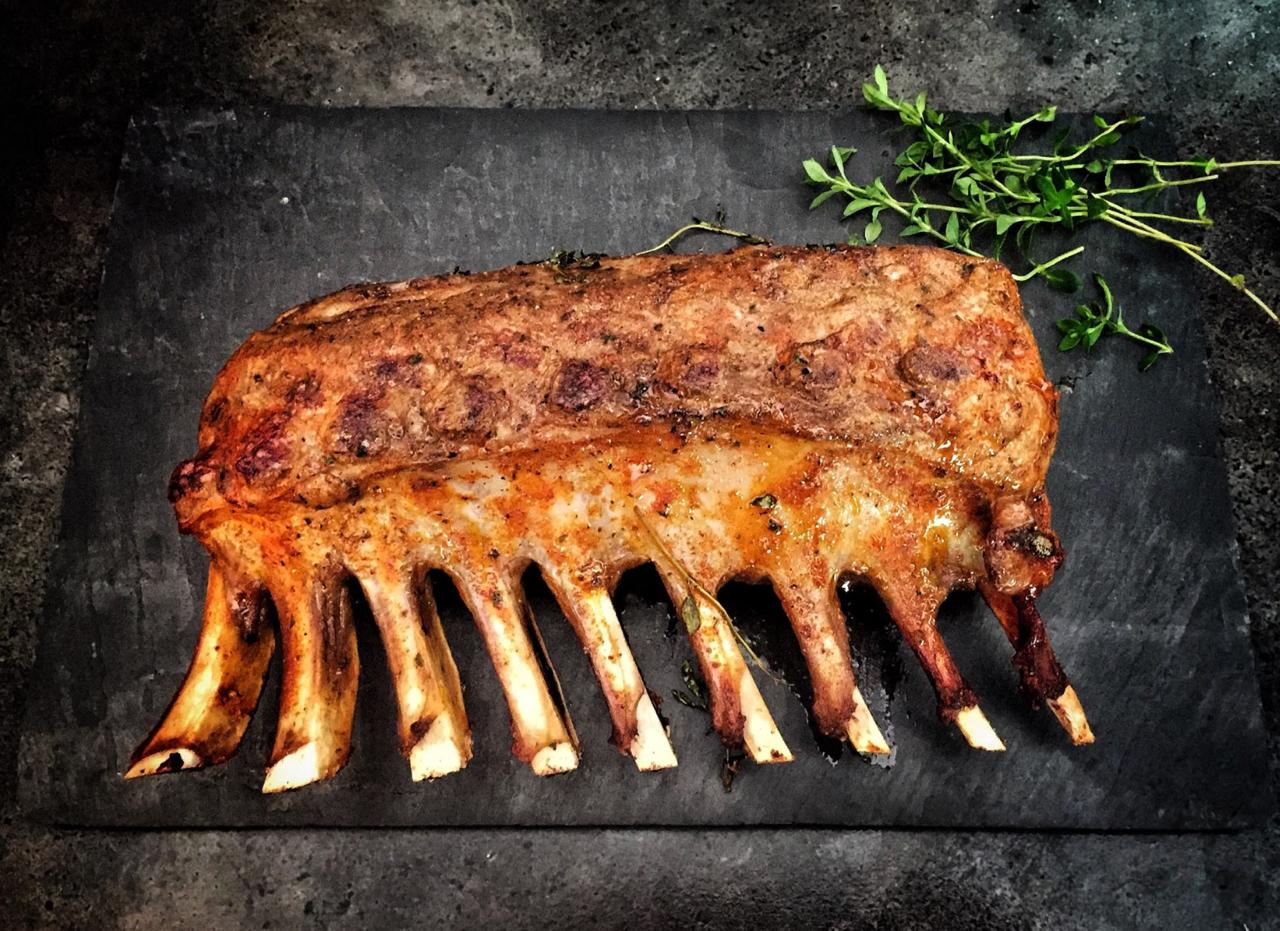
Smoked meat. Not pastrami, not corned beef, something distinct. The long-brined, hickory-smoked brisket served on rye with yellow mustard at Schwartz's Deli on Boulevard Saint-Laurent is the benchmark. Schwartz's has been on this street since 1928 and still operates the same way. Line-ups form early. It is worth it.
Montreal-style bagels. Smaller, denser, and sweeter than New York bagels, baked in a wood-fired oven and boiled in honey water before baking. St-Viateur Bagel in Mile End runs 24 hours a day, and watching the bagels come out of the oven at 2 AM is one of those Montreal experiences that requires no justification.
Poutine. The Québécois original: fries, cheese curds, gravy. The cheese curds need to be fresh enough to squeak when you bite them. La Banquise on Rue Rachel is the local reference point, open around the clock and offering over 30 variations.
On the higher end, Montreal's fine-dining scene has been climbing the international rankings. When the MICHELIN Guide made its Québec debut in 2025, Sabayon, the 14-seat dining room helmed by chef Patrice Demers and sommelier Marie-Josée Beaudoin, was among the first Montreal restaurants to earn a star, a distinction it kept in the 2026 guide. The 2026 edition added two more Montreal stars, for Hoogan et Beaufort and Sushi Nishinokaze, bringing the city's total to five. Reservations at the starred rooms fill up weeks in advance.
The Time Out Market Montréal at the Eaton Centre is worth knowing about for a faster food tour: 13 restaurants, 7 bars, and a curated rotation of Montreal's best chefs under one roof in a 40,000-square-foot space downtown.
What Are the Best Things to Do in Montreal for Free?
Montreal has an unusually strong free-activities offer, particularly in summer. The Jazz Festival's outdoor concerts, the Tam-Tams on Mount Royal, the Cité Mémoire projections in Old Montreal, the murals along The Main (Boulevard Saint-Laurent), and the Quartier des Spectacles programming are all free. Most of the city's parks, waterfront paths, and outdoor markets cost nothing to enter.
6. The Montreal Neighbourhoods Worth Exploring
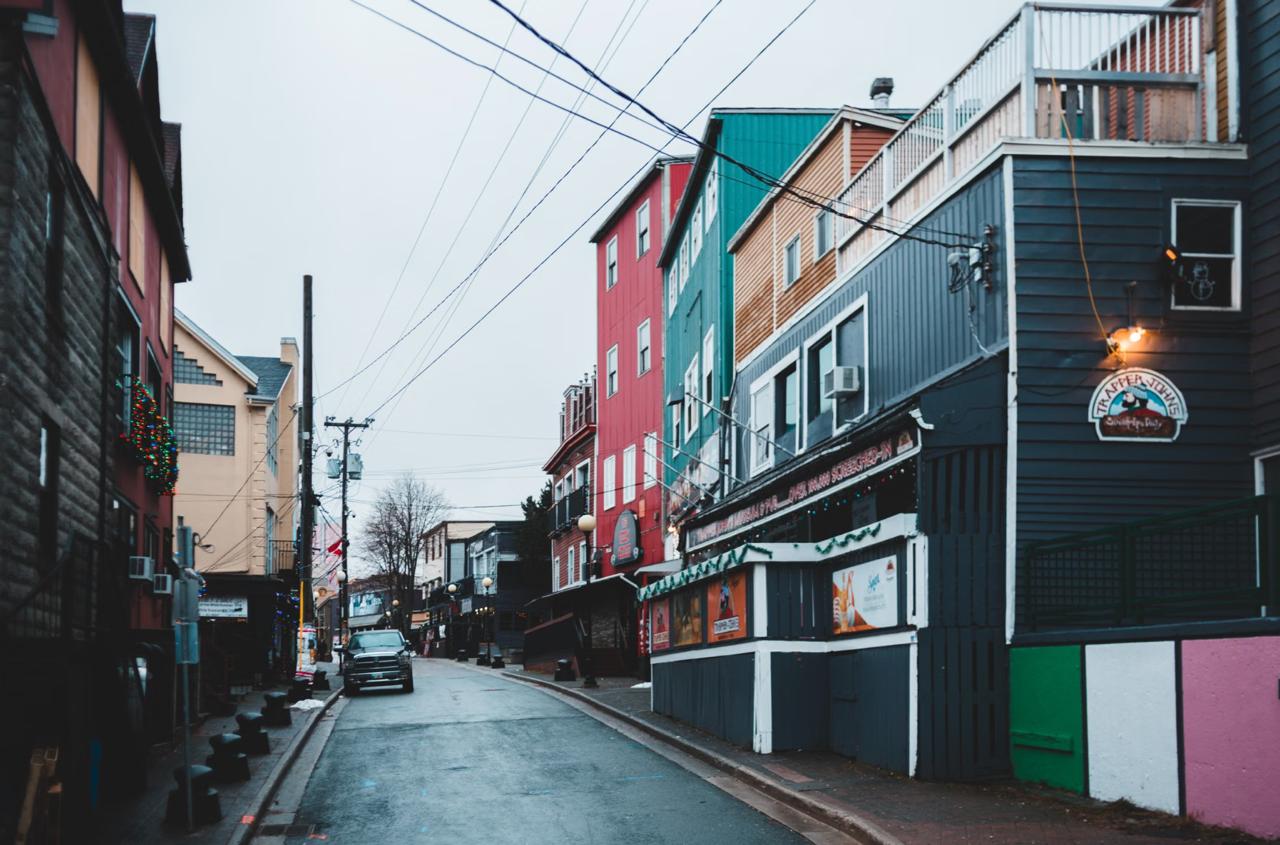
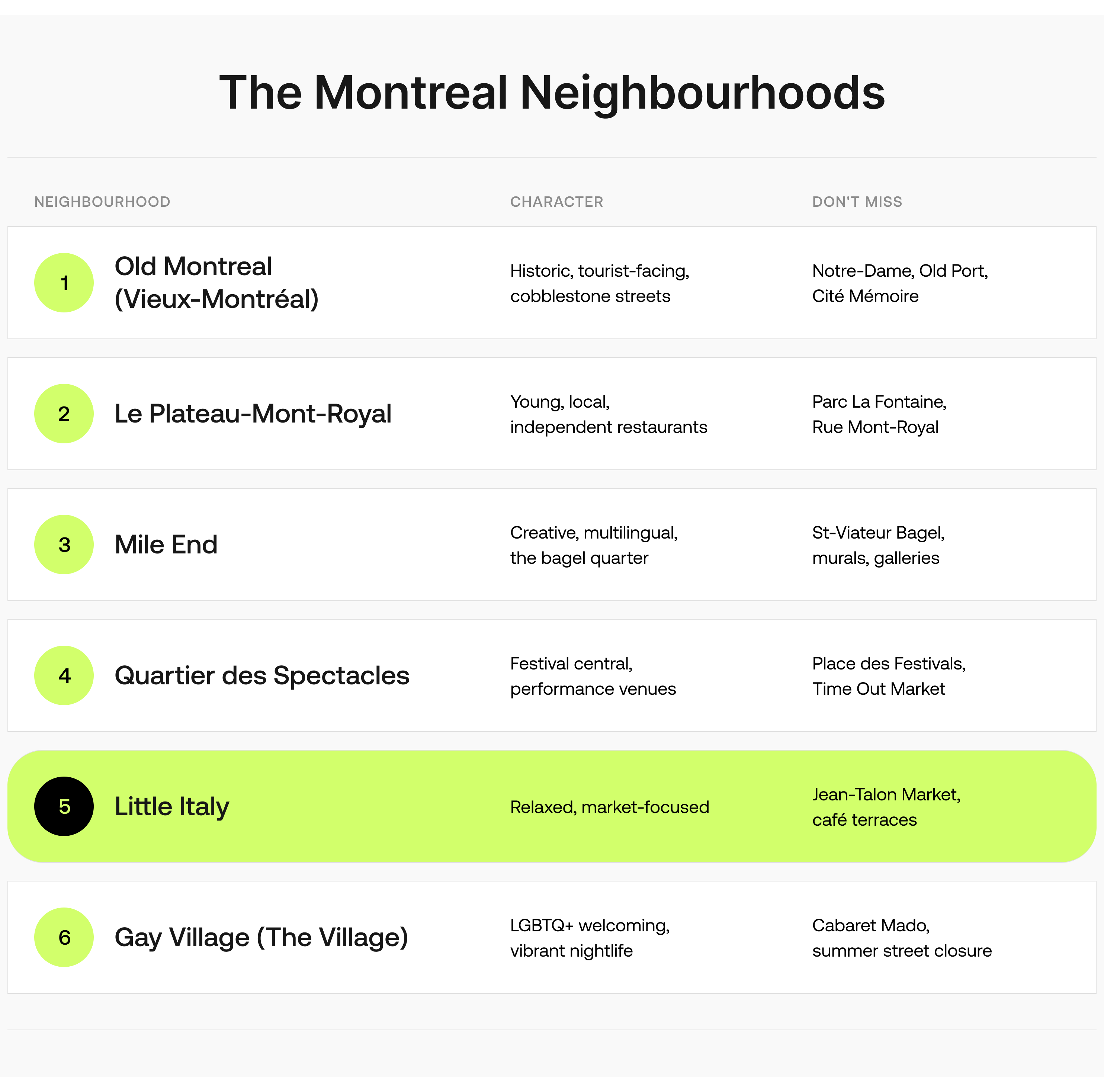
The Plateau and Mile End reward slow walking more than structured sightseeing. Get off the main streets, look up at the spiral staircases that distinguish Montreal's residential architecture, and follow whatever smells good.
7. The Montreal Botanical Garden and Biodome
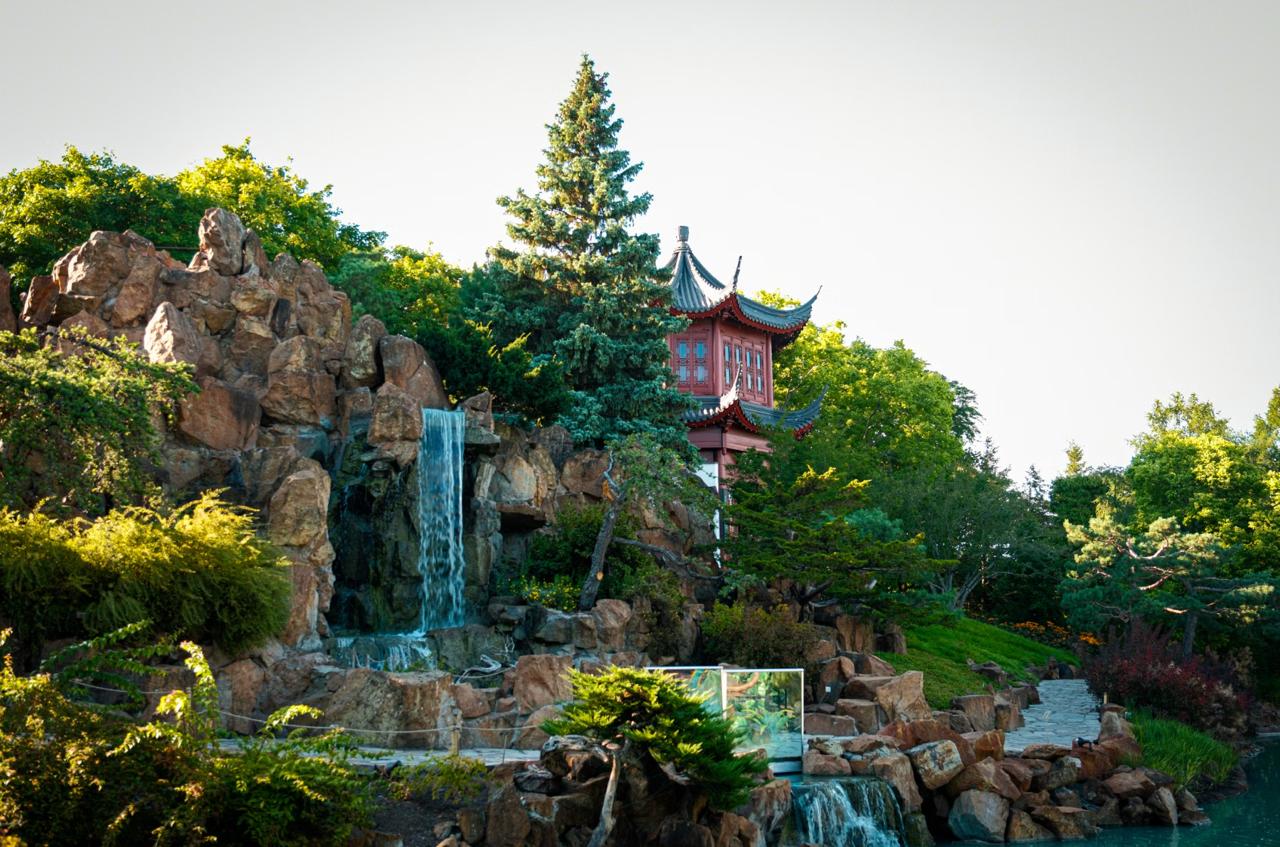
On the eastern side of the city, in the Olympic Park complex, the Montreal Botanical Garden covers 190 hectares and ranks among the largest of its kind in the world. It holds over 22,000 plant species across more than 20 thematic gardens, including a Chinese Garden and a Japanese Garden that are among the finest examples outside Asia. In late summer, the Mosaïcultures displays turn sections of the garden into living sculpture installations.
Next door, the Biodome recreates five ecosystems of the Americas under a single roof, from a tropical rainforest to a sub-Antarctic environment, each with resident animals. It shares the building that housed the velodrome for the 1976 Olympic Games, a fact that adds a layer of history to the visit. The Insectarium and Planetarium are part of the same Espace pour la Vie complex and can be combined on a single multi-attraction pass.
2026 note: the 50th anniversary of the 1976 Montreal Olympics is being marked throughout 2026 with special programming, guided tours, and exhibitions at the Olympic Park and McCord Stewart Museum. If that era of sports history means anything to you, this year's visit has an extra dimension.
8. The Lachine Canal
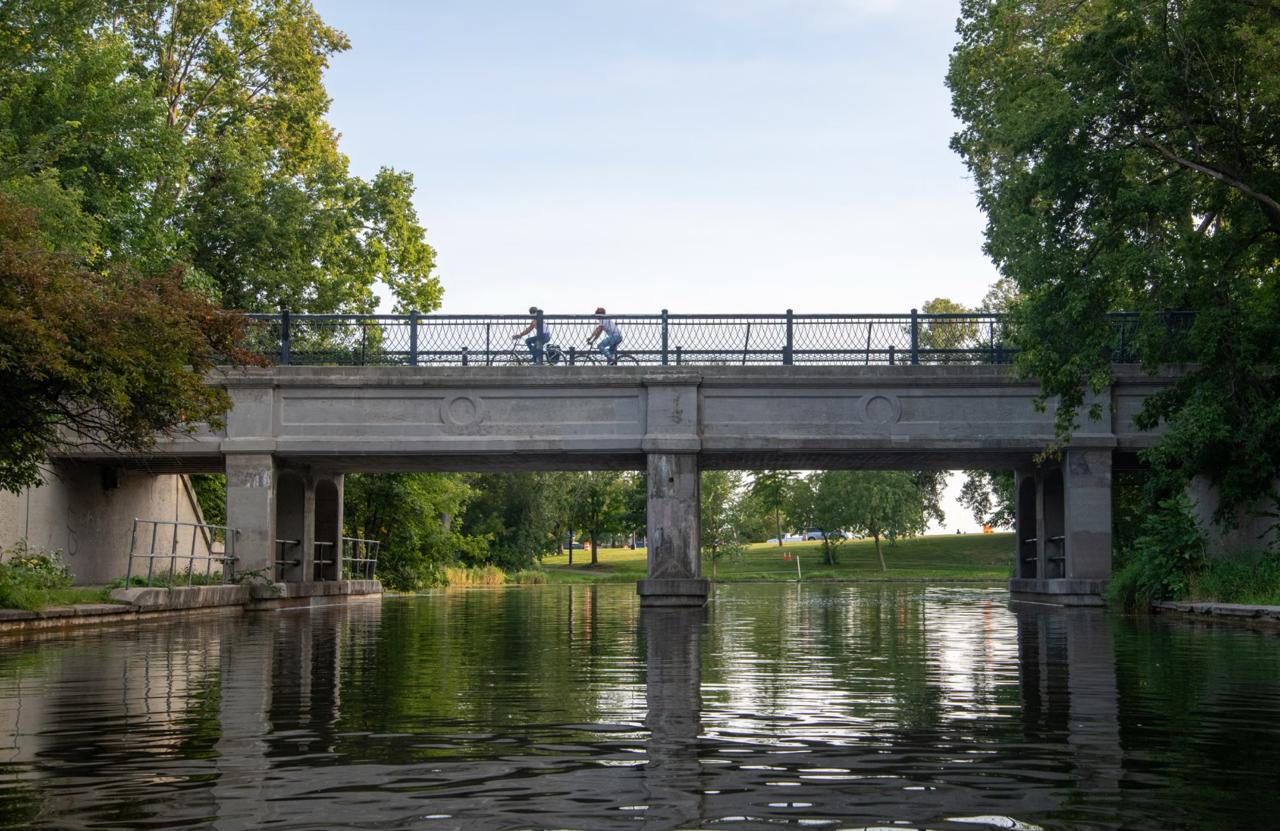
The Lachine Canal is an 11-kilometre waterway that originally opened in 1824 to allow ships to bypass the Lachine Rapids on the St. Lawrence. Today it runs from the Old Port westward through the city's former industrial district, and the cycling path that runs alongside it is one of the best urban rides in Canada.
The route connects the Old Port to Atwater Market (a smaller, year-round covered market excellent for picnic supplies) and continues through neighbourhoods that show a different, less tourist-facing side of the city. Bikes are available via BIXI, Montreal's bike-share system, which operates from mid-April through November. A single 45-minute BIXI ride costs CAD $1.25 plus a short-trip fee; a day pass works out to around CAD $15 and covers unlimited 45-minute rides.
9. Cité Mémoire
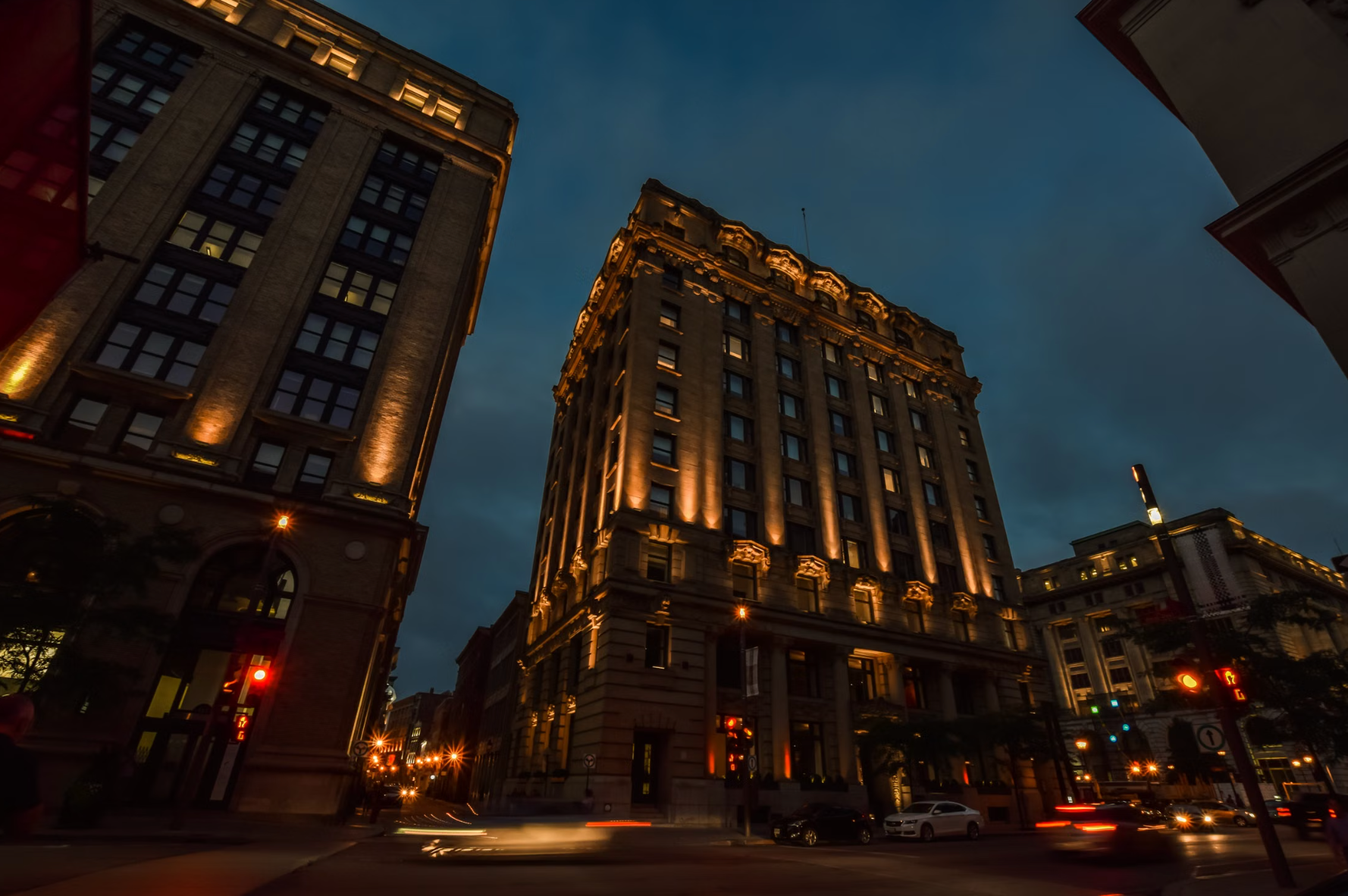
Cité Mémoire is an outdoor multimedia art installation that projects 50 short films onto the walls, streets, and facades of Old Montreal after dark. Created by Michel Lemieux and Victor Pilon, the films tell stories drawn from the city's 380-year history: a soldier, a merchant, an immigrant, a child using building-scale projections, augmented reality elements, and a companion app that guides you through the route.
It is completely free. It runs from dusk. The full circuit takes around 90 minutes, though most people move at their own pace and stop at what catches their eye. It is one of the genuinely distinctive things Montreal offers that you won't find a direct equivalent of elsewhere.
10. Jean-Talon Market
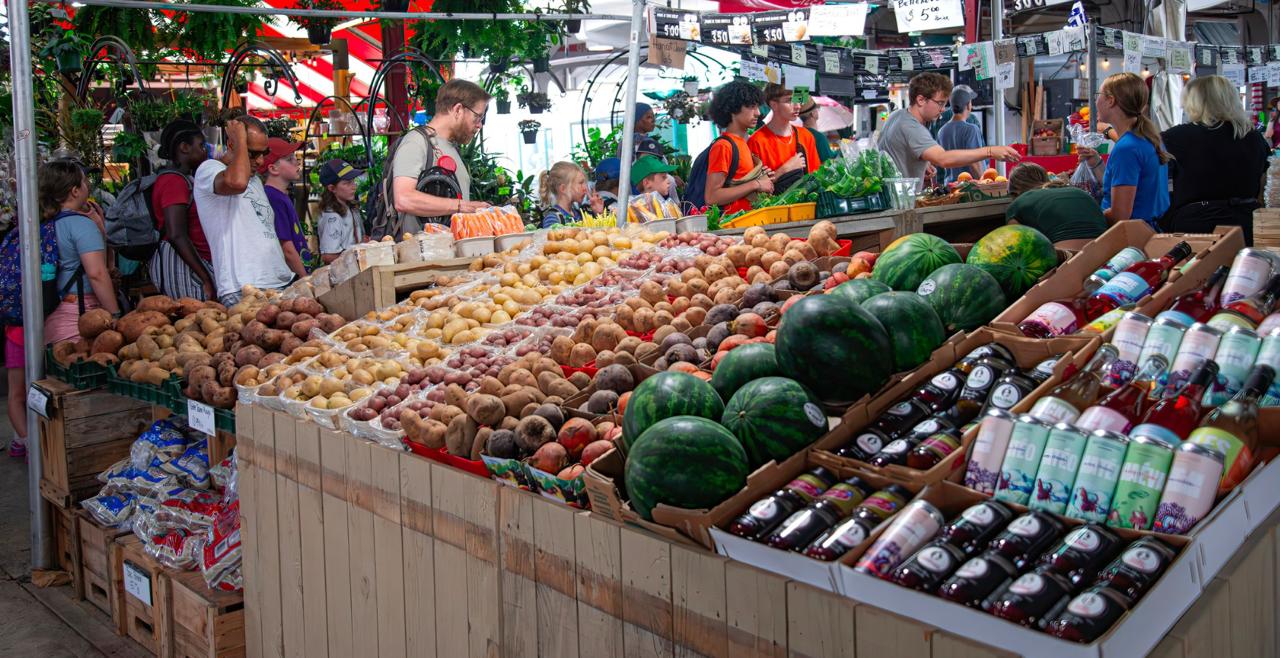
Jean-Talon Market's stalls are filled with artisanal Québécois food products as well as fresh produce, and it's open year-round. It opened in 1934 and remains the largest public market in Montréal, drawing both locals and visitors into Little Italy for the same experience: a covered, permanent market with vendors who know their product and aren't in a hurry.
Book your next hotel for up to 30% less
In peak summer, the stalls pile high with heritage tomatoes, Quebec strawberries, fresh-pressed cider, artisan cheese, maple products, and things like lavender from local farms. The market is at its fullest between June and October. Get there before noon on a Saturday if you want elbow room.
How Many Days Do You Need in Montreal?
Three days can cover the essentials. Old Montreal and the waterfront on day one, the Plateau, Mile End, and Mount Royal on day two, and the Olympic Park complex or a day focused on markets and food on day three. Four to five days allow you to go deeper into specific neighbourhoods, catch a Jazz Festival or Cirque performance, or add a day trip to the Eastern Townships or Laurentian Mountains.
Is Montreal Safe for Tourists?
Montreal is consistently rated one of the safer large cities in North America for tourists. Standard precautions apply: watch your belongings in crowded areas, be aware of your surroundings at night in unfamiliar neighbourhoods, but the city has no tourist-specific safety concerns that would warrant changing your plans.
Getting Around Montreal
The STM metro is fast, reliable, and covers the tourist-facing areas of the city well. The four lines connect Old Montreal, downtown, the Plateau, Mile End (via Laurier or Rosemont station), Little Italy, and the Olympic Park complex. A single fare is CAD $3.75; a day pass is CAD $11.
BIXI bike-share is the other effective option for the central city, particularly for the Lachine Canal route and cross-neighbourhood travel. Taxis and ride-hailing are available throughout. Uber operates in Montreal.
How to Book Your Montreal Trip
Travellers are now booking their trips about 50 days in advance, compared to roughly 90 days in previous years, which means availability at quality hotels, particularly during the Jazz Festival (late June), F1 Grand Prix (May), and Just for Laughs (July), gets tight faster than you might expect. The months of June and July, in particular, regularly push hotel occupancy above 80% across the city.
You can book Montreal hotels and flights on Epic using Visa, Mastercard, Apple Pay, Google Pay or 200+ cryptocurrencies, 30% lower than Booking.com. If you're a frequent traveller or planning multiple trips this year, that's enough savings for a fourth trip. Sign up for early access and claim $25 off your first booking.
If you're travelling in peak summer and want to see where else earns the season beyond Canada, our roundup of the best places to travel in August 2026 runs through ten destinations where high summer is the whole point, from the peak of Kenya's Great Migration in the Masai Mara and the briefly navigable Faroe Islands to the Albanian Riviera's beaches discounted Croatia's prices.
FAQs
1. What is the best month to visit Montreal?
June and July are peak season: the weather is warm, the festival calendar is fullest, and the city's outdoor culture is at its best. The Jazz Festival runs from late June to early July. September and early October offer good weather, fewer crowds and lower hotel prices. Winter is genuinely cold but has its own culture, anchored by Igloofest, the outdoor electronic music festival held on the waterfront in January and February.
2. What food is Montreal famous for?
Montreal is most strongly associated with three things: poutine (fries, fresh cheese curds, gravy), smoked meat (best at Schwartz's on Boulevard Saint-Laurent), and the Montreal-style bagel (smaller, sweeter, and denser than New York bagels, baked in a wood-fired oven). The city also has a strong French fine-dining tradition and, since the Michelin Guide's Québec debut in 2025, several Michelin-starred restaurants.
3. What are the best things to do in Montreal with kids?
The Biodome, Insectarium, and Botanical Garden in the Olympic Park complex are the strongest family options, with a half-day minimum each. La Ronde, the amusement park on Île Sainte-Hélène, is the largest in Quebec and well-suited for older children. Cité Mémoire in Old Montreal work for families after dark. The free outdoor programming at the Jazz Festival and Cirque Montréal in July is genuinely all-ages.
4. What is the number one tourist attraction in Montreal?
By visitor count, the Old Port and Notre-Dame Basilica consistently lead. Notre-Dame was visited by over 1.2 million people annually before COVID and has recovered steadily since. The basilica's AURA light show has extended its draw into the evening hours with a 45-minute immersive experience projected onto the interior architecture.
5. Is Montreal worth visiting?
Yes, and it tends to exceed expectations. Montreal drew 11.8 million visitors in 2025, a 7.3% increase over 2024, with tourism spending steady at $5.8 billion CAD. The combination of European-influenced architecture, a strong food culture, free summer festivals, and genuine neighbourhood character gives the city a texture that pure tourist infrastructure alone does not create. The language duality of French and English coexists throughout, adding a dynamic you don't get in most Canadian cities.

Mithra Ghosh is a Dubai-based content writer and SEO copywriter with 2+ years of experience crafting search-optimised content across crypto, Web3, and digital finance. She combines strong editorial instincts with a deep understanding of blockchain ecosystems and on-chain trends.
At Epic, she writes about the growing world of crypto-native travel helping readers understand how holding and spending digital assets can unlock smarter, cheaper ways to see the world.
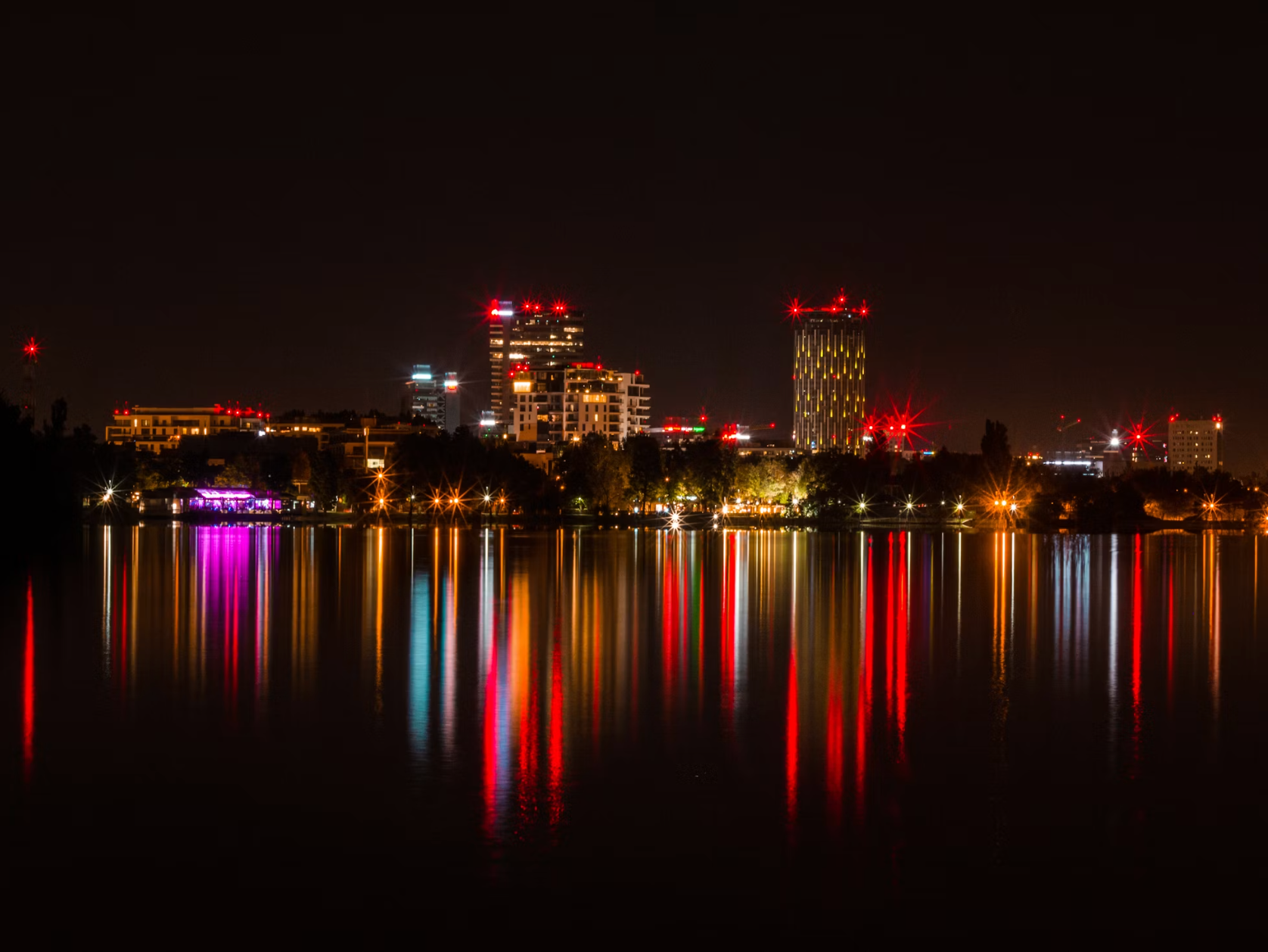
Found a destination you like? Book it for up to 30% less.

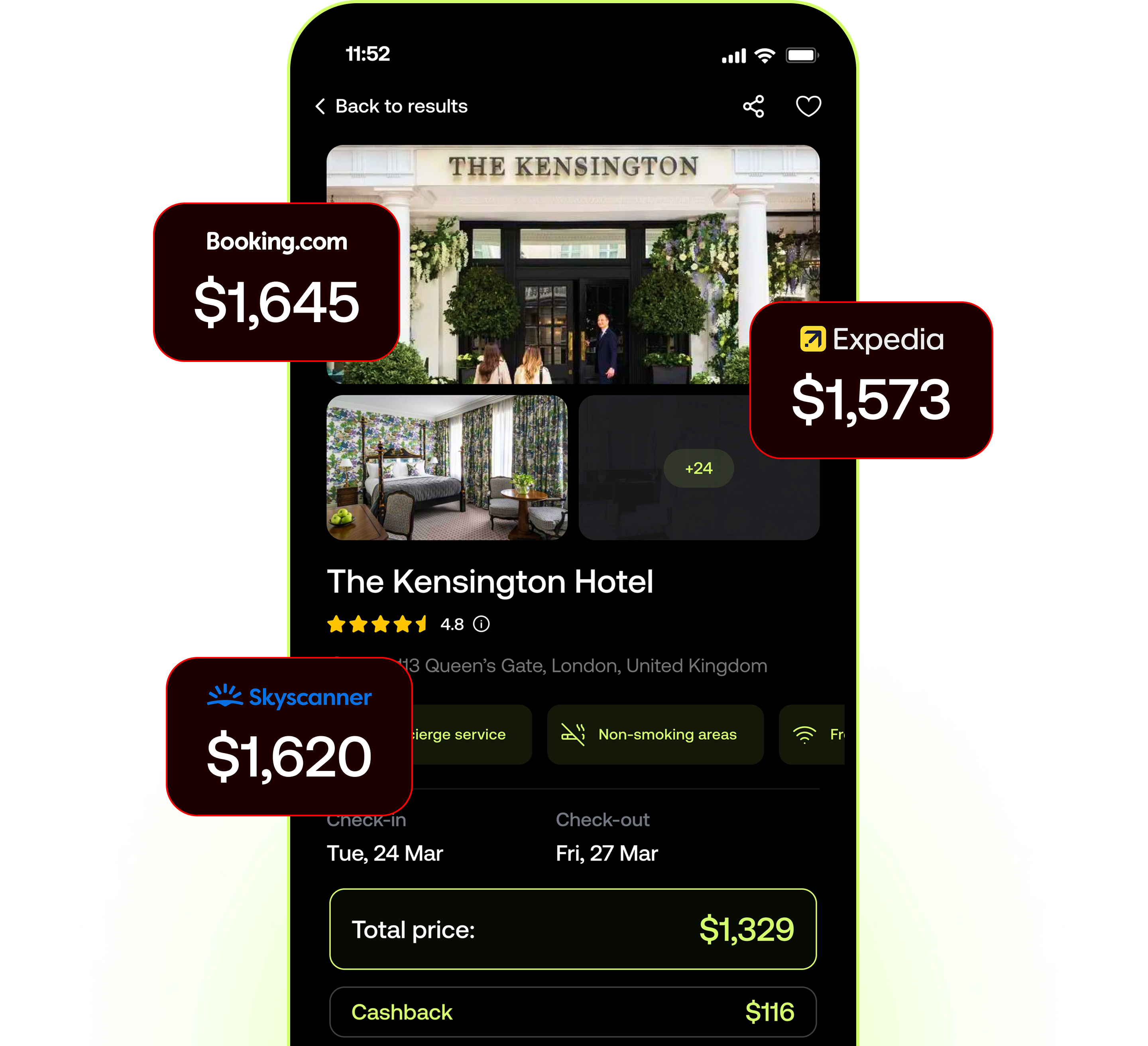
Found a destination you like? Book it for up to 30% less.