Content
Virtuals Protocol (VIRTUAL) is a crypto coin that powers a decentralized marketplace for AI agents, where creators deploy monetized AI personas that interact with users, earn revenue in VIRTUAL, and execute automatic buyback-and-burn mechanics for their community tokens. On the platform, every new AI agent token must pair with VIRTUAL in liquidity pools, making VIRTUAL the routing layer for acquiring and trading AI agent tokens.
As of July 2026, VIRTUAL trades around $0.60 with a market cap of about $396 million, ranking at #87 among cryptocurrencies according to CoinMarketCap. Beyond holding, Virtuals Protocol (VIRTUAL) has several real-world use cases including booking discounted travel through CoinBooking, providing liquidity for AI agent tokens, routing trades through VIRTUAL to acquire agents, paying AI agents for inference services, and earning revenue streams when AI agents burn community tokens. Users can also use VIRTUAL to book discounted flights and hotels on Epic.
See how much you
could save with $VIRTUAL
Answer 2 questions to get your personalized
savings estimate.
Question 1 of 2
Where do you want?
Question 2 of 2
How many nights?
Your result
Get similar deals when we go live.
Get $25 off your first trip.
Key Takeaways
- Virtuals Protocol is the infrastructure layer for co-owned, monetized AI agents that earn revenue directly from user interactions, with automatic buyback-and-burn tied to agent earnings.
- VIRTUAL is the required liquidity pairing for every new AI agent token, making it the settlement and routing token across the entire ecosystem.
- The network was founded by Jansen Teng (CEO) and Weekee Tiew in October 2021 and officially launched on the Base network in October 2024.
- The protocol has grown to support autonomous AI agents across multiple blockchains including Ethereum, Base, Solana, and Ronin.
- AI agents use earned VIRTUAL revenue to execute automatic buyback-and-burn mechanics for their respective community tokens, creating a deflationary pressure tied to network usage.
- Book hotels and flights with VIRTUAL on Epic at up to 30% below Booking.com prices. Get $25 off your first booking.
VIRTUAL at a Glance (July 2026)
What Is Virtuals Protocol?
Virtuals Protocol is a decentralized marketplace for AI agents. Unlike traditional AI services where a company owns and controls the AI, Virtuals allows anyone to deploy an AI persona that is co-owned by its community, runs autonomously, and earns revenue directly from user interactions. These agents are not static models; they are interactive entities that accumulate VIRTUAL tokens as payment for their services and reinvest those earnings into their own token economies.
The problem it targets is that AI creators have limited ways to monetize their work, and users have no ownership stake in the AI systems they use. Virtuals connects the two. A creator builds an AI agent, launches a community token, and deploys it on Virtuals. Users pay VIRTUAL directly to the agent for each interaction. The agent's earned revenue is then used to buy back and burn its community token, which benefits all community holders. VIRTUAL itself becomes the common settlement layer across all of these independent agent economies.
The protocol was founded in October 2021 by Jansen Teng (Co-Founder & CEO) and Weekee Tiew (Co-Founder), evolved from Path DAO, and officially launched on Ethereum's Base L2 network in October 2024. It has since expanded to multiple blockchains including Solana, Ronin, and Ethereum mainnet, with planned expansions to BNB Chain and XLayer.
How Does Virtuals Protocol Work?
Virtuals Protocol operates as a hub for AI agent creation, deployment, and monetization. The mechanics work in four steps:
- AI Agent Creation and Deployment A creator builds an AI persona and deploys it on Virtuals Protocol. At launch, the agent's community token must be paired with VIRTUAL in a decentralized exchange liquidity pool. This ensures that all agent tokens flow through VIRTUAL as the routing layer. Agents start with a 100 VIRTUAL token fee and utilize bonding curve mechanics for price discovery before graduating to permanent liquidity pools at 42,000 VIRTUAL.
- User Interactions and Per-Inference Payments Users interact with AI agents through the platform and pay VIRTUAL tokens directly to the agent for each service whether that's a conversation, prediction, analysis, or other inference. The VIRTUAL goes into the agent's treasury.
- Revenue Streams and Buyback-and-Burn The AI agent uses its accumulated VIRTUAL revenue to buy back and burn its own community token automatically. This reduces the supply of the agent's token, benefiting all holders. VIRTUAL is consumed in this process, creating deflationary pressure on the VIRTUAL supply as the ecosystem scales.
- Liquidity Pairing and Token Routing Users who want to acquire specific AI agent tokens must swap through VIRTUAL in liquidity pools. A trader might exchange USDC or ETH for VIRTUAL, then swap VIRTUAL for the agent token. This dual-pairing requirement means every new agent token requires VIRTUAL liquidity, cementing VIRTUAL's role as the ecosystem's settlement asset.
VIRTUAL is the fuel for all of it. It is the required pairing token for AI agent liquidity, the medium of exchange for inference payments, and the mechanism by which agents burn community tokens. The tokenomics are tied directly to ecosystem usage: the more agents earn and the more they burn, the more VIRTUAL circulates through the economy.
Top 5 Ways to Use Virtuals Crypto Coin in 2026
1. Book Discounted Hotels and Flights with VIRTUAL on Epic
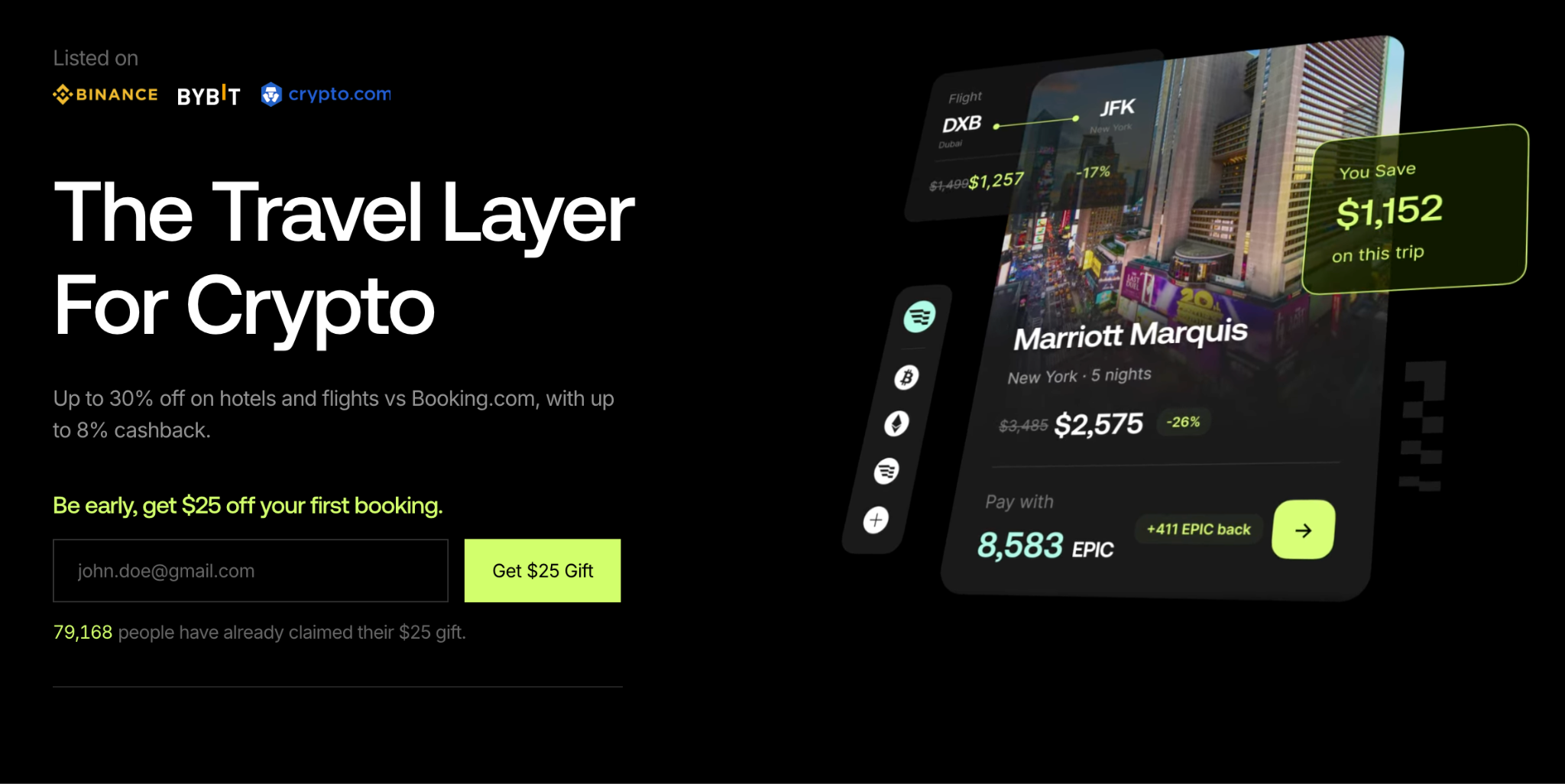
One of the easiest and most practical ways to use your VIRTUAL tokens in 2026 is to book travel through Epic. As a Web3 travel booking platform, Epic accepts VIRTUAL along with more than 200 cryptocurrencies, allowing you to pay for trips directly with your crypto instead of converting it into fiat first.
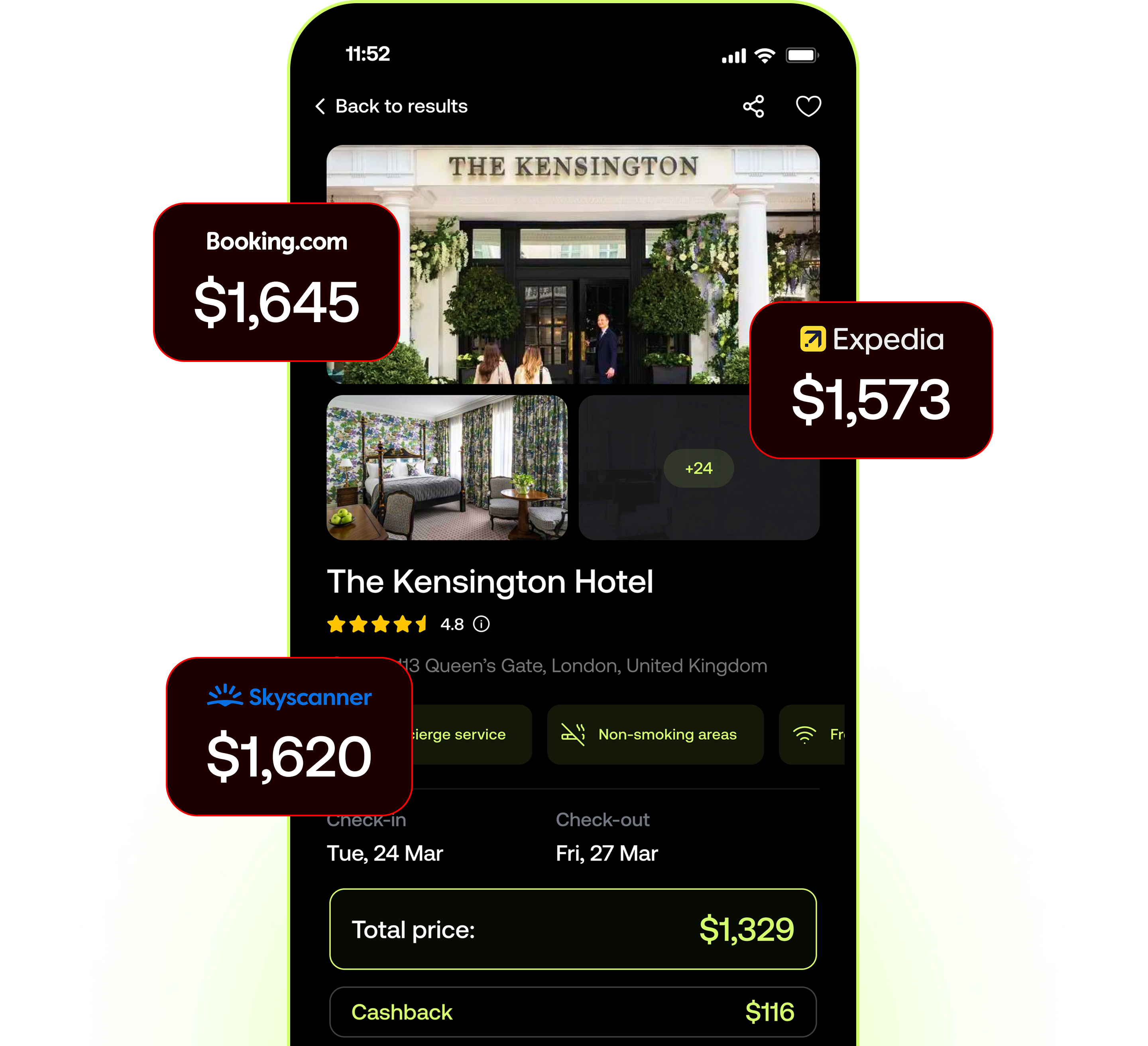
Epic has access to travel options in more than 190 countries, with over 2 million hotels, resorts, and flight options available worldwide. While other crypto-native travel platforms attach a 10-15% crypto premium, prices on Epic are often up to 30% lower than Booking.com and Expedia.
Book your next hotel for up to 30% less
New users also receive $25 off their first hotel or flight booking.
Whether you're planning a short weekend getaway or an international vacation, using VIRTUAL on Epic is a simple way to turn your crypto into real-world travel while saving money on your bookings.
2. Provide Liquidity for AI Agent Tokens
Every new AI agent token created on Virtuals Protocol must establish liquidity against VIRTUAL in a decentralized exchange. If you provide VIRTUAL liquidity alongside agent tokens, you earn a portion of trading fees. As more agents launch and scale, liquidity demand for VIRTUAL increases, making it a structural sink for the token.
3. Route Trades to Acquire AI Agent Tokens
To buy most AI agent tokens, you must swap through VIRTUAL. Users exchange USDC, ETH, or other tokens for VIRTUAL, then VIRTUAL for the specific agent token they want. This routing requirement ensures every agent token acquisition burns some VIRTUAL or routes it through the network, cementing VIRTUAL's role as the ecosystem's settlement layer.
4. Pay AI Agents Directly for Inference Services
Users pay VIRTUAL directly to AI agents each time they use them. Whether you're paying an agent for analysis, conversation, or predictions, the payment goes to the agent's treasury in VIRTUAL. This direct pay-per-use model means VIRTUAL is the native currency for accessing the entire ecosystem of monetized AI personas.
5. Trade VIRTUAL
VIRTUAL is listed on major exchanges including Binance, Bitget, BitMart, BingX, eToro, Gate.io, and Bybit. It trades against USDT and stablecoin pairs with daily volume typically between $30 million and $60 million. Traders treat VIRTUAL as the foundational layer of the AI agent economy, so it tends to move with the broader sentiment around AI-powered services and creator monetization narratives.
Is VIRTUAL a Good Investment?
Whether VIRTUAL is a good investment depends on your risk tolerance and your view of decentralized AI agent platforms as a category. The bull case centers on structural demand: every new AI agent that launches requires VIRTUAL liquidity, every user interaction requires VIRTUAL payment, and every buyback-and-burn requires VIRTUAL consumption. As the ecosystem scales, demand for VIRTUAL grows mechanically.
The risks are concrete. VIRTUAL trades roughly 88% below its all-time high of $5.07 (January 2025). The AI agent narrative is crowded, with competitors like Render and io.net competing for similar audiences. The platform's adoption remains early, and it is unclear how much developer demand will materialize for decentralized AI agent deployment versus centralized alternatives. Security risks around autonomous AI execution and the sustainability of per-inference payment models also remain uncertain.
This is not financial advice. Crypto is volatile. Always do your own research and never invest more than you can afford to lose.
FAQs
1. Is Virtuals Protocol a good investment?
VIRTUAL has structural demand as the required liquidity and routing token for an AI agent ecosystem, but it remains a volatile small-cap coin trading far below its all-time high. Treat it as a high-risk asset and do your own research before buying.
2. What is Virtuals Protocol?
Virtuals Protocol is a decentralized marketplace for monetized AI agents. AI creators deploy agents that earn VIRTUAL from user interactions and use that revenue to buy back and burn their community tokens. VIRTUAL is the required liquidity pairing and settlement layer for the entire ecosystem.
3. Who founded Virtuals Protocol?
Virtuals Protocol was founded in October 2021 by Jansen Teng (Co-Founder & CEO) and Weekee Tiew (Co-Founder). The protocol evolved from Path DAO and officially launched on the Base network in October 2024. The team includes Khoon Kheng Teh (Chief Operating Officer) and others.
4. What are AI agents on Virtuals Protocol?
AI agents are autonomous, co-owned AI personas deployed by creators on Virtuals Protocol. They interact with users, earn VIRTUAL as payment, and use that revenue to execute automatic buyback-and-burn mechanics for their community tokens. Each agent has its own token and treasury. Agents launch with a 100 VIRTUAL fee and graduate to permanent liquidity pools at 42,000 VIRTUAL.
5. Why is VIRTUAL required for liquidity?
Every new AI agent token on Virtuals Protocol must establish liquidity against VIRTUAL in a decentralized exchange pool. This makes VIRTUAL the common routing layer across all agent tokens. Users must swap through VIRTUAL to acquire agent tokens, and agents must use VIRTUAL to fund their buyback-and-burn mechanics.
6. Can I earn VIRTUAL by providing liquidity?
Yes. If you provide VIRTUAL and AI agent token liquidity to decentralized exchanges, you earn a portion of trading fees. As more agents launch and adoption grows, liquidity demand for VIRTUAL increases.
7. Where can you buy VIRTUAL?
VIRTUAL is available on major exchanges including Binance, Bitget, BitMart, Gate.io and Bybit. It trades against USDT and other stablecoin pairs.


Mithra Ghosh is a Dubai-based content writer and SEO copywriter with 2+ years of experience crafting search-optimised content across crypto, Web3, and digital finance. She combines strong editorial instincts with a deep understanding of blockchain ecosystems and on-chain trends.
At Epic, she writes about the growing world of crypto-native travel helping readers understand how holding and spending digital assets can unlock smarter, cheaper ways to see the world.

Found a hotel you like? Book it for up to 30% less

Found a hotel you like? Book it for up to 30% less