Content
UPCX (UPC) is the native crypto coin of a Layer 1 blockchain built specifically for payments and financial services rather than general-purpose computing. The network runs on a sharded architecture with a central Beacon Chain, uses a hybrid Delegated Proof of Stake and Byzantine Fault Tolerance consensus, and achieves settlement finality of one second, according to official UPCX documentation.
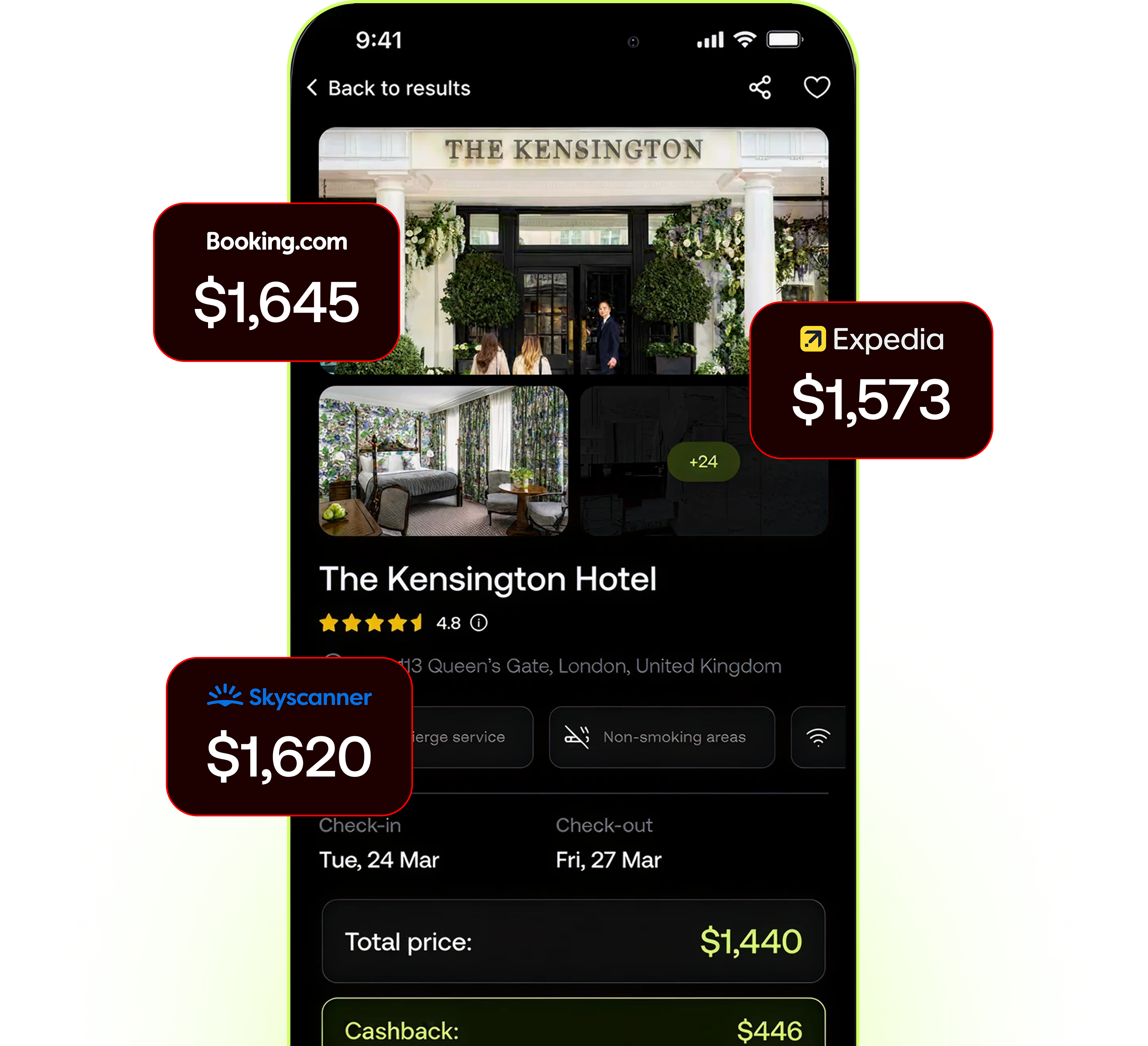
At the time of writing (15 August 2026), UPC trades near $0.1505, with a market capitalisation of roughly $20.16 million and a rank of #614 on CoinMarketCap. Beyond speculation, UPC has practical utility across booking travel with Epic at up to 30% savings, paying network fees, staking to Witnesses, governance, and collateralising stablecoins on the UPCX chain. For travellers who hold UPC, you can book hotels and flights directly with UPC on Epic and get $25 off your first booking.
See how much you
could save with $UPC
Answer 2 questions to get your personalized
savings estimate.
Question 1 of 2
Where do you want?
Question 2 of 2
How many nights?
Your result
Get similar deals when we go live.
Get $25 off your first trip.
Key Takeaways
- UPCX is an open-source payment blockchain developed by UPCX-Platforms Pte. Ltd., a Singapore-registered company with Japanese roots. Its mainnet launched in October 2024, and the UPCX Bridge connecting the mainnet to Ethereum has been running since 18 January 2025.
- UPC pays network transaction fees, secures the chain through delegation to Witnesses, carries governance weight, and serves as collateral for Market Pegged Assets, according to the official whitepaper.
- Each UPCX shard is managed by a committee of 7 Witnesses, elected every 24 hours by UPC holders who stake their coins.
- UPC has been listed for spot trading on BitTrade, a Japanese exchange licensed by the Financial Services Agency, since 27 March 2025.
- In April 2025, an attacker compromised a UPCX management address, upgraded the ProxyAdmin contract and withdrew 18.4 million UPC, valued at approximately $70 million at the time. UPCX suspended deposits and withdrawals and stated that user funds were unaffected.
- According to CoinMarketCap, UPC reached an all-time high of $5.37 on 24 March 2025 and an all-time low of $0.1445 on 7 August 2026. As of 15 August 2026, the coin trades 97.2% below that peak, with 17.2% of maximum supply in circulation.
- Book hotels and flights with $UPC on Epic, at up to 30% below Booking.com prices. Get $25 off your first booking.
UPC at a Glance (August 2026)
What Is UPCX (UPC) Coin?
UPCX is an open-source payment system built on a purpose-designed high-speed blockchain, according to the official whitepaper. UPC is its native asset, responsible for securing the network, powering smart contracts, and paying transaction fees. The ticker stands for Coordinated Universal Payment, a name the whitepaper says draws on Coordinated Universal Time.
The project is developed by UPCX-Platforms Pte. Ltd., registered at Marina Bay Financial Centre in Singapore, with core blockchain research supplied by Paycle Inc., a Fukuoka-based technology company founded in 2018. The official team page lists four co-founders: Makoto Nakano, who serves as CEO and CFO; Yutaka Imaizumi; Joerg Alexander Weisshaar, who serves as CTO; and Dr Jason Nye, who serves as CSO. Koki Sato is Chief Marketing Officer. Nakano and Weisshaar delivered keynotes at WebX 2025 in Tokyo, where UPCX served as title sponsor.
The problem the whitepaper identifies is that general-purpose blockchains were not designed for retail payments. Transaction fees fluctuate, finality can take minutes, and the user experience assumes technical knowledge that most shoppers do not have. UPCX addresses this with a payments-specific chain: named accounts that work like email addresses instead of hexadecimal strings, QR code and NFC payments, scheduled and recurring payments, non-custodial escrow, multi-signature permissions, and offline payment capability.
UPC exists in two forms. The original token is an ERC-20 on Ethereum at contract address 0x487d62468282Bd04ddf976631C23128A425555EE, with a total issued amount of 780,000,000 tokens. The native coin lives on the UPCX mainnet, which UPCX states launched in October 2024. UPCX Bridge moves UPC between the two chains in both directions.
How Does UPCX (UPC) Coin Work?
According to official UPCX documentation, the network uses a shard-based architecture with a central Beacon Chain that maintains compatibility between shards. Each shard processes transactions independently, which distributes throughput across the network rather than concentrating it in a single chain. The underlying codebase is a version of Cryptonomex's Graphene blockchain technology, specialised by UPCX for payments and finance.
Consensus combines Delegated Proof of Stake with Byzantine Fault Tolerance. Witnesses are elected through the DPoS process to validate transactions and add blocks, while BFT allows the network to reach consensus even when some Witnesses are faulty or malicious. Every shard is managed by a committee of 7 Witnesses, elected every 24 hours. UPC holders stake their coins to vote for Witnesses, and Witnesses earn compensation for producing blocks and securing the network.
On performance, the official consensus algorithm page states that the hybrid design delivers high throughput and a block confirmation time, or settlement finality, of 1 second. The UPCX homepage puts a figure on that throughput, citing 100,000 TPS and capacity to handle twice the traffic of credit card networks. The 1-second finality figure is stated in the whitepaper itself; the 100,000 TPS figure appears as a headline claim on the site rather than in a published benchmark, so treat it as a project target rather than a measured result on live mainnet.
Smart contracts run on the UPCX Virtual Machine. Developers can write local contracts that operate within a single shard or global contracts synchronised across all shards, and can test them in the UVM Runner before deployment without spending assets. The available SDK is UPCX-JS for JavaScript.
Fee mechanics carry a deflationary element. Network fees are allocated to block generation rewards, a Fee Pool, and referral fees where applicable. Fees can also be paid in Market Pegged Assets, the network's collateral-backed stablecoins. In that specific case, and only in that case, UPC of equivalent value is moved from the Fee Pool to the Reservation Pool and burned, which the whitepaper describes as a mechanism for maintaining UPC value.
Top 5 Ways to Use UPCX (UPC) Coin
1. Book Hotels and Flights with UPC on Epic

The easiest and most direct way to use UPC is on Epic, where you do not need to cash out to fiat first, and you do not pay premium markups. Book hotels and flights directly with UPC on Epic at up to 30% below Booking.com. While most crypto travel platforms charge a 10 to 15% markup at checkout, Epic charges none; every UPC you spend goes toward your booking, not fees. Join the early access list now and get $25 off your first booking.
Book your next hotel for up to 30% less
2. Pay Network Transaction Fees
According to the official whitepaper, users and protocol operators pay a network fee on every UPCX transaction, and UPC is the base asset for those fees. This is the coin's primary structural demand: any activity on the chain, from a simple transfer to a smart contract call, consumes UPC. Where a user pays fees in a Market Pegged Asset instead, the whitepaper specifies that an equivalent amount of UPC is moved from the Fee Pool to the Reservation Pool and burned, so that route also removes UPC from supply.
3. Stake to Witnesses and Vote on Governance
UPC holders participate in consensus by delegating their coins to Witnesses, the block producers elected to each shard. Delegation earns staking rewards through the chosen Witness, according to the official tokenomics documentation. Those rewards are funded from a defined pool: of the 391,959,960 UPC allocated to the ecosystem, 150,000,000 UPC is lent to Witnesses for staking, and the remaining 241,959,960 UPC is distributed as staking rewards over 50 years, with the block generation reward halving every five years.
Because each shard's 7-member Witness committee is re-elected every 24 hours, staked holdings translate into continuous influence over who secures the network. Witnesses in turn vote on which UPCX issues to address and which solutions to implement, so holders shape protocol direction indirectly, through the Witnesses they elect, rather than by voting on proposals themselves.
4. Collateralise Market Pegged Assets
The whitepaper documents UPC's use as collateral backing the issuance of Market Pegged Assets, the network's stablecoin format. MPAs are pegged to real-world assets including USD, EUR and gold, and are backed by more than 100% of their value in collateral. This lets holders mint a price-stable asset against UPC without selling the position, then use that stable asset for payments across the UPCX ecosystem or as an alternative fee currency.
5. Move UPC Between Ethereum and the UPCX Mainnet
UPCX Bridge provides bi-directional transfer of UPC between the Ethereum chain and the UPCX chain, and has operated since 18 January 2025 according to the official announcement. Holders who bought the ERC-20 on an exchange can bridge to the mainnet to use native features such as named accounts, scheduled payments and escrow, then bridge back to Ethereum for exchange liquidity. The bridge is the practical link between where UPC trades and where it functions.
Is UPCX (UPC) a Good Investment?
Whether UPC is a suitable investment cannot be established from the project's infrastructure and partnerships alone. The relevant factors are its network development, adoption, security history, token supply, liquidity and price performance.
As of August 2026, UPCX has a live mainnet, an Ethereum bridge and documented smart contract, wallet and DEX infrastructure. It is also listed on BitTrade, a Japan-regulated exchange, while partnerships with NTT Digital and VNX Commodities point to potential enterprise and tokenisation use cases. However, these agreements are memoranda of understanding rather than binding commercial contracts, and neither has been confirmed as fully implemented.
The biggest risk is the 2025 security exploit. On 1 April 2025, an attacker compromised a UPCX management address, upgraded the ProxyAdmin contract and withdrew 18.4 million UPC, worth around $70 million at the time. UPCX suspended deposits and withdrawals and said user funds were safe, but the incident exposed the risks of privileged administrative access to upgradeable contracts.
Dilution is another major concern. Only 133.96 million of the 780 million maximum UPC supply is circulating, or about 17.2%. Several large allocations continue unlocking through 2029, including grants, development, marketing, referrals, team tokens and early-backers' allocations. As of August 2026, the larger grant tranche has begun releasing, increasing the potential supply pressure.
Liquidity also appears weak relative to reported volume. CoinMarketCap shows roughly $7.38 million in 24-hour volume against a $20.16 million market cap. On price performance, UPC is about 97.2% below its March 2025 all-time high of $5.37 and reached a new all-time low of $0.1445 on 7 August 2026.
Finally, UPCX's official news page has not been updated since September 2025, meaning recent public communication appears to rely more heavily on its social channels.
This is not financial advice. Crypto is volatile. Always do your own research and never invest more than you can afford to lose.
Explore Other Ethereum Protocols
- What Is Tokenlon Network Token (LON)? Top 5 Ways to Use LON Crypto Coin in 2026
- What Is COTI Coin (COTI)? Top 5 Ways to Use It in 2026
- What is LayerZero (ZRO) and Why It Just Led the Gainers (2026)
FAQs
1. Is UPCX (UPC) a good investment?
UPC has documented utility as a fee token, staking asset, governance weight and stablecoin collateral on a live mainnet, and trades on BitTrade, a Japanese FSA-licensed exchange. According to CoinMarketCap (15 August 2026), UPC trades at $0.1505, representing a 97.2% decline from its March 2025 all-time high of $5.37, and it set a new all-time low on 7 August 2026. Only 17.2% of maximum supply is circulating, and in April 2025 the project lost 18.4 million UPC, worth about $70 million at the time, to an exploit of a management address. Crypto assets carry significant risk. Research thoroughly and invest only capital you can afford to lose.
2. What is UPCX?
UPCX is an open-source payment system built on a Layer 1 blockchain optimised for payments and financial services. According to official documentation, it uses a sharded architecture with a central Beacon Chain, a hybrid Delegated Proof of Stake and Byzantine Fault Tolerance consensus, and a codebase derived from Cryptonomex's Graphene technology, achieving settlement finality of 1 second. Its mainnet launched in October 2024.
3. Who founded UPCX?
The official UPCX team page lists four co-founders. Makoto Nakano is Co-Founder, CEO and CFO. Yutaka Imaizumi is a Co-Founder. Joerg Alexander Weisshaar is Co-Founder and CTO. Dr. Jason Nye is Co-Founder and CSO. Koki Sato is Chief Marketing Officer. The company is UPCX-Platforms Pte. Ltd., registered in Singapore, with core blockchain development supplied by Paycle Inc., a Fukuoka-based company founded in 2018.
4. What blockchain does UPC run on?
UPC exists on two chains. The ERC-20 token runs on Ethereum at contract address 0x487d62468282Bd04ddf976631C23128A425555EE. The native coin runs on the UPCX mainnet. UPCX Bridge has moved UPC between the two in both directions since 18 January 2025.
5. How many UPC tokens are in circulation?
According to CoinMarketCap (15 August 2026), 133.96 million UPC are in circulation out of a total and maximum supply of 780 million, or approximately 17.2% of the cap. CoinGecko reports a circulating supply of 4.149 million for the same date, a discrepancy that materially changes the reported market cap and rank.
6. How is the UPC supply distributed?
According to the official whitepaper, the 780,000,000 UPC issued is allocated 50% to the ecosystem, 20% to rewards covering referral incentives and grants, 10% to marketing, 8% to development, 7% to early backers and 5% to the team. The ecosystem allocation releases over 50 years, with the block generation reward halving every five years. Referral and grant tranches run to October 2029, and the team allocation vests over 24 months starting two years after the Token Generation Event.
7. What is the all-time high price of UPC?
According to CoinMarketCap, UPC reached an all-time high of $5.37 on 24 March 2025. Per CoinMarketCap (15 August 2026), UPC trades at $0.1505, representing a 97.2% decline from that peak. The all-time low of $0.1445 was recorded on 7 August 2026.
8. Where can you buy UPC?
UPC has traded on BitTrade, a Japanese exchange licensed by the Financial Services Agency, since 27 March 2025. According to CoinGecko (15 August 2026), it also trades on MEXC, Bitget, LBank and WEEX, and on Uniswap V4 on Ethereum, with MEXC and Bitget together accounting for roughly 92% of tracked volume. Decentralised exchanges require only a Web3 wallet; centralised exchanges require account creation and KYC verification.
9. Can you stake UPC?
Yes. According to the official tokenomics documentation, UPC holders earn staking rewards by delegating their coins to Witnesses, the elected block producers on each UPCX shard. Rewards come from a pool of 241,959,960 UPC distributed over 50 years, with the block generation reward halving every five years. Delegation also determines which Witnesses are elected in the 24-hour voting cycle, so staking carries both a reward and a governance function.
10. Was UPCX hacked?
Yes. On 1 April 2025, an attacker accessed a UPCX management address, upgraded the ProxyAdmin contract and executed a withdrawByAdmin function, moving 18.4 million UPC from three management accounts. The amount was worth roughly $70 million at the time. Security firm Cyvers flagged the transactions, and UPCX suspended deposits and withdrawals, stating that user funds were unaffected.


Mithra Ghosh is a Dubai-based content writer and SEO copywriter with 2+ years of experience crafting search-optimised content across crypto, Web3, and digital finance. She combines strong editorial instincts with a deep understanding of blockchain ecosystems and on-chain trends.
At Epic, she writes about the growing world of crypto-native travel helping readers understand how holding and spending digital assets can unlock smarter, cheaper ways to see the world.


Found a hotel you like? Book it for up to 30% less

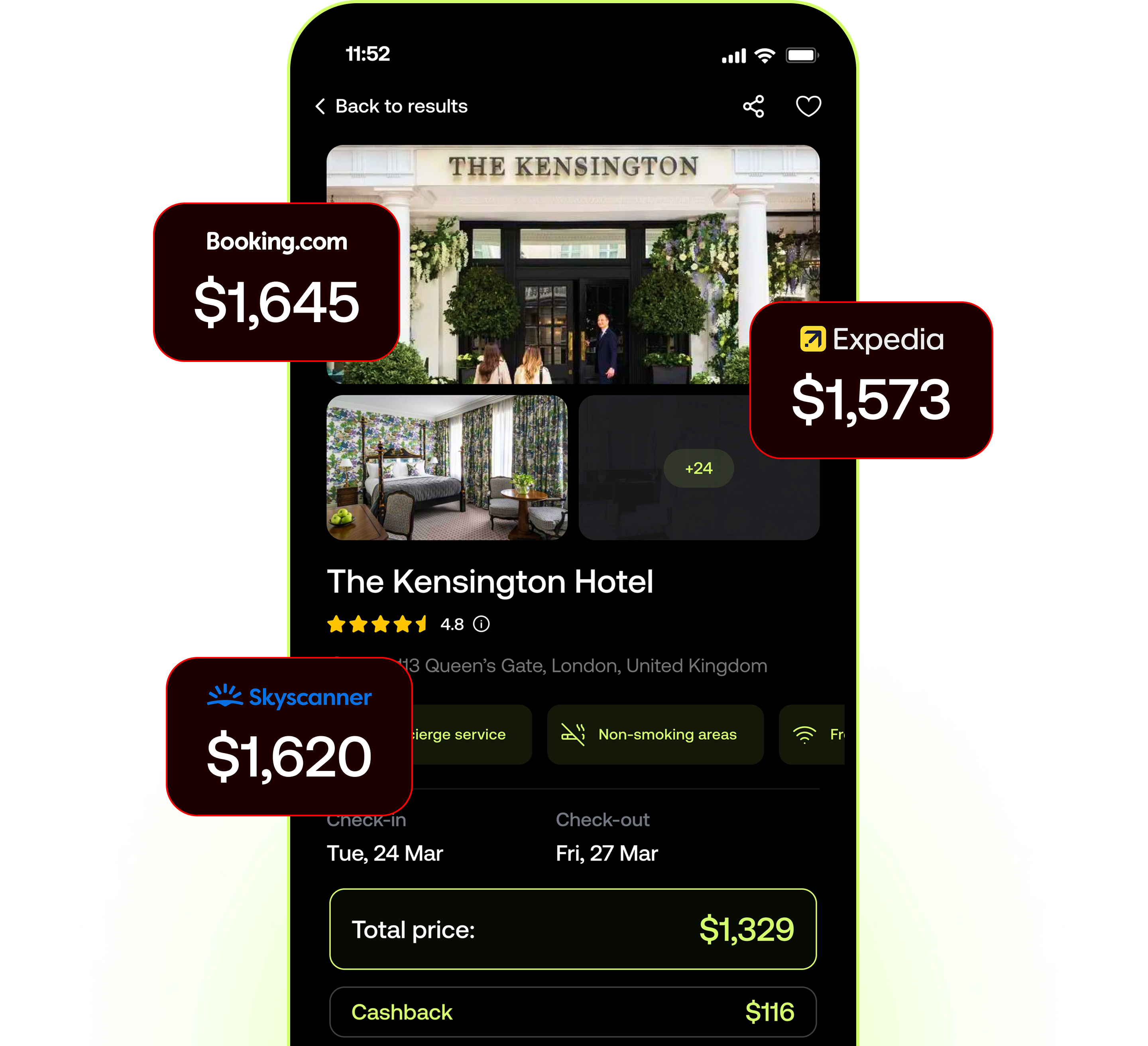
Found a hotel you like? Book it for up to 30% less