Content
Lighter is a decentralised perpetual futures exchange built as a custom zero-knowledge rollup on Ethereum, designed to give traders centralised-exchange speed with on-chain, verifiable settlement. Its native token, LIT, aligns the platform's economics by routing trading fee revenue into token buybacks and burns, and in July 2026 the protocol executed its first permanent burn of roughly 15.5 million LIT tokens, around 6.3% of circulating supply, following an integration push into Robinhood Wallet and Telegram's trading rails.
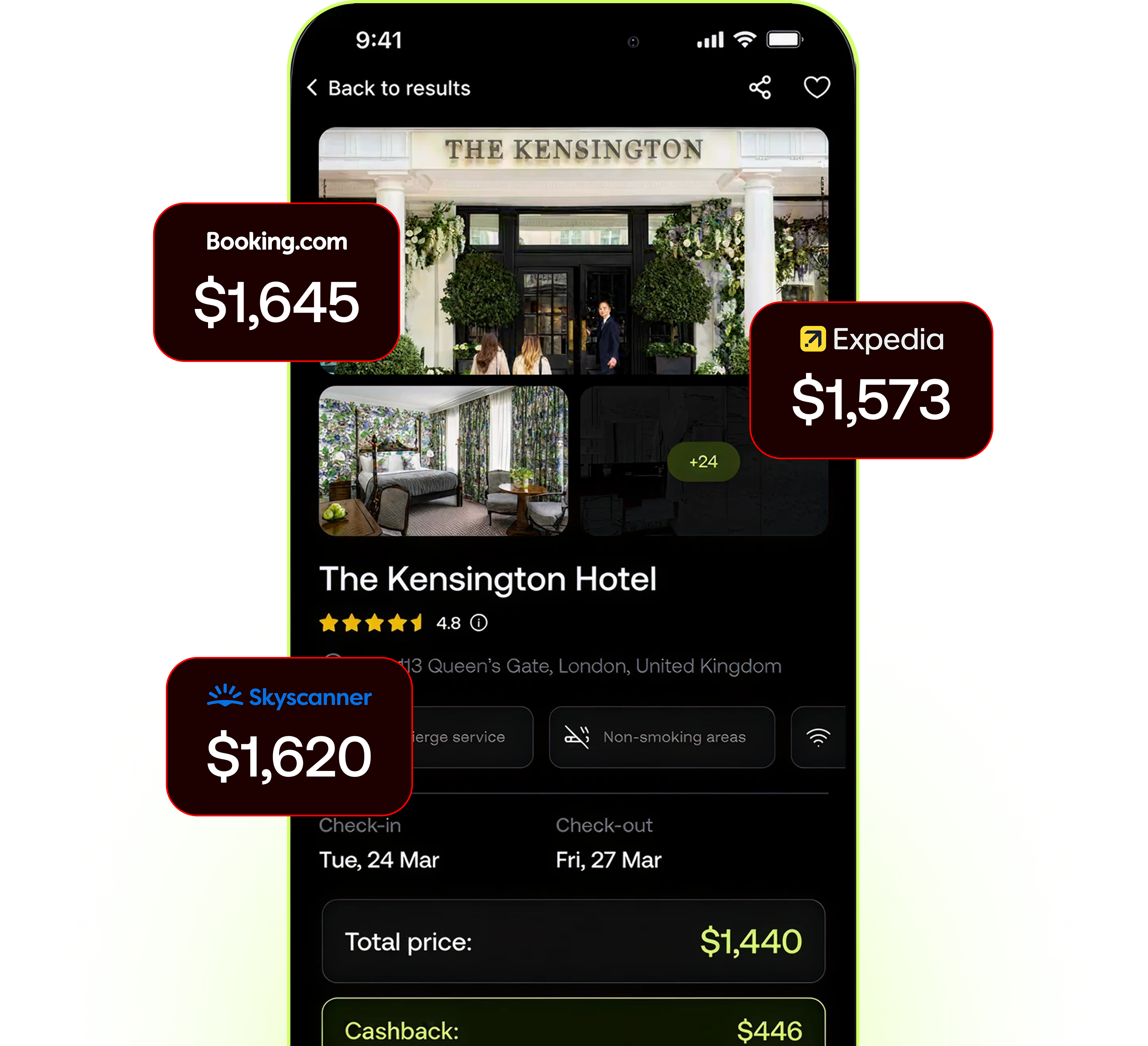
At the time of writing (July, 2026), LIT trades near $2.31, with a market capitalisation of roughly $576 million and a rank of #89 on CoinGecko. Beyond speculation, LIT has practical utility across staking, governance, and fee-sharing within the Lighter ecosystem, and for travellers who already hold LIT or other cryptocurrencies, Epic lets you book hotels and flights, with up to 30% savings compared to Booking.com and Expedia and a $25 discount on your first trip upon sign-up.
See how much you
could save with $LIT
Answer 2 questions to get your personalized
savings estimate.
Question 1 of 2
Where do you want?
Question 2 of 2
How many nights?
Your result
Get similar deals when we go live.
Get $25 off your first trip.
Key Takeaways
- Lighter is a zero-knowledge rollup perpetual futures exchange on Ethereum offering zero trading fees for retail users, with LIT as its native incentive and buyback token.
- Lighter posted roughly $279.5 billion in 30-day perpetual trading volume around its November 2025 funding round, briefly rivalling established perp DEXs like Hyperliquid.
- Lighter's trading infrastructure now powers perpetuals access through Robinhood Wallet and a Telegram integration reaching Telegram's large user base.
- LIT has a maximum supply of 1 billion tokens against roughly 250 million circulating, meaning a large share remains subject to future unlocks and vesting.
LIT at a Glance (July 2026)
What Is Lighter (LIT)?
Lighter was founded in 2022 by Vladimir Novakovski, a former quantitative trader at Citadel and a Harvard graduate. Before starting Lighter, he worked on machine learning at Quora, led engineering at Addepar, and co-founded the social networking platform Lunchclub. According to IQ.wiki, the project originally started as an AI venture before shifting its focus to building a fairer and more transparent financial trading platform.
Lighter was created to solve one of the biggest problems in crypto derivatives trading: trust. On most centralized exchanges, important processes like order matching, liquidations, and account balances happen behind the scenes. Traders have to trust that the exchange is handling everything fairly because they cannot verify it themselves.
Decentralized exchanges improve transparency by recording transactions on the blockchain, but they have traditionally been much slower. Many take several seconds to process trades and cannot provide the speed or liquidity that professional traders need.
Lighter aims to combine the best of both worlds. It delivers the speed of a centralized exchange while keeping the transparency of decentralized finance. Every trade and liquidation can be cryptographically verified on Ethereum, so users can confirm that everything was executed fairly. Another major advantage is that retail traders pay zero trading fees, while the platform earns revenue from institutional trading activity instead.
Lighter launched its public beta in January 2025 and quickly became one of the largest decentralized perpetual futures exchanges by trading volume. Its public mainnet officially went live in October 2025.
In November 2025, Lighter raised $68 million at a $1.5 billion valuation. The funding round was led by Founders Fund and Ribbit Capital, with additional investments from Haun Ventures, Dragonfly, Craft Ventures, and Robinhood Ventures. This brought the project's total funding to approximately $89-90 million.
The LIT token was launched through a token generation event in late December 2025. Half of the total token supply (50%) was allocated to ecosystem incentives and airdrop participants. The remaining supply was divided between the team (26%) and investors (24%), with both allocations locked for one year and released gradually over a three-year vesting schedule.
How Does Lighter (LIT) Work?
Lighter is designed to make crypto derivatives trading as fast as a centralized exchange while keeping the transparency and security of blockchain technology. Here's how the process works:
1. A trader places an order
The user connects a self-custodial crypto wallet and places either a market order or a limit order for a perpetual futures contract, such as opening a long position on ETH-USD.
2. The order is matched off-chain
Lighter's private sequencer processes and matches orders using price-time priority, the same method used by many traditional financial exchanges. This allows trades to be completed in milliseconds, giving both retail and professional traders the speed they expect.
3. A zero-knowledge (ZK) proof is created
Instead of using a general-purpose rollup like Arbitrum or zkSync, Lighter relies on custom Plonky2-based zero-knowledge circuits. These specialized circuits mathematically prove that every order match, margin check, and liquidation followed the platform's rules exactly.
4. The proof is verified on Ethereum
After the proof is generated, it is submitted to Ethereum Layer 1. The smart contract updates the blockchain only after the proof is successfully verified. Since users keep control of their assets on Ethereum instead of handing them to the exchange, they can still withdraw their funds using a forced-exit mechanism even if Lighter's sequencer goes offline.
Example:
Imagine a trader opens a $10,000 leveraged position and later gets liquidated. On Lighter, the liquidation process, collateral deduction, and final account balance can all be verified on-chain. Users don't have to trust the platform; they can independently confirm that everything happened according to the protocol's rules.
How Does LIT Gain Value?
Lighter earns revenue from institutional trading activity, while retail traders continue to enjoy zero trading fees.
That revenue is used to strengthen the LIT ecosystem through a buyback-and-burn model. As of mid-2026, the protocol has used 100% of its trading fee revenue to buy LIT tokens from the open market. Instead of redistributing those tokens, they are permanently burned, reducing the circulating supply over time.
More Than a Perpetual Futures Exchange
Lighter has continued expanding its ecosystem beyond perpetual futures trading. Its growing product suite includes:
- Spot trading, launched in December 2025.
- Multi-asset margin, allowing traders to use multiple assets as collateral.
- An AI-powered trading agent introduced in April 2026.
- Circle-powered USDC integration, added in May 2026 for easier stablecoin transactions.
As the ecosystem grows, LIT plays an increasingly important role. The token is used for staking rewards, governance voting, and benefits directly from the platform's buyback-and-burn mechanism, which links the protocol's growth to the token's long-term value.
Top 5 Ways to Use Lighter Crypto Coin (LIT) in 2026
1. Book Discounted Hotels and Flights Using Lighter (LIT) on Epic
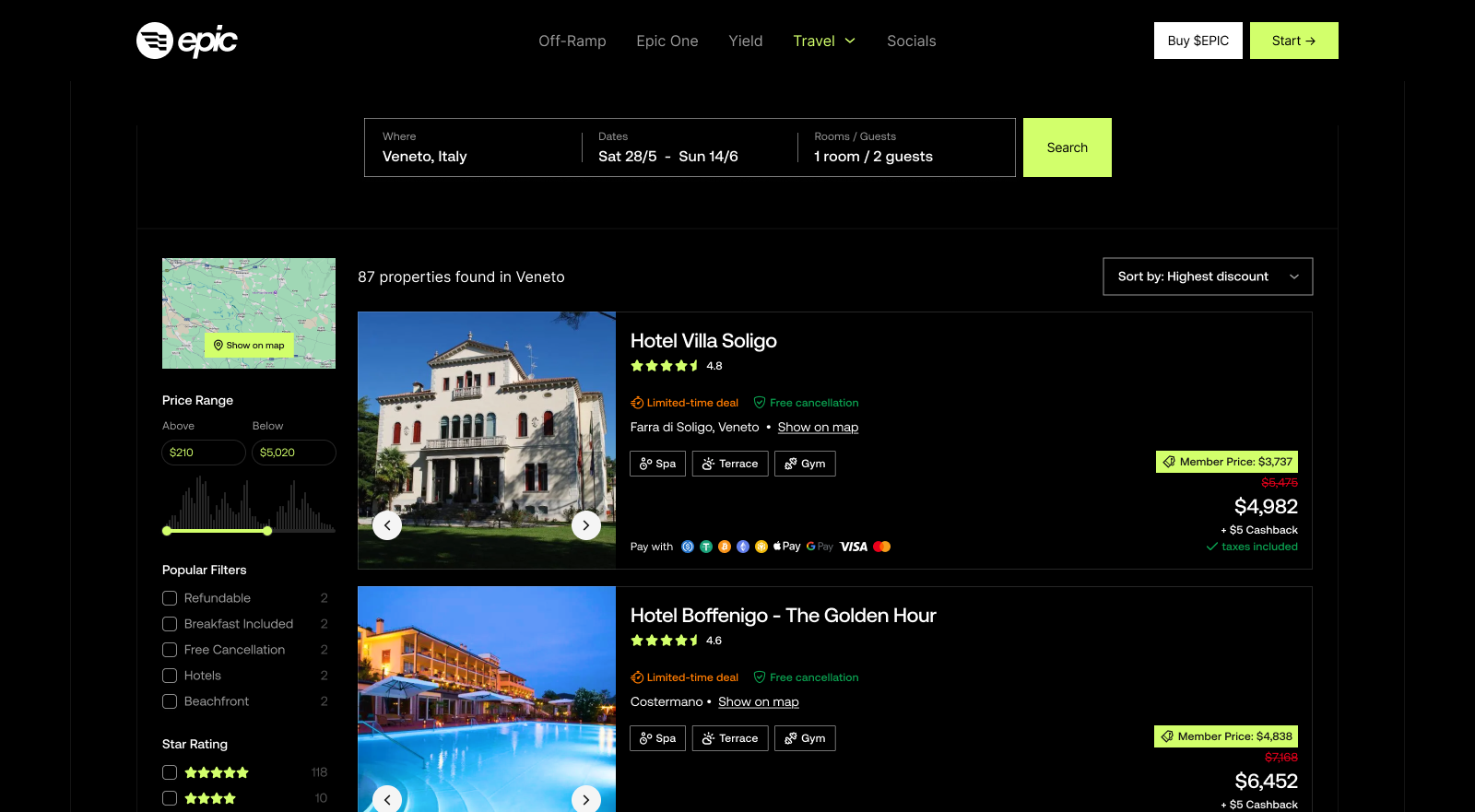
One of the most practical uses of LIT is booking travel through Epic. The platform has access to more than 2 million hotels and flights across 190+ countries, and you can pay directly with LIT or 200+ other cryptocurrencies.
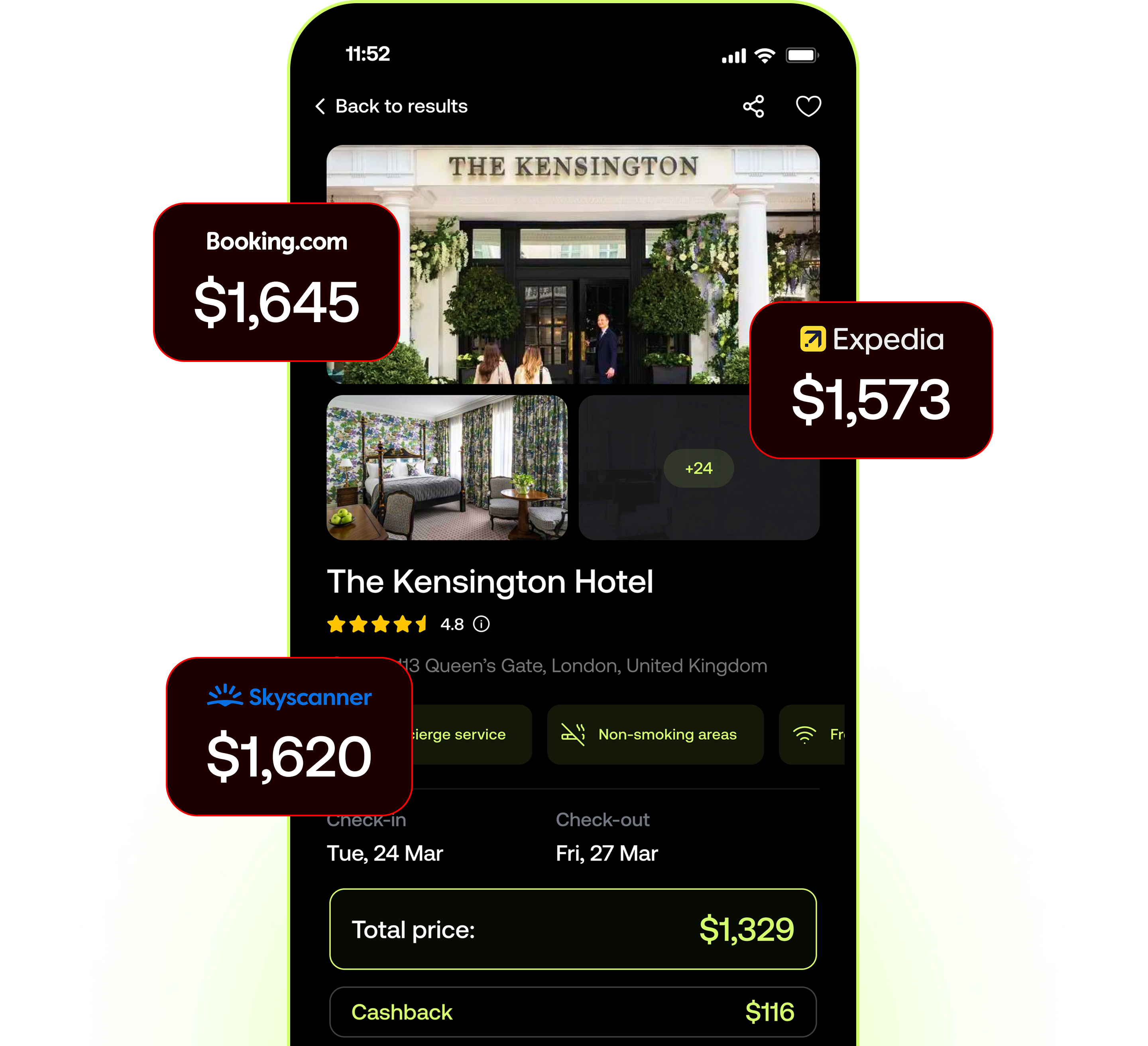
Book your next hotel for up to 30% less
The best part? Epic offers savings of up to 30% compared to Booking.com and Expedia on hotel and flight bookings.
New users also receive a $25 discount on their first booking. This makes Epic an easy way to use your LIT for real-world purchases.
2. Stake LIT to Access the Lighter Liquidity Pool (LLP)
LIT is also an important part of Lighter's liquidity system. If you want to provide liquidity through the Lighter Liquidity Pool (LLP), you must first stake LIT tokens.
The LLP acts as the automated market maker (AMM) that serves as the counterparty to traders' positions on the platform. To join the pool, users must stake LIT at a fixed ratio. For every 1 LIT token staked, you can deposit up to 10 USDC into the LLP to earn yield.
This setup creates additional demand for LIT because anyone who wants to provide liquidity and earn rewards through the LLP must hold and stake the token first. As more users participate in the liquidity pool, demand for LIT can grow alongside the protocol.
3. Claim Trading Fee Credits and High-Frequency Trading Discounts
LIT also offers benefits for professional and high-volume traders. Institutional market makers and high-frequency trading (HFT) firms can hold and stake LIT to qualify for lower trading costs on the platform.
By staking a certain amount of LIT, users can unlock discounted trading tiers that reduce or even remove withdrawal and cross-chain transfer fees.
Professional traders can also use LIT-denominated fee credits to pay their execution fees directly with LIT. This helps them manage trading costs more efficiently while keeping more of their capital available for active trading.
4. Participate in Protocol Governance and Risk Parameters
LIT acts as the main governance token for the Lighter ecosystem, giving holders a role in important decisions about how the protocol operates and develops. LIT holders can vote on key updates, including:
- Adding new perpetual futures trading pairs.
- Adjusting collateral margin requirements.
- Managing liquidation penalty limits.
- Deciding how protocol treasury funds are used.
This governance system allows the Lighter community to participate in shaping the platform instead of relying on a centralized team to make every decision.
As Lighter expands into new areas, including synthetic Real-World Assets (RWAs), LIT governance helps maintain a more decentralized approach to managing protocol upgrades, risk settings, and future ecosystem growth.
5. Provide Liquidity and Earn Deflationary Buyback Yield
Lighter connects its protocol revenue with the long-term value of LIT through an on-chain buyback mechanism. A portion of the revenue generated from institutional trading execution fees is used to buy LIT tokens directly from the open market.
LIT holders who lock their tokens into smart contract vaults can earn a share of these buyback-funded rewards. At the same time, the buyback process helps reduce the total circulating supply of LIT by removing tokens from the market.
This creates a revenue-linked deflationary model, where the token's supply dynamics are connected to the actual growth and usage of the Lighter protocol. As trading activity increases, more revenue can flow into buybacks, potentially increasing scarcity for remaining LIT holders.
Is Lighter (LIT) a Good Investment?
Whether Lighter (LIT) is a good investment depends on your risk tolerance, belief in decentralized derivatives, and confidence in the project's long-term adoption. Like most crypto assets, LIT comes with both strong growth potential and significant risks.
Since launching in December 2025, LIT has experienced a major price correction. After reaching an all-time high of $7.86 on December 30, 2025, the token dropped sharply and reached an all-time low of $0.7794 on March 31, 2026.
After that decline, LIT recovered partially and traded in the $1.50-$2.70 range through mid-2026. At the time of writing, the token remains around 70% below its previous all-time high, which is a common pattern among newly launched crypto tokens that initially receive large airdrop distributions and later experience selling pressure.
Lighter has several factors that support a potential long-term growth story. The project has attracted strong institutional backing from investors including Founders Fund, Ribbit Capital, Haun Ventures, and Robinhood Ventures, raising funds at a $1.5 billion valuation.
Beyond funding, Lighter has shown real product usage. The protocol has processed tens of billions of dollars in monthly perpetual futures trading volume during periods in 2025-2026 and generates actual revenue that supports its LIT buyback program. This gives LIT a stronger value-accrual model compared with many governance tokens that rely mainly on future promises.
The project also benefits from major integrations with platforms like Robinhood and Telegram, which can help introduce Lighter to a wider audience.
Another important advantage is its technology. Lighter's non-custodial and cryptographically verifiable settlement system addresses a real problem in crypto derivatives trading: the lack of transparency on centralized exchanges. By combining exchange-level speed with blockchain verification, Lighter aims to offer a more trustworthy trading experience.
Despite its potential, LIT also faces several risks. The token remains a highly volatile mid-cap cryptocurrency and is still trading significantly below its all-time high. Around 750 million LIT tokens from the 1-billion maximum supply remain locked or reserved, creating possible future selling pressure as team and investor tokens unlock over a three-year vesting period.
Competition is another major challenge. The decentralized perpetual futures market is becoming increasingly crowded, with competitors such as Hyperliquid (HYPE) and Aster competing for traders, liquidity, and market share. Some blockchain data has shown competitors like Variational outperforming Lighter at certain times in areas such as open interest and revenue.
Regulation is also an uncertainty. Governments and regulators worldwide are still developing rules around perpetual futures and decentralized finance platforms, which could impact how these protocols operate in different regions.
Additionally, some community members have expressed concerns about communication transparency, particularly around treasury management and future token allocation decisions.
This is not financial advice or a price prediction. Always conduct your own research, review multiple sources, and only invest capital you can afford to lose.
Frequently Asked Questions
1. What is Lighter crypto?
Lighter is a decentralised perpetual futures exchange built as a custom zero-knowledge rollup on Ethereum. It lets traders open leveraged positions with order matching and liquidations that are cryptographically provable on-chain, combining the speed of a centralised exchange with the transparency of DeFi.
2. Does Lighter have a coin?
Yes. Lighter's native token is LIT, which launched via a token generation event in December 2025. LIT is used for staking, governance signalling, and is the direct beneficiary of the protocol's fee-funded buyback-and-burn programme.
3. How much is Lighter crypto coin worth?
LIT trades in a volatile range and was priced at roughly $2.31 at the time of writing, with a market capitalisation near $576 million. Prices move quickly, so check a live source like CoinGecko or CoinMarketCap before transacting.
4. Where can I buy Lighter crypto?
LIT trades on centralised exchanges including Coinbase, OKX, Bybit, Bitget, Gate, KuCoin, MEXC, HTX, BingX, as well as on Lighter's own decentralised spot exchange.
5. What chain is Lighter on?
Lighter runs as an application-specific zero-knowledge rollup built on Ethereum. It is not deployed on a general-purpose Layer 2 like Arbitrum or zkSync; instead, it uses custom Plonky2-based proof circuits purpose-built for its order book and margin system, settling final state on Ethereum Layer 1.
6. Can I use LIT for real-world purchases?
Yes, while LIT's primary utility is within the Lighter trading ecosystem (staking, fee dynamics, governance), holders can also use LIT crypto more broadly to book real-world travel through Epic, which accepts 200+ cryptocurrencies for hotel and flight bookings in 190+ countries at up to 30% lower rates.


Mithra Ghosh is a Dubai-based content writer and SEO copywriter with 2+ years of experience crafting search-optimised content across crypto, Web3, and digital finance. She combines strong editorial instincts with a deep understanding of blockchain ecosystems and on-chain trends.
At Epic, she writes about the growing world of crypto-native travel helping readers understand how holding and spending digital assets can unlock smarter, cheaper ways to see the world.
Found a hotel you like? Book it for up to 30% less

Found a hotel you like? Book it for up to 30% less