Content
LayerZero climbed 2.40% to $0.793 on August 1, 2026, though the move reversed within hours and lacked fundamental drivers. The broader narrative carries greater weight. ZRO is the native governance and utility token of LayerZero, an omnichain interoperability protocol that enables secure communication and asset transfers across 170+ blockchains.
As of August 3, 2026, ZRO trades at $0.793 with a market cap of $279.82 million, down 89.47% from its December 2024 all-time high of $7.53. The token's trajectory reflects a fundamental collision: transformative institutional adoption through the newly announced Zero blockchain initiative, backed by Citadel Securities, ARK Invest, and Tether, clashes directly with dilutive monthly token unlocks releasing millions of ZRO into circulation through 2027. This overview examines LayerZero's core technology, the institutional narrative, and the concrete risks that define ZRO's 2026 investment thesis.
See how much you
could save with $ZRO
Answer 2 questions to get your personalized
savings estimate.
Question 1 of 2
Where do you want?
Question 2 of 2
How many nights?
Your result
Get similar deals when we go live.
Get $25 off your first trip.
Key Takeaways
- LayerZero connects blockchains through Decentralized Verifier Networks (DVNs), where each application configures its own X-of-Y-of-N security setup from a permissionless marketplace of 50+ verifiers.
- ZRO governance token: holders vote every six months on a "fee switch"; all four referendums to date have concluded with the fee off, with one failing to reach quorum.
- Zero blockchain was announced in February 2026 with backing from Citadel Securities, ARK Invest, and Tether (investors); DTCC, ICE, and Google Cloud (exploratory collaborators). Targeting a Fall 2026 launch.
- Supply structure: 1 billion token fixed cap, 352.84M circulating (35.28%). Of remaining: 38.3% community, 32.2% strategic partners, 25.5% core contributors. 57.7% subject to vesting; Foundation holds 133M re-locked tokens until Zero mainnet.
- Buyback program: Foundation repurchased 50M ZRO (5% of supply); ongoing monthly buyback funded by Stargate revenue ($1.2M ZRO purchases from $2.4M Stargate revenue Sept–Nov 2025).
- April 2026 KelpDAO exploit ($292M loss): LayerZero Labs' RPC infrastructure was compromised; the single-DVN configuration was the enabling condition, not a protocol smart contract bug.
- ZRO trades 89.47% below ATH; near its recent all-time low of $0.7352 (June 28, 2026).
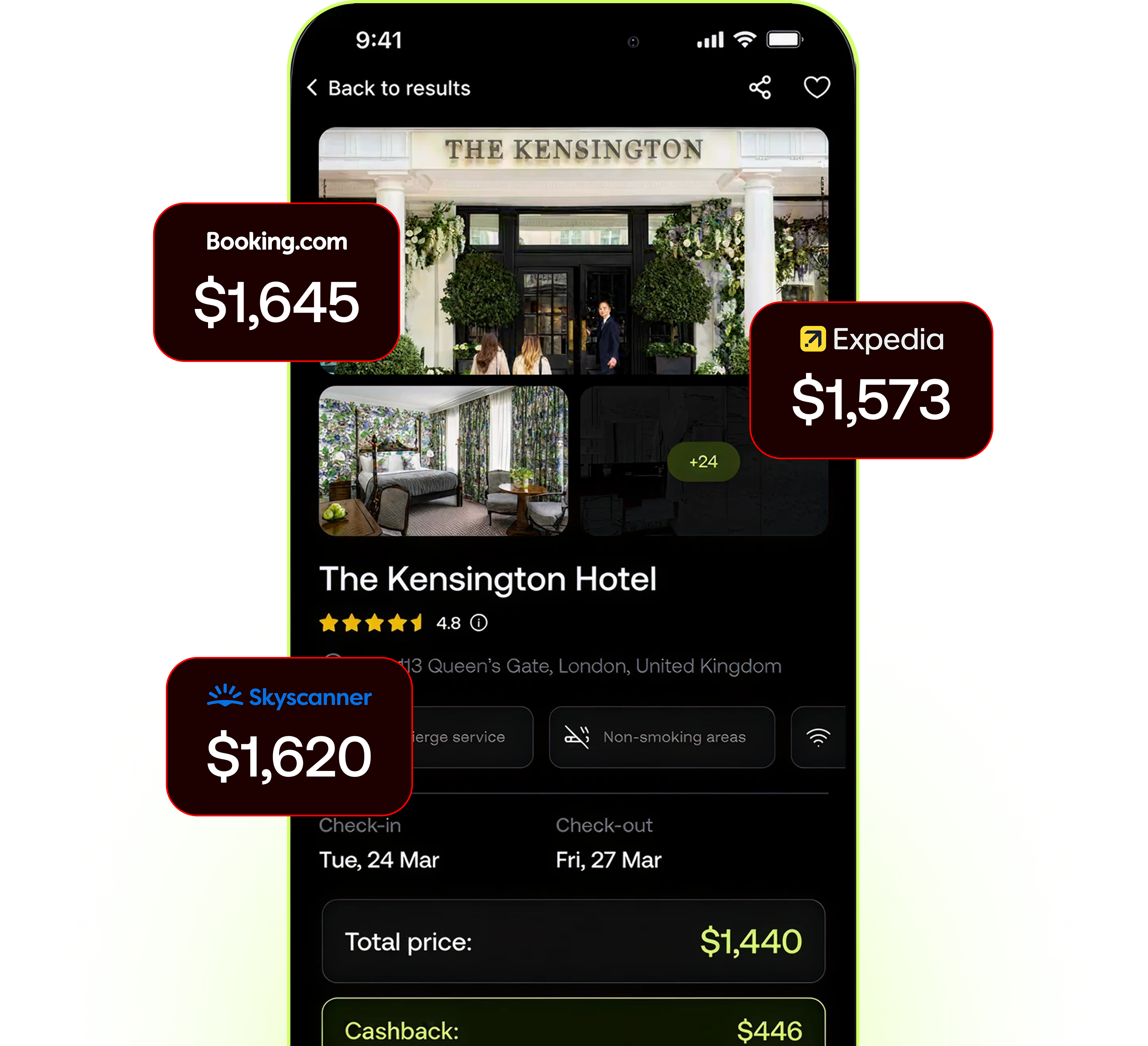
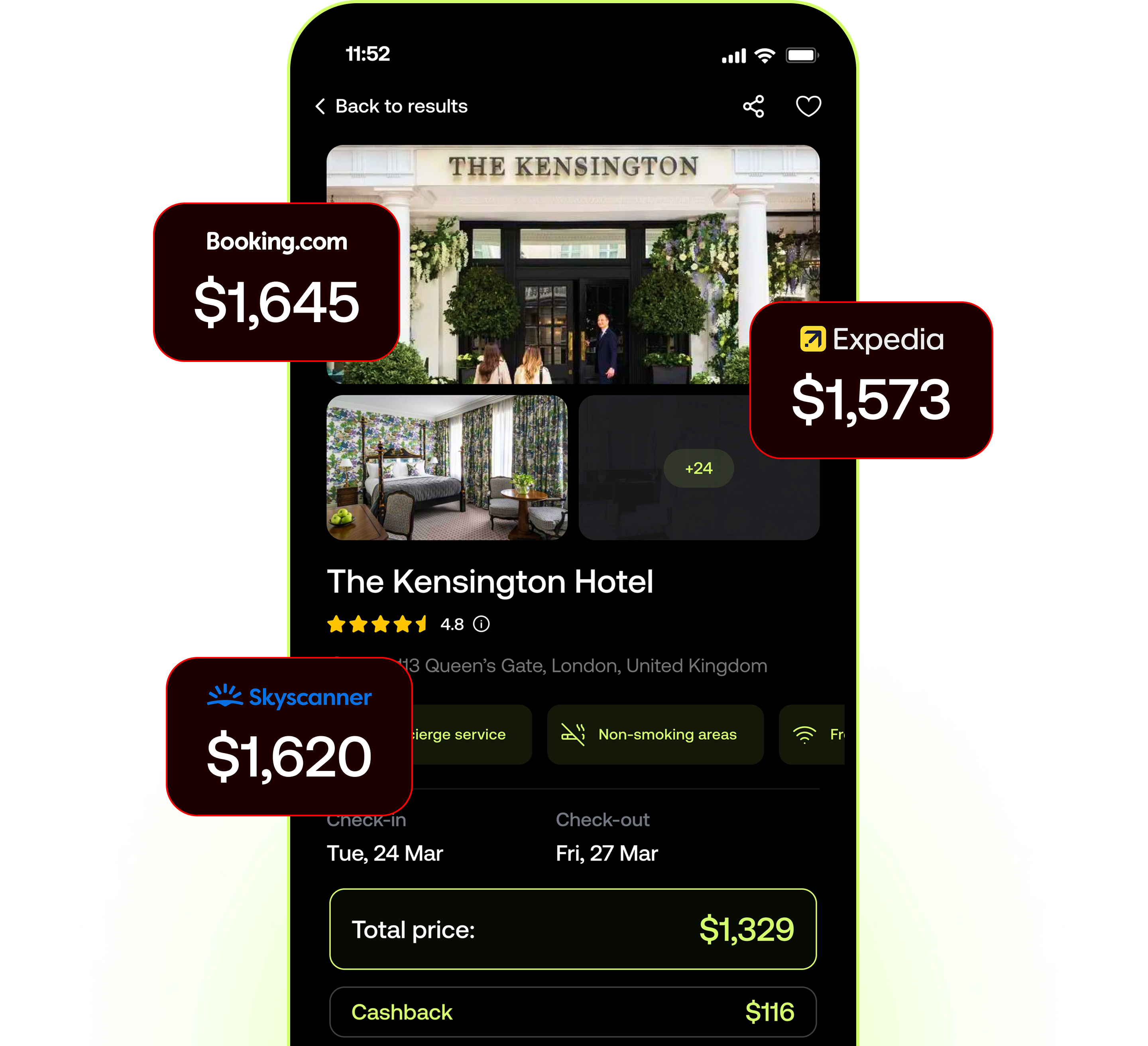
- Book hotels and flights with $ZRO on Epic at up to 30% below Booking.com prices. Get $25 off your first booking.
Book your next hotel for up to 30% less
At a Glance
What Is LayerZero?
LayerZero is an omnichain interoperability protocol that solves blockchain fragmentation by acting as a universal communication layer. It allows smart contracts on different networks Ethereum, Solana, Arbitrum, Avalanche, Polygon, BNB Chain, Optimism, Sonic (formerly Fantom), Aptos, and 170+ others to send messages and transfer assets natively without relying on traditional bridges, which often introduce centralized risk and security vulnerabilities.
LayerZero was founded in 2021 by Bryan Pellegrino, Ryan Zarick, and Caleb Banister. The protocol has attracted major institutional investors, including a16z, Sequoia, PayPal Ventures, Polygon, Coinbase Ventures, Binance Labs, DeFiance Capital, Spartan Group, Sino Global Capital, and Multicoin Capital. The company raised $6M in seed funding (September 2021), $135 million in Series A+ funding (March 2022, $1B valuation), and another $120 million Series B in April 2023 ($3B valuation).
LayerZero's core technical innovation is its use of Decentralized Verifier Networks (DVNs), a configurable security model where each application selects its own X-of-Y-of-N DVN configuration from a permissionless marketplace of 50+ verifiers. ZRO is the native governance and utility token of this infrastructure, giving holders control over the protocol's economic model through voting on a six-month "fee switch" mechanism.
How Does LayerZero Work?
LayerZero enables cross-chain communication through a lightweight, permissionless architecture centered on Decentralized Verifier Networks. When a user or application initiates a cross-chain message on the source blockchain, an Endpoint on that chain encodes the message along with a cryptographic proof of its validity.
The application's chosen DVN set (which it configures independently e.g., 2-of-3 DVNs, 3-of-5 DVNs, or a single DVN) verifies the proof using block headers from the source chain, confirming that the message is authentic. Once verified and committed, an Executor delivers the message on the destination blockchain, completing the cross-chain transaction.
Key Design Principle: Security is configurable per application, not fixed by the protocol. An application with high security requirements may select 3-of-5 DVNs; one prioritizing speed may select fewer. This is a trust assumption LayerZero's V2 whitepaper explicitly states "optimal, trustless communication across blockchains is impossible." Applications delegate security to whichever DVN set they configure.
Delivery Guarantees: LayerZero guarantees eventual delivery subject to source-chain finality, not instant finality.
This design eliminates the need for wrapped tokens, liquidity pools, or centralized validators. Unlike traditional bridges that require third-party consensus or lock-and-mint mechanisms, LayerZero's DVNs validate messages directly against the source chain's state, making the protocol both secure and capital-efficient.
LayerZero supports any type of cross-chain payload: token transfers, function calls, data exchange, governance votes, NFT transfers, and arbitrary smart contract interactions. This flexibility allows developers to build omnichain applications that operate seamlessly across multiple blockchains simultaneously, leveraging the features and liquidity of each network without fragmentation.
ZRO's role within this architecture is governance. Token holders vote every six months on whether to activate or deactivate a "fee switch." If activated, the protocol charges a configurable fee for cross-chain messages (capped at the cost of verification and execution). All collected fees are permanently burned, creating a deflationary mechanism tied directly to network activity. To date, all four referendums (Dec 2024, Jun 2025, Dec 2025, Jun 2026) have concluded with the fee remaining off, with one vote failing to reach quorum.
Why ZRO Moved on August 1, 2026
On August 1, 2026, LayerZero rose 2.40% over 24 hours in a flat, broader crypto market. However, this move was not driven by fundamental developments. No protocol upgrades, new exchange listings, or on-chain activity metrics improvements occurred during this period.
The short-term bounce lacked conviction. Price action reversed within the same day, illustrating a critical distinction: near-term technical momentum is not predictive of longer-term price direction or fundamental strength. ZRO's 2.40% gain was mechanical, a result of how market structure aligned at a specific moment, not new conviction in the project's adoption or utility.
Institutional "Zero" Blockchain Narrative Versus Supply Dilution
The real strategic story underlying ZRO's valuation is a collision between two forces: institutional adoption and token dilution.
In February 2026, LayerZero announced the development of its own high-performance Layer 1 blockchain called "Zero," targeting a Fall 2026 launch with three initial zones. The announcement clarified materially different relationships:
What This Means: Citadel, ARK, and Tether are making equity and token investments. DTCC, ICE, and Google Cloud are exploring use cases but are not investors. The involvement of traditional finance infrastructure (DTCC, ICE) is noteworthy but remains exploratory.
This represents a major strategic pivot toward embedding ZRO as the native asset within institutional-grade financial infrastructure. For holders and the protocol, this is theoretically bullish. Direct investment and collaboration from traditional finance leaders validate LayerZero's technology and could significantly increase network usage and demand for ZRO as both a utility token and governance mechanism. ZRO would become essential infrastructure for cross-chain settlement in institutional markets.
However, this narrative is directly offset by significant supply-side headwinds.
Supply Structure and Dilution Risk
ZRO has a fixed supply of 1 billion tokens. Of this, 38.3% is allocated to the community, 32.2% to strategic partners, and 25.5% to core contributors. Critically, 57.7% is subject to multi-year vesting schedules with monthly releases. A documented unlock of 25.71 million ZRO occurred on July 20, 2026 (13M to Strategic Partners, 10.63M to Core Contributors), worth approximately $19.98M at early-August prices.
Monthly releases average ~25.7M ZRO, worth roughly $20M at current prices, creating consistent sell pressure as early investors and team members unlock their allocations throughout 2027.
Critical Offset: The Buyback Program
The dilution narrative must account for offsetting supply mechanisms:
- Foundation Repurchase: The LayerZero Foundation bought back 50 million ZRO (5% of total supply) from early investors at ~$150M total cost, reducing the original Strategic Partners allocation.
- Ongoing Monthly Buyback: An active buyback program funded by Stargate revenue (LayerZero Labs acquired Stargate in August 2025). For the first six months post-acquisition, 50% of Stargate fees fund ZRO purchases; this rises to 100% once the veSTG revenue-share expires. Historical example: $2.4M of Stargate revenue (Sept–Nov 2025) produced $1.2M of ZRO repurchases.
- Re-Locked Foundation Tokens: 133M Foundation tokens remain locked until Zero's mainnet launch, removing them from circulation pressure.
Net Thesis: Institutional demand must accelerate faster than net supply pressure (gross unlocks minus ongoing buybacks). Past precedent shows risk. In March 2026, the FTX/Alameda estate transferred 7.93 million ZRO (~$15.3M) to market maker Wintermute as part of its bankruptcy liquidation, suggesting major token recipients may liquidate to manage portfolio exposure.
Until the institutional narrative materializes into real network activity and transaction volume, monthly unlock schedule remains a dominant price driver.
The KelpDAO Incident and Security Risk
LayerZero's infrastructure was involved in a high-profile exploit in April 2026 that resulted in approximately $292 million in losses (116,500 rsETH). The incident requires accurate characterization.
What Actually Occurred
The attacker compromised two internal RPC nodes operated by LayerZero Labs while simultaneously DDoS-ing external nodes, forcing KelpDAO's single DVN configuration to rely on the falsified infrastructure. Those RPC nodes falsely reported an rsETH burn on Unichain that never occurred, enabling the theft.
This was not a smart contract vulnerability. OpenZeppelin's analysis, titled "$292 Million Lost, Zero Bugs Found," confirmed LayerZero's smart contracts were uncompromised. CoinDesk reported the attacker "tricked LayerZero's cross-chain messaging layer into believing a valid instruction had arrived from another network."
The Real Issue: The exploit succeeded because (1) KelpDAO ran a 1-of-1 DVN configuration (single point of failure), (2) LayerZero Labs' own off-chain infrastructure was compromised, and (3) the single-verifier setup was the default for new deployments at the time. LayerZero only subsequently recommended multi-DVN configurations.
Why This Matters: LayerZero's security model is configurable. Applications that selected multi-DVN setups were not vulnerable. The incident exposed a deployment default risk—the single-verifier configuration that LayerZero recommended at the time—not a fundamental protocol flaw. This is a more serious finding regarding LayerZero Labs' own infrastructure security and defaults than "smart contract vulnerabilities," and it directly informed our understanding of why DVN diversity matters.
Is ZRO a Good Investment?
Whether ZRO is a good investment depends on your conviction in two opposing narratives and your risk tolerance. The bull case centers on institutional adoption. If the Zero blockchain launches successfully and attracts significant TradFi volume, ZRO becomes infrastructure for a multi-trillion-dollar market. The governance fee-switch mechanism could become valuable if network activity justifies fee activation, creating deflationary pressure and direct linkage to usage.
LayerZero has legitimate technology, backing from tier-one institutional investors (Citadel, ARK, Tether), and exploratory partnerships with traditional finance infrastructure (DTCC, ICE). The buyback program and Foundation's re-locked tokens partially offset vesting dilution. Adoption metrics are published: 75B+ in assets secured, $200B+ in historical volume, and 700+ companies powered (vendor figures, attributed as such). On-chain TVL: $7.36B across the ecosystem.
The bear case is equally concrete. ZRO trades 89.47% below its December 2024 peak. Monthly token unlocks totaling ~25.7M ZRO (~$20M) are scheduled through 2027, creating persistent supply pressure that must be absorbed by new demand. Institutional adoption of the Zero blockchain remains speculative. No launch date has been confirmed beyond "Fall 2026," and no transaction volume data exists. Competitors including Wormhole (W) and established cross-chain infrastructure already capture significant market share.
The April 2026 KelpDAO exploit ($292M loss) damaged ecosystem trust and raised infrastructure security questions. All four fee-switch referendums have concluded with the fee off, with one failing to reach quorum a sign of weak governance participation that complicates claims of "community governance." Regulatory uncertainty around cross-chain protocols remains unresolved. Enterprise adoption of decentralized infrastructure remains skeptical about long-term performance and security guarantees.
Critical Asymmetry: The bull narrative (institutional Zero adoption) is a 2027+ thesis at the earliest. The bear case (monthly dilution plus weak market sentiment plus infrastructure risks) is happening now.
Position sizing should reflect this long time-to-value and the risk that institutional adoption may not accelerate fast enough to absorb vesting supply.
Disclaimer: This analysis is informational only and does not constitute financial advice. ZRO is a speculative asset. Do not invest capital you cannot afford to lose. Conduct your own research and consult a financial advisor before making investment decisions.
Bottom Line
LayerZero's 2.40% gain on August 1 lacked fundamental drivers and reversed within hours. The structural narrative carries greater weight. The Zero blockchain initiative backed by Citadel, ARK, and Tether is theoretically transformative, but remains pre-launch and unproven at scale.
Until the institutional adoption thesis materializes into real network activity, the dominant price driver is monthly token unlocks of ~25.7M ZRO (~$20M), which must be absorbed by new demand at depressed valuations. The Foundation's buyback program and re-locked tokens partially offset dilution, but have not reversed the 89.47% decline from all-time high.
ZRO's design creates a fundamental challenge. Institutional participation is essential for value creation, but token dilution from vesting schedules depresses price, potentially deterring retail participation and reducing the token's visibility as demand picks up. This circular dynamic is structural, not temporary. Infrastructure innovations and institutional backing exist, but they cannot overcome near-term supply headwinds.
The April 2026 KelpDAO exploit ($292M loss) exposed infrastructure risks in single-DVN configurations and damaged ecosystem trust. All four fee-switch votes have failed to activate governance, raising questions about participation rates.
ZRO is a 2027+ story at the earliest. Position sizing should reflect this long time-to-value and the risk that institutional adoption may not accelerate fast enough to absorb vesting supply. Monitor three critical signals: (1) Zero blockchain launch announcement and mainnet date. (2) Monthly unlock calendar and on-chain activity to track whether real demand is growing. (3) Regulatory clarity on cross-chain protocols and institutional custody solutions.
FAQs
1. What is LayerZero and what does it do?
LayerZero is an omnichain interoperability protocol that enables secure, cross-chain communication and asset transfers between 170+ blockchains. It uses Decentralized Verifier Networks (DVNs) where applications configure their own security settings from a permissionless marketplace of 50+ verifiers, plus Executors that deliver messages on destination chains. This eliminates the need for bridges, liquidity pools, or centralized validators.
2. What is the ZRO token and what is its purpose?
ZRO is the governance token for LayerZero. Holders vote every six months on whether to activate or deactivate a "fee switch" that would charge protocol fees for cross-chain messages. If activated, all collected fees are permanently burned, creating a deflationary mechanism tied to network usage. To date, all four referendums (Dec 2024, Jun 2025, Dec 2025, Jun 2026) have concluded with the fee remaining off.
3. How does LayerZero differ from traditional bridges?
Traditional bridges rely on wrapped tokens, liquidity pools, or third-party validators to facilitate cross-chain transfers. LayerZero eliminates these intermediaries by using Decentralized Verifier Networks where each application selects its own security configuration (e.g., 2-of-3 DVNs, 3-of-5 DVNs). This reduces capital requirements, lowers trust assumptions (applications configure their own), and enables eventual delivery guarantees. Security is not fixed by the protocol but configurable per application.
4. Why is ZRO down 89.47% from its all-time high?
ZRO peaked at $7.53 in December 2024. The decline reflects several factors: monthly token unlocks from vesting schedules (averaging ~25.7M ZRO, ~$20M per month through 2027), lack of meaningful institutional adoption of the Zero blockchain to absorb supply, the April 2026 KelpDAO exploit ($292M loss) which damaged ecosystem trust, all four fee-switch referendums concluding with the fee off (one failing quorum), and broader risk-off sentiment in altcoins. The buyback program and re-locked Foundation tokens partially offset dilution but have not reversed the decline.
5. What is the Zero blockchain and why does it matter?
Zero is a planned Layer 1 blockchain announced in February 2026, targeting a Fall 2026 launch with three initial zones. Strategic investors include Citadel Securities, ARK Invest, and Tether; exploratory collaborators include DTCC, ICE, and Google Cloud. ZRO would be the native asset. If Zero launches successfully and attracts institutional trading volume, ZRO could become essential infrastructure for cross-chain settlement in institutional markets. However, this remains speculative; no specific mainnet date or adoption metrics have been published.
6. How much ZRO will be in circulation eventually?
ZRO has a fixed maximum supply of 1 billion tokens. Currently, 352.84 million are in circulation (35.28%). Of the total 1 billion supply: 38.3% is allocated to the community, 32.2% to strategic partners, 25.5% to core contributors, and 4.0% repurchased by the Foundation. Most allocations are subject to monthly vesting through 2027. The Foundation holds 133M tokens re-locked until Zero's mainnet launch.
7. Where can I buy ZRO?
ZRO trades on major centralized exchanges including Binance, Bitget, Gate.io, and KuCoin, as well as decentralized exchanges. Liquidity and listing status may vary by jurisdiction.
8. What happened in the April 2026 KelpDAO exploit?
Attackers compromised two internal RPC nodes operated by LayerZero Labs while DDoS-ing external nodes, forcing KelpDAO's single-DVN configuration to rely on the falsified infrastructure. Those nodes reported an rsETH burn on Unichain that never occurred. LayerZero's smart contracts were not exploited; the failure mode was infrastructure compromise combined with a 1-of-1 DVN configuration. The loss was $292M (116,500 rsETH). The incident highlighted the importance of multi-DVN configurations.
9. Is the fee switch activated?
No. All four fee-switch referendums have concluded with the fee remaining off. One vote (December 2025) failed to reach quorum. The next vote is due around December 2026. If activated, fees would be converted to ZRO and burned, creating a deflationary mechanism tied to protocol activity. The fact that four votes have concluded off signals low governance participation.
10. What are the main risks to ZRO?
Key risks include: (1) Monthly token unlocks (~25.7M ZRO, ~$20M) creating persistent supply pressure through 2027. (2) Zero blockchain remains pre-launch with no confirmed mainnet date or adoption metrics. (3) The April 2026 KelpDAO exploit ($292M loss) raised infrastructure security questions. (4) All four fee-switch votes have failed to activate; one failed quorum, signaling weak governance participation. (5) Competitive pressure from Wormhole and established cross-chain infrastructure. (6) Regulatory uncertainty around cross-chain protocols and custody solutions. (7) Enterprise adoption of decentralized infrastructure remains skeptical. (8) Risk-off market sentiment may persist, depressing speculative altcoins.
11. Where can you use LayerZero and ZRO?
NEO has multiple real-world use cases. Travel booking: NEO holders can use their tokens as payment on Epic, a crypto-friendly travel platform offering 2M+ hotels and flights with up to 30% discounts compared to Booking.com.


Mithra Ghosh is a Dubai-based content writer and SEO copywriter with 2+ years of experience crafting search-optimised content across crypto, Web3, and digital finance. She combines strong editorial instincts with a deep understanding of blockchain ecosystems and on-chain trends.
At Epic, she writes about the growing world of crypto-native travel helping readers understand how holding and spending digital assets can unlock smarter, cheaper ways to see the world.
Found a hotel you like? Book it for up to 30% less

Found a hotel you like? Book it for up to 30% less