Content
Kusama is an independent, experimental blockchain platform designed as a proving ground for cutting-edge technology before production-level deployment on Polkadot or standalone mainnet launches. Often described as Polkadot's "canary network," Kusama operates as a high-speed, high-risk testing environment where developers can deploy new blockchains, governance models, and economic mechanisms under real-world conditions with real value at stake.
Built on Substrate, the blockchain development framework created by Parity Technologies, Kusama shares almost the same codebase as Polkadot but emphasises rapid iteration, lower barriers to entry for parachain deployment, and governance that moves roughly four times faster than Polkadot's.
Unlike Polkadot's focus on enterprise stability and institutional adoption, Kusama embraces an "expect chaos" culture where breaking changes, rapid upgrades without forking, and experimental features are standard practice. This philosophy attracts early-stage startups, bold innovators, and developers willing to accept higher risk in exchange for access to cutting-edge blockchain capabilities and a community that rewards bold experimentation.
Kusama completed a significant technical migration to the Polkadot Asset Hub architecture in October 2025, improving scalability and aligning its runtime infrastructure with modern Polkadot standards. Despite this technical realignment, Kusama remains an independent, standalone chain with its own governance, token economics, and parachain ecosystem.
As of August 2026, Kusama (KSM) is trading at approximately $3.06 USD, with a market capitalisation around $57.13 million, ranking #308 by market cap according to CoinMarketCap. The all-time high of $623.75 was reached on 18 May 2021, representing a decline of approximately 99.5% from the peak. The all-time low of $0.9158 was recorded on 14 January 2020, with the current price reflecting a recovery of approximately 234% from that floor. The KSM token secures the network through staking, enables governance participation through nominated proof-of-stake consensus, and powers transaction fees across the Kusama ecosystem.
See how much you
could save with $KSM
Answer 2 questions to get your personalized
savings estimate.
Question 1 of 2
Where do you want?
Question 2 of 2
How many nights?
Your result
Get similar deals when we go live.
Get $25 off your first trip.
Key Takeaways
- Kusama operates as Polkadot's independent experimental canary network, enabling developers to test new blockchains, governance models, and economic mechanisms with real value at stake before mainnet deployment.
- Substrate-based architecture with heterogeneous sharding allows parachains to connect to a shared Relay Chain, providing scalability while maintaining cross-chain security and interoperability through cross-chain message passing (XCMP).
- On-chain governance moves roughly four times faster than Polkadot, with a combined voting and enactment cycle of around 15 days, enabling rapid protocol upgrades without forks and supporting the culture of rapid experimentation. Kusama now runs on OpenGov, its current fully on-chain governance model.
- Nominated Proof-of-Stake consensus secures the network through validator and nominator participation, with a validator set numbering in the hundreds and staking rewards distributed based on network inflation and participation levels.
- Low barriers to entry for deployment and minimal validator bond requirements make Kusama ideal for early-stage projects and testbed deployments before Polkadot or standalone launch.
- Use KSM to pay transaction fees across the Kusama network and earn staking rewards by nominating validators or running a validator node.
Kusama (KSM) at a Glance (August 2026)
What Is Kusama (KSM)?
Kusama is an independent blockchain platform that functions as Polkadot's sibling network and primary testing ground for experimental blockchain technology. Rather than being a layer 2 or a sidechain dependent on Polkadot, Kusama is a fully sovereign blockchain built on the same Substrate framework that powers Polkadot, allowing it to operate independently while sharing technological foundations and community values.
The platform was created by Parity Technologies, the company founded by Dr Gavin Wood, who also co-founded Ethereum. Kusama's co-founders are Gavin Wood, Robert Habermeier, and Peter Czaban, the same team behind Polkadot. Parity designed Kusama specifically to serve early-stage projects that needed access to a highly scalable, interoperable blockchain environment but could not meet Polkadot's higher stability and security requirements for enterprise adoption. Kusama attracts teams willing to accept higher technical and economic risk in exchange for faster development cycles, lower deployment costs, and earlier access to advanced blockchain infrastructure.
Unlike most blockchains that launch in a final form and then iterate slowly, Kusama embraces continuous evolution. Developers deploy experimental governance models, test unusual tokenomics, launch new runtimes, and conduct live economic experiments. If something breaks or proves ineffective, the community learns and moves forward quickly. This culture of rapid experimentation has made Kusama a proving ground where innovations are tested before adoption by Polkadot or the broader blockchain industry.
Kusama's independence is critical. Although rumours occasionally circulate about a merger with Polkadot or a token swap, Kusama remains its own chain with separate governance, separate token economics, and a separate parachain ecosystem.
In October 2025, Kusama underwent a technical migration to the Polkadot Asset Hub architecture, a modernisation of its runtime that moved core functions such as staking, governance, and balances toward the Asset Hub and aligned infrastructure with contemporary Polkadot standards. This migration was a technical upgrade, not a prelude to a merger; Kusama continues operating as an independent, long-term testing network for the Polkadot ecosystem.
How Kusama Works
Consensus Mechanism: Nominated Proof-of-Stake (NPoS)
Kusama secures its network using Nominated Proof-of-Stake,a consensus mechanism where KSM holders (nominators) delegate their stake to validators they trust. Validators participate in block production and consensus, earning rewards for honest behaviour. Nominators who select honest validators earn a proportional share of staking rewards. Validators who behave dishonestly or fail to meet performance requirements have their stake slashed, creating strong economic incentives for correct behaviour.
The NPoS system differs fundamentally from Proof-of-Work systems that require massive computational power. Instead, security comes from economic incentive alignment: validators are rewarded for correct behaviour and punished for misbehaviour, making attacks expensive and uneconomical. Nominators benefit from choosing skilled, reliable validators, creating a meritocratic system where reputation and performance drive validator selection.
Kusama's active validator set numbers in the hundreds. Recent figures place it in the region of 500 to 1,000 active validator slots, a number that adjusts over time through governance. Each validator runs a full node, participates in consensus, and produces blocks. Relay Chain blocks were historically produced every 6 seconds; following the December 2025 runtime upgrade that introduced Elastic Scaling, block times were reduced to under 2 seconds, improving throughput and finality for parachain transactions.
Heterogeneous Sharding and Parachain Architecture
Kusama's scalability comes from heterogeneous sharding, a architecture where multiple independent blockchains (called parachains) connect to a shared Relay Chain. Each parachain processes its own transactions in parallel, multiplying overall throughput. The Relay Chain validators ensure security and enable communication between parachains through cross-chain message passing (XCMP).
This design is fundamentally different from homogeneous sharding, where all shards run identical code. In Kusama's model, each parachain can implement custom logic, token economics, and consensus rules. A gaming parachain might prioritise speed and throughput; a DeFi parachain might prioritise security and verification; a data parachain might optimise for storage. All benefit from the same security properties of the Relay Chain while maintaining complete autonomy over their design choices.
Access to Kusama's blockspace is now managed through Agile Coretime, which replaced the earlier parachain slot auction and crowdloan model. Instead of bidding to lease a fixed slot, projects purchase coretime on demand or in bulk (by the block, or in longer allocations) and can scale their compute up or down as demand changes. Combined with Elastic Scaling, this lets a parachain draw on multiple cores when it needs more capacity, then release them when it does not. This shift moved Kusama away from the older, rigid auction-and-parathread structure toward flexible, pay-for-what-you-use resource allocation.
On-Chain Governance and Rapid Upgrades
Kusama's governance is completely on-chain and permissionless, running on OpenGov. Any KSM holder can submit proposals for protocol upgrades, parameter changes, treasury spending, or feature additions. The community votes on proposals, and if approved, changes execute automatically without requiring manual intervention or network forks.
Kusama's governance cycle runs at roughly four times the pace of Polkadot's, with a combined voting and enactment period of around 15 days. This rapid pace supports Kusama's identity as an experimental network where testing new governance mechanisms, economic models, and technical upgrades happens quickly. The speed also means mistakes can be corrected quickly, and successful innovations can propagate to Polkadot rapidly.
The Kusama Treasury accumulates a share of network revenue and inflation that is not distributed to validators or nominators. The treasury funds community proposals for development, marketing, education, and infrastructure improvements. Treasury spending is governed entirely by KSM holders through on-chain voting, ensuring funds support activities that benefit the ecosystem broadly.
Asset Hub Migration (October 2025)
In October 2025, Kusama completed a technical migration to the Polkadot Asset Hub architecture, modernising its runtime infrastructure and improving scalability. This migration moved core functions including staking, governance, and balances toward the Asset Hub, aligning Kusama's codebase more closely with contemporary Polkadot standards while maintaining Kusama's independence as a network.
The Asset Hub architecture improves performance for asset transfers and supports advanced features such as Elastic Scaling. This technical evolution is ongoing. Kusama continues adopting innovations from Polkadot development while simultaneously testing features before they reach Polkadot.
On 30 December 2025, a runtime upgrade cut block times to under 2 seconds via Elastic Scaling and launched Revive, a unified smart contract platform that runs both the Polkadot Virtual Machine (PVM) and Ethereum Virtual Machine (EVM), allowing developers to deploy standard Solidity contracts with familiar Ethereum tooling. Revive is now live on Kusama and illustrates the kind of advanced capability Kusama tests ahead of wider Polkadot deployment.
The KSM Token
What Is KSM Used For?
KSM is the native token of the Kusama network and plays an essential role in powering the blockchain's operations, security, and governance. Here are its main uses:
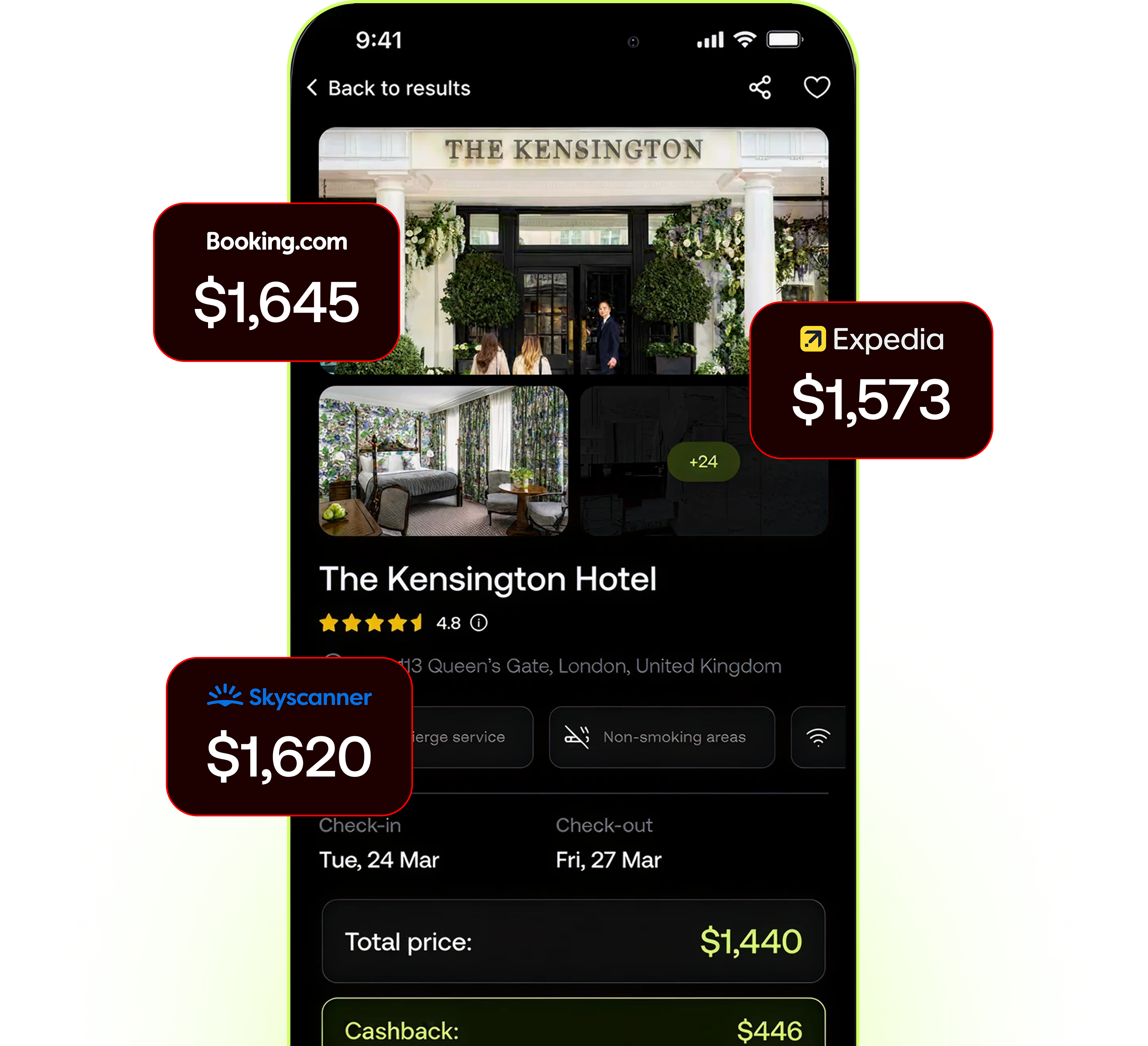
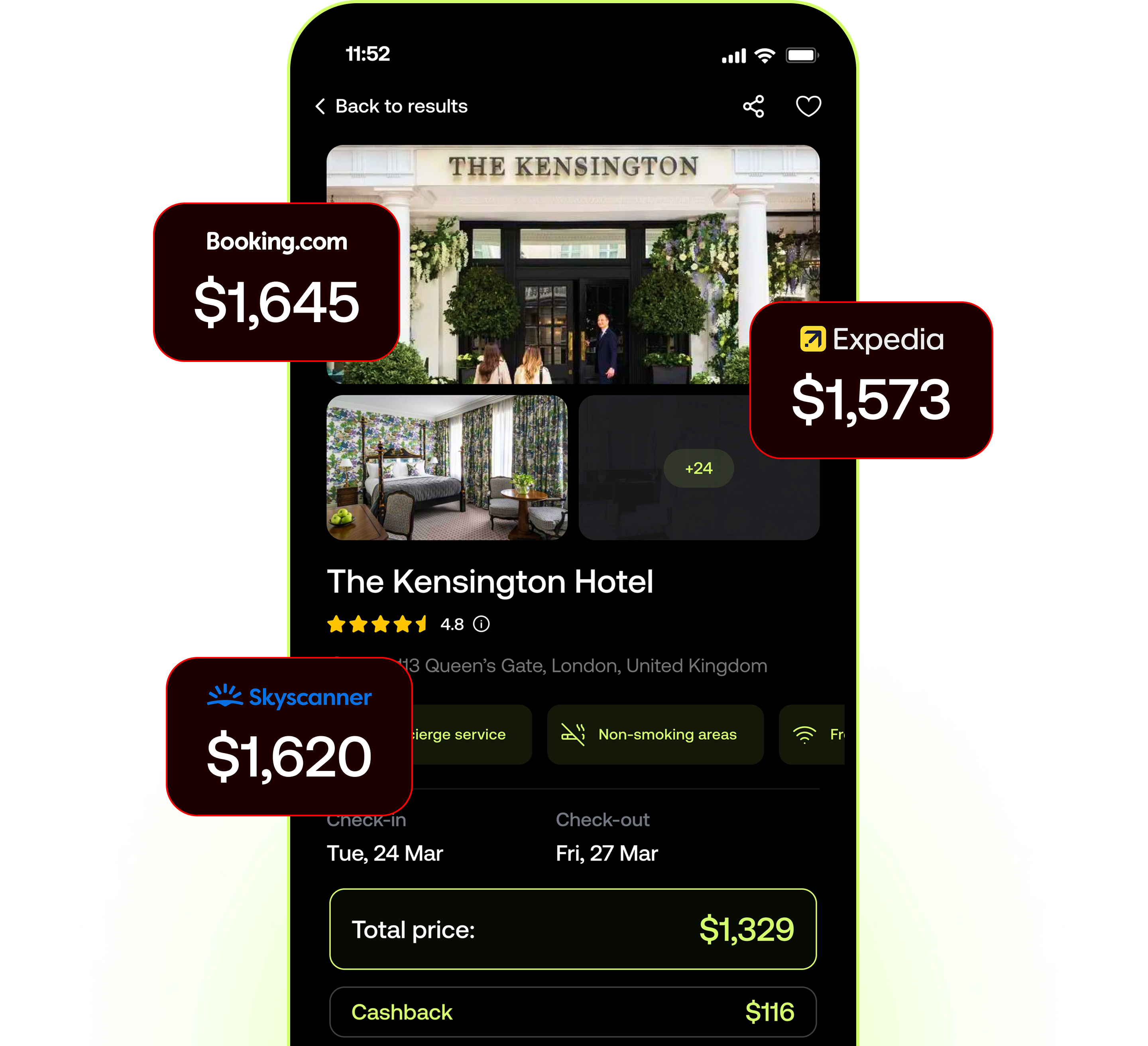
- You can use KSM as a payment method on Epic to book over 2 million hotels and flights across 190+ countries worldwide. By booking travel through Epic with KSM or 200+ other supported cryptocurrencies, users enjoy travel rates up to 30% cheaper than Booking.com and Expedia, plus $25 off your first booking upon signing up.
Book your next hotel for up to 30% less
- KSM is used to pay transaction fees whenever users send tokens or interact with smart contracts on Kusama parachains. Gas costs scale with computational complexity and network congestion, similar to Ethereum, but at significantly lower absolute prices thanks to Kusama's efficient architecture and fast block production, reduced to under 2 seconds following the December 2025 Elastic Scaling upgrade. Of each transaction fee, 80% is directed to the Kusama Treasury and 20% goes to the block producer.
- Users can stake KSM tokens to help secure the network and earn staking rewards through Nominated Proof-of-Stake. Nominators delegate KSM to validators they trust and earn rewards proportional to their stake and the validator's performance, subject to a minimum bond. Validators must run full nodes and maintain high uptime to participate in block production and consensus. Staking rewards are dynamic, driven by network inflation, the total amount staked, and the active validator count, and have historically sat in the mid-teens on an annualised basis.
- KSM holders gain voting rights in Kusama's on-chain governance, now run through OpenGov, with voting power proportional to the amount of KSM locked. Conviction voting lets holders increase their influence by locking tokens for longer periods. Token holders vote on critical decisions including protocol upgrades, parameter changes, treasury spending, reward distribution, and strategic direction. Governance is fully permissionless: any KSM holder can submit proposals and vote without centralised gatekeeping.
- The Kusama Treasury accumulates a share of transaction fees, network inflation, and slashed funds that are not distributed to validators or nominators, funding development grants, infrastructure improvements, marketing, community initiatives, and ecosystem growth. At the end of each spend period, a fraction of unspent treasury funds is burned, which encourages the treasury to deploy capital rather than accumulate it. All treasury spending decisions are made through on-chain governance by KSM holders.
Token Issuance and Inflation
Kusama follows a programmed inflation model distinct from Polkadot's. The design targets around 10% annual inflation, though the effective rate is dynamic and adjusts based on the proportion of KSM that is actively staked.
If exactly 50% of all KSM supply is staked, validators receive 100% of newly minted tokens from inflation. If the staked proportion is above or below 50%, a portion of the inflation is instead directed to the Kusama Treasury. This variable model encourages optimal staking participation without forcing a specific target.
Kusama launched through an airdrop at a 1:1 ratio to Polkadot (DOT) token sale participants, with a frictional faucet for others that has since been decommissioned. Unlike Polkadot, which underwent redenomination to increase its circulating supply, Kusama has not. Total supply is not fixed; it grows through programmed inflation.
Current circulating supply is approximately 18.65 million KSM with no maximum cap. New tokens are created continuously and distributed to validators, to nominators through staking, and to the Kusama Treasury. This ongoing inflation is fundamental to Kusama's security model and incentive structure.
Adoption Metrics and Ecosystem Status
Real-World Traction
Kusama's adoption metrics reflect its role as an experimental network with a smaller scale than Polkadot but a highly engaged developer community:
The parachain ecosystem spans DeFi, gaming, NFTs, storage, identity, and specialised use cases. Notable parachains include Karura (DeFi hub), Shiden (Kusama's EVM-compatible smart contract parachain), Basilisk (liquidity), and Crust (decentralised storage). (Verify the current active parachain count against Subscan or the official Kusama dashboard before publishing a specific figure.)
Developer activity remains steady, supported by hackathons, grants through the Kusama Treasury, and technical support from Parity Technologies. The Web3 Foundation provides ongoing grants and research for the ecosystem.
Transaction volume on Kusama reflects diverse experimental use cases rather than high throughput demands. Daily transactions vary significantly based on experimental deployments and market conditions, with periods of intense activity followed by quieter phases as projects iterate.
Network participation includes nominators and validators distributed globally, with community-driven validation and governance participation reflecting engagement by early-stage projects and blockchain researchers.
Market Conditions and Liquidity
KSM currently trades well below its longer-term highs, though substantially above its all-time low. The token is listed on major exchanges including Binance, OKX, HTX, and Kraken, providing consistent liquidity for trading. (Note: KuCoin removed KSM spot margin trading in January 2026; spot trading remains available.)
Per CoinMarketCap, 24-hour trading volume is approximately $2.27 million against a market cap of around $57.13 million, giving a volume-to-market-cap ratio of roughly 3.98%. Top trading pairs include KSM/USDT and KSM/BTC. These figures reflect moderate liquidity for an asset ranked around #308.
Kusama's price reflects risk-on sentiment toward experimental blockchain projects and shifts in broader cryptocurrency markets. As an experimental network with lower institutional adoption compared to Polkadot, Kusama typically exhibits higher volatility.
Kusama Ecosystem
Block Explorer and Network Transparency
Subscan serves as the primary block explorer for Kusama, providing real-time visibility into blocks, transactions, addresses, smart contracts, and parachain activity. Users can verify transactions, monitor validators, track staking activity, and observe governance proposals through Subscan's transparent interface.
The explorer displays detailed information about parachain operations, relay chain activity, and cross-chain message passing, enabling community members to understand network activity comprehensively. Kusama's fully on-chain governance means all proposals, voting, and treasury spending are visible and auditable through the explorer.
Developer Infrastructure
Kusama benefits from Substrate's mature developer ecosystem, with comprehensive documentation and tooling. Substrate itself is Rust-based, while Polkadot.js provides JavaScript libraries for wallet and blockchain interaction; additional community tooling exists in other languages. Developers can build parachains, smart contracts (on EVM-compatible parachains like Shiden, or via Revive), or applications using standard Substrate tooling.
The Kusama Treasury funds development grants and hackathons, supporting project teams and infrastructure improvements. Parity Technologies provides technical support to projects building on Kusama, and the Web3 Foundation offers grants and research support for ecosystem development.
Popular development tools include Polkadot.js for wallet and blockchain interaction, plus Ethereum tools such as Hardhat and Remix for Solidity development on EVM-compatible environments. With Revive now live, teams familiar with Ethereum tooling can deploy Solidity contracts on Kusama with fewer modifications.
DeFi and Trading Applications
Kusama has hosted multiple DeFi experiments including decentralized exchanges, lending protocols, and synthetic asset platforms. Karura parachain serves as the DeFi hub, hosting liquidity pools, lending protocols, and governance infrastructure. Kusama's speed and low fees make complex trading strategies and real-time price updates feasible.
Gaming and NFT applications leverage Kusama's scalability and cost efficiency. Projects experiment with play-to-earn models, NFT marketplaces, and gaming economies in which transaction costs are negligible, enabling freemium and micropayment models that are impractical on higher-cost networks.
Storage and data infrastructure parachains like Crust provide decentralized storage with economic incentives aligned to Kusama's network. These applications test storage mechanisms that later influence Polkadot development.
Is Kusama (KSM) a Good Investment?
Kusama's investment thesis differs fundamentally from Polkadot. As an experimental network, Kusama carries higher risk and volatility but offers exposure to early-stage blockchain innovation. The investment case rests on several factors:
The technology foundation is solid. Substrate-based architecture, Nominated Proof-of-Stake consensus, and heterogeneous sharding represent proven, battle-tested technology. The October 2025 migration to the Asset Hub architecture and the December 2025 Elastic Scaling and Revive upgrades demonstrate ongoing technical evolution and a commitment to modern standards.
Ecosystem potential remains significant. Kusama's lower barrier to entry attracts ambitious projects testing novel ideas before mainnet deployment. Several projects that launched on Kusama have gone on to achieve meaningful adoption. Early investors in successful Kusama projects have, in some cases, experienced substantial returns, though past performance does not indicate future results.
However, risks warrant serious consideration. Kusama's experimental nature means projects fail, governance decisions prove incorrect, and technical issues occur more frequently than on Polkadot. The "expect chaos" culture attracts bold innovation but also elevated risk. Token value depends on ecosystem adoption, development progress, and market sentiment toward experimental blockchain projects.
The regulatory environment remains uncertain. Kusama's decentralised governance and international community mean regulatory changes in any major jurisdiction could affect adoption or exchange listings. Staking rewards and token economics may also shift through governance decisions, affecting returns.
Price volatility is significant. The move from Kusama's all-time high of $623.75 to current levels represents extreme price swings. A meaningful recovery would require substantial ecosystem growth, successful deployments, and positive market sentiment toward experimental blockchain infrastructure.
The investment thesis for KSM is straightforward: Kusama provides exposure to early-stage blockchain innovation with real technology and an active developer community, but carries elevated risk compared to Polkadot or other established platforms. Only risk capital unsuitable for conservative portfolios should be considered for KSM.
This content is for educational purposes only and should not be considered financial advice. Always conduct your own research before investing in any cryptocurrency.
Read More Layer 1 Blockchain Coin Guides
- What is Conflux (CFX): A Comprehensive Guide (2026)
- What is Neo (NEO): A Comprehensive Guide (2026)
- What Is TX Crypto Coin (TX)? Top 5 Ways to Use TX in 2026
Frequently Asked Questions
1. What is the price of Kusama?
As of August 2026, Kusama (KSM) trades at approximately $3.06 USD. Crypto prices fluctuate continuously; always check live pricing on CoinMarketCap or CoinGecko for real-time rates.
2. Where can I buy KSM?
KSM trades on major exchanges including Binance, OKX, HTX, Kraken, and KuCoin. Top trading pairs include KSM/USDT and KSM/BTC. Search your preferred exchange for KSM trading pairs and current prices.
3. How does Kusama differ from Polkadot?
Kusama and Polkadot are independent networks sharing Substrate technology but with distinct philosophies. Kusama prioritises rapid experimentation and fast-paced development; Polkadot prioritises stability, security, and enterprise adoption. Kusama's governance cycle is roughly four times faster than Polkadot's, with a combined voting and enactment period of around 15 days. Both use Nominated Proof-of-Stake consensus and heterogeneous sharding, but Kusama deliberately accepts higher risk to enable bolder innovation. Kusama serves as Polkadot's testing ground, with successful innovations often adopted by Polkadot afterwards. Kusama is suited to early-stage projects and experimental deployments; Polkadot is suited to production systems requiring stability.
4. How secure is Kusama?
Kusama achieves security through Nominated Proof-of-Stake consensus, where validators and nominators stake KSM to secure the network. Dishonest validators have their stake slashed, creating strong economic penalties for misbehaviour. Relay Chain validators provide shared security for parachains. However, Kusama's experimental nature means security incidents occur more frequently than on Polkadot. Users should expect higher technical risk and be cautious with large amounts of value.
5. What is the staking reward on Kusama?
Kusama staking rewards depend on the network inflation rate, the total amount staked, and the active validator count. Historically, rewards have sat in the mid-teens on an annualised basis, but this fluctuates. Check a live staking dashboard at publication time for the current APY. Nominators earn rewards by delegating to validators; validators earn rewards by running nodes and participating in consensus.
6. Is KSM staking available to everyone?
Any KSM holder can become a nominator by bonding tokens to validators through the network. Nominators need not run nodes; they select validators to delegate to. A minimum bond is required to nominate, and there is also a dynamic minimum-active-nomination threshold that determines whether a nomination earns rewards, which varies with the size of the nominator pool. Validators must run full nodes and meet technical requirements, creating higher barriers to entry.
7. Is Kusama merging with Polkadot?
No. There is no official merger or token swap planned between Kusama and Polkadot. Both networks remain independent, standalone blockchains. Rumours about a 1:100 KSM-to-DOT swap originated as unverified community speculation, not an official proposal or governance referendum. In October 2025, Kusama completed a technical migration to the Polkadot Asset Hub architecture, a modernisation of runtime infrastructure, but this is a technical upgrade, not a prelude to a merger. Kusama continues operating as an independent experimental network.
8. What are parachains on Kusama?
Parachains are independent blockchains that connect to Kusama's Relay Chain. Each parachain maintains its own state and logic while benefiting from Relay Chain security and the ability to communicate with other parachains. Access to blockspace is managed through Agile Coretime, which replaced the earlier slot-auction and crowdloan model: projects now purchase coretime on demand or in bulk and can scale capacity up or down as needed. Kusama parachains span DeFi, gaming, storage, identity, and specialised use cases.


Mithra Ghosh is a Dubai-based content writer and SEO copywriter with 2+ years of experience crafting search-optimised content across crypto, Web3, and digital finance. She combines strong editorial instincts with a deep understanding of blockchain ecosystems and on-chain trends.
At Epic, she writes about the growing world of crypto-native travel helping readers understand how holding and spending digital assets can unlock smarter, cheaper ways to see the world.

Found a hotel you like? Book it for up to 30% less

Found a hotel you like? Book it for up to 30% less