Content
Kaia is a high-performance, permissionless Layer 1 blockchain engineered to bring Web3 to Asia's mainstream markets by unifying two of the region's most influential blockchain ecosystems. Built from the 2024 merger of Klaytn (developed by South Korean tech giant Kakao) and Finschia (initiated by Japanese messaging leader LINE), Kaia combines enterprise-grade reliability with access to over 250 million users through integrated messaging platforms.
The network uses an optimized Byzantine Fault Tolerance consensus mechanism capable of processing up to 4,000 transactions per second with 1-second block confirmations and immediate finality, making it one of Asia's fastest and most practical blockchain infrastructures for real-world adoption.
As of August 2026, Kaia (KAIA) is trading at approximately $0.029–$0.031 USD, with a market capitalization around $189–$193 million, ranking between #129–#174 depending on the data source. The all-time low of $0.02855 was reached in late July 2026, representing a decline of approximately 92% from the all-time high of $0.415 in December 2024. The KAIA token powers network operations, staking, governance, and transaction fees, providing genuine utility within the blockchain ecosystem.
See how much you
could save with $KAIA
Answer 2 questions to get your personalized
savings estimate.
Question 1 of 2
Where do you want?
Question 2 of 2
How many nights?
Your result
Get similar deals when we go live.
Get $25 off your first trip.
Key Takeaways
- Kaia merged Klaytn (Kakao) and Finschia (LINE) in 2024, uniting two major Asian blockchains with direct integration into messaging platforms reaching 250+ million users, eliminating Web3 onboarding barriers.
- Optimized Istanbul BFT consensus delivers immediate finality, up to 4,000 TPS capacity, and 1-second block times; current measured throughput averages ~1.5 transactions per second with peaks around 3,142 TPS.
- Full EVM compatibility with minimal changes allows developers to port Ethereum dApps and Solidity contracts to Kaia using familiar tools like Remix, Hardhat, and MetaMask.
- Fee delegation and gas abstraction let applications sponsor user costs and accept alternative tokens for payment, enabling freemium services and subscription models without requiring users to hold KAIA.
- The KAIA token secures the network through staking, enables proportional governance voting for stakers (with voting power capped), pays transaction fees, and participates in a programmed 5.2% annual inflation model.
- Real adoption metrics show 35 million users on LINE Mini Dapps (first month, 2025), 7.37 million new wallets created in February 2025 (+1,168%), and 8.1 million on-chain active users (+252%).
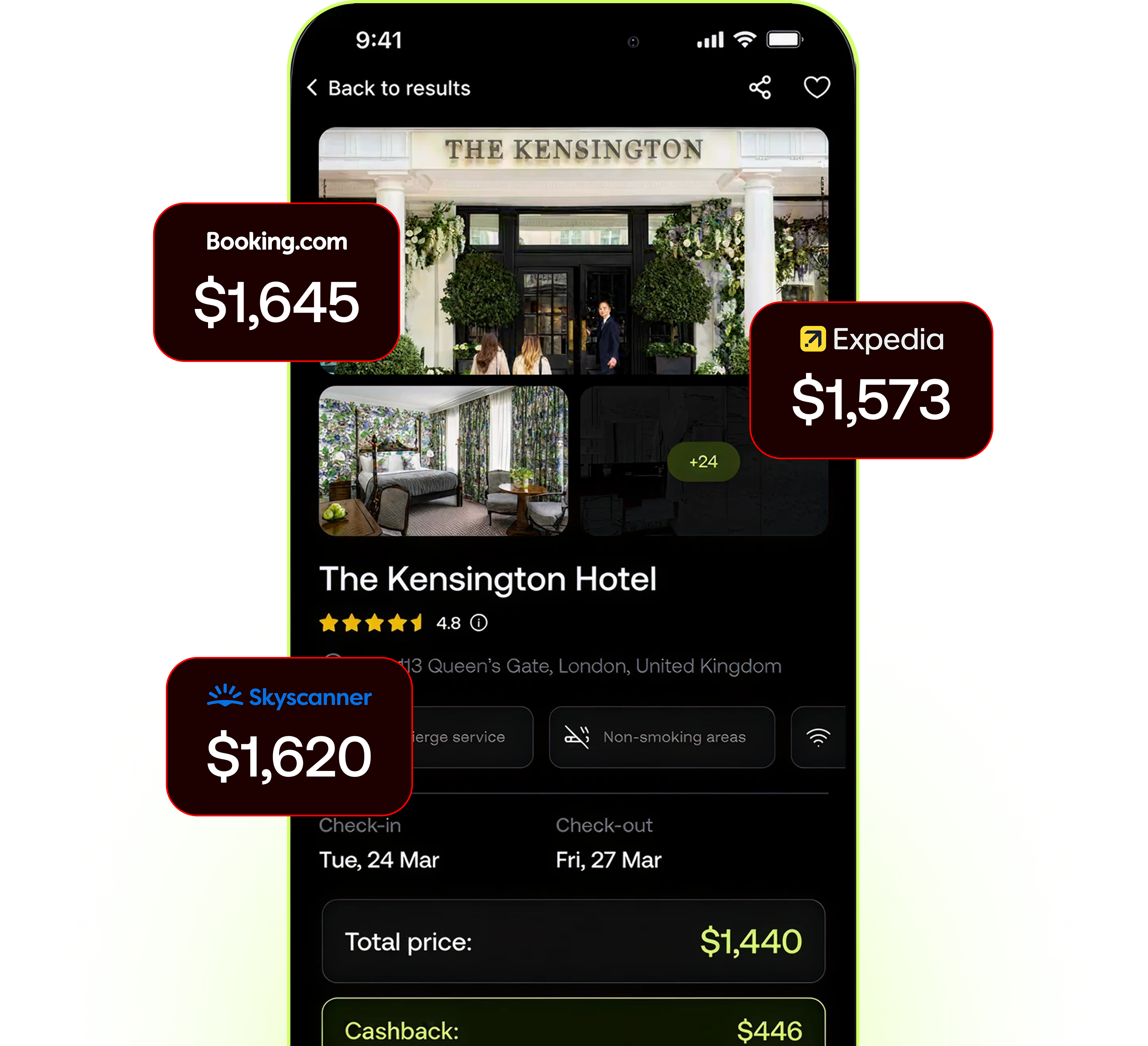
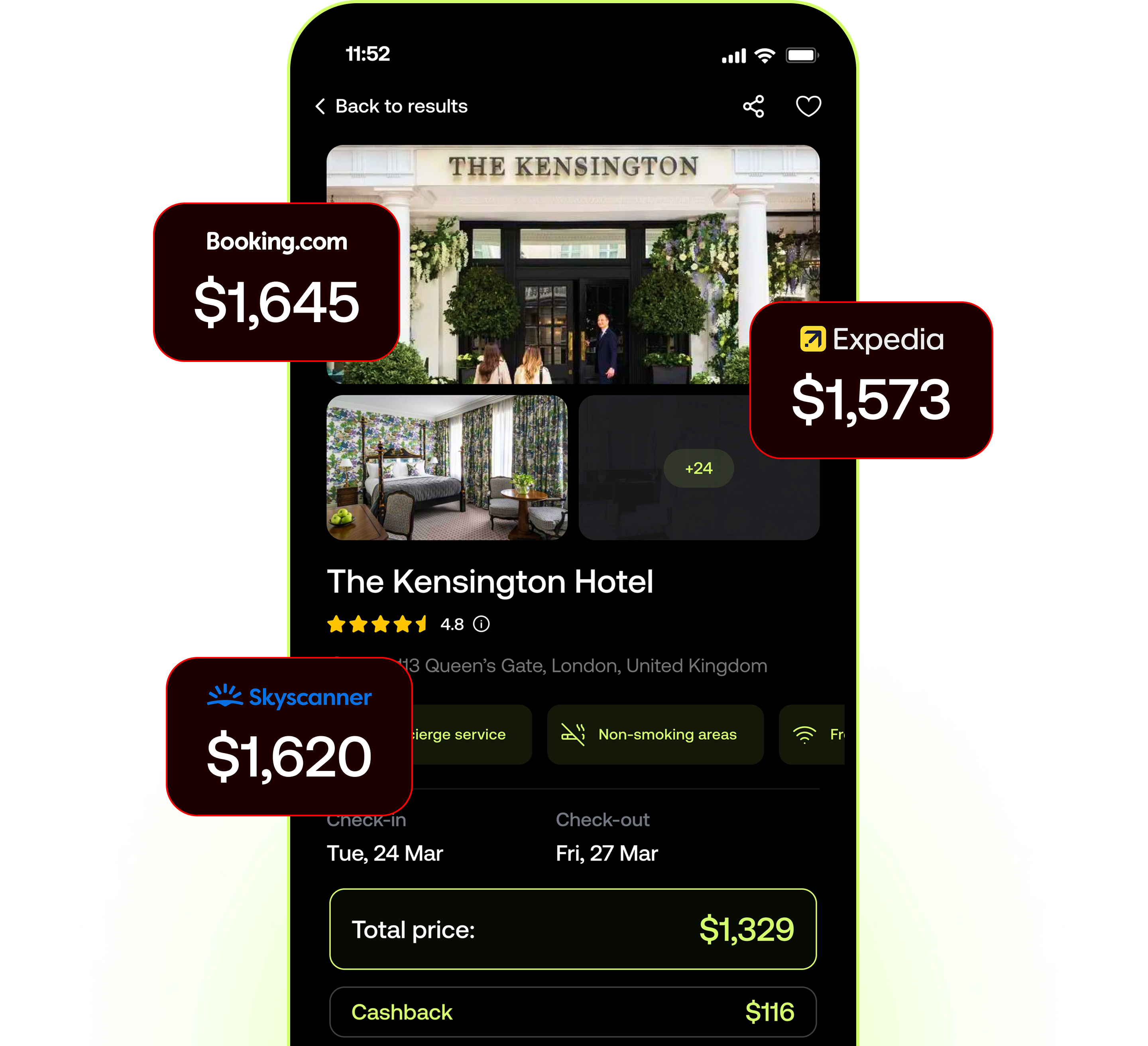
- Use KAIA on Epic to book hotels and flights across 190+ countries at rates up to 30% cheaper than Booking.com and Expedia, plus $25 off your first booking.
Kaia (KAIA) at a Glance (July 2026)
What Is Kaia (KAIA)?
Kaia is a permissionless, high-performance Layer 1 blockchain designed to solve the adoption gap between Web2 and Web3 by bringing blockchain technology to Asia's massive user base through existing messaging platforms. Rather than asking users to learn complex blockchain concepts, Kaia integrates directly with KakaoTalk and LINE, platforms that together reach over 250 million active users across South Korea, Japan, Indonesia, Thailand, Taiwan, and other Asian markets.
The platform emerged from an unprecedented decision by two leading blockchain projects to merge rather than compete. Klaytn, developed by Kakao in 2019, had built significant developer adoption and enterprise partnerships. Finschia, launched by LINE in 2018, brought similar infrastructure and user integration. Rather than continue as separate networks, the two foundations recognized that unification would accelerate Web3 adoption more effectively than parallel development. The Kaia mainnet launched in 2024, inheriting technology, talent, and user access from both projects while eliminating redundant infrastructure.
What sets Kaia apart is its focus on solving practical problems for real users rather than pursuing technological extremes. The network prioritizes immediate transaction finality eliminating the need for multiple confirmations low fees suitable for everyday payments, and seamless integration with tools users already trust. By allowing users to experience Web3 through familiar messaging apps, Kaia eliminates the learning curve that has historically prevented mainstream blockchain adoption.
Kaia's Permissionless Governance Transition (PGT)
Kaia is actively executing a transition from a stability-focused Public Permissioned Chain to a performance-driven Public Permissionless Chain. This restructuring has three core pillars:
- Permissionless Expansion: Validator and Governance Council roles are being decoupled. Validators handle node stability, block production, and consensus, while Governance Council members focus on ecosystem direction and decision-making. All GC members must be validators, but not all validators need to be GC members.
- Governance Automation: Manual Governance Council approval is being replaced by "Qualification by System" automatic validator onboarding when staking and technical requirements are met, followed by a 7-day Challenge Period for community review.
- Tokenomics Reform: Token economics are explicitly part of the PGT, with details to be announced separately. Readers should monitor Kaia's official channels for updates on inflation rates, distribution, and burn mechanisms.
This transition increases decentralization (upside) while introducing uncertainty around unannounced tokenomics changes (risk). See the investment section below for implications.
How Kaia Works
Consensus Mechanism: Optimized Istanbul BFT
Kaia uses an optimized version of Istanbul Byzantine Fault Tolerance, a consensus algorithm designed specifically for enterprise-grade reliability and performance. Unlike Proof-of-Work systems that require massive computational power, or simple Proof-of-Stake systems vulnerable to certain attack vectors, BFT achieves transaction finality through a committee-based validation process. This committee-based model trades off perfect decentralization for reliability suitable for enterprise and mainstream applications.
The mechanism works through three core steps: a proposer creates a new block using Verifiable Random Function (VRF) to ensure unpredictable selection, validators review and sign the block, and finality is achieved once more than two-thirds of the committee signs the block. This process completes in one second, ensuring transactions cannot be reversed after confirmation. The VRF component adds cryptographic unpredictability, preventing malicious actors from targeting specific block proposers.
The key advantage of this approach is immediate finality. Once a block is confirmed and signed by the committee, it becomes part of the immutable chain. Users don't wait for subsequent blocks or additional confirmations, eliminating the uncertainty present on Proof-of-Work blockchains. For applications like payments and exchanges, this provides the user experience of traditional centralized systems while maintaining blockchain benefits like transparency and verifiable security.
Measured Performance: Kaia's theoretical capability is 4,000 TPS; however, actual current network throughput averages approximately 1.5 transactions per second, with recorded peaks around 3,142 TPS during higher-activity periods (source: Chainspect). This distinction matters for evaluating real-world adoption.
EVM Compatibility and Smart Contracts
Kaia implements Ethereum Virtual Machine compatibility with minimal changes required to existing smart contracts. The platform supports all major Ethereum development tools including Remix for online development, Hardhat for local development, Foundry for testing, and libraries like Web3.js and Ethers.js.
Kaia's account model decouples cryptographic keys from addresses—a feature unavailable on standard Ethereum. This allows multiple keys with different roles assigned to single accounts. Users can separate transaction keys from governance keys or fee delegation keys, adding security and flexibility. If a private key is compromised, it can be replaced without losing the account or associated assets.
Users benefit from seamless wallet integration. Connecting to Kaia applications with MetaMask requires only an RPC endpoint change. This compatibility extends to all Ethereum-based wallets and development practices, dramatically reducing barriers for both developers and users transitioning from Ethereum.
Network Architecture
Kaia's network structure separates different functions into distinct node types. Core Cell nodes handle consensus and block creation, forming the core validation committee. Endpoint nodes provide RPC API access for users and applications, processing requests and serving data without participating in consensus. This separation keeps consensus lean and performant while providing robust public access.
Service chains extend Kaia's capabilities for specialized use cases. Applications can run their own blockchains connected to the main Kaia chain, maintaining autonomy while inheriting security properties from the parent chain. This architecture suits gaming applications requiring high-speed side chains or enterprises needing private transaction processing.
Fee Delegation and Gas Abstraction
Kaia's most innovative feature for mainstream adoption is fee delegation, allowing applications to pay transaction costs on behalf of users. A new user can interact with a dApp without owning any KAIA by having the application sponsor their transaction fee. This eliminates a critical barrier to Web3 adoption: the requirement to obtain cryptocurrency just to pay gas.
Gas abstraction complements fee delegation by allowing users to pay fees with any token approved by an application, not just KAIA. A gaming application might accept the game's native token for gas, or a DeFi protocol might accept stablecoins. This flexibility enables business models previously impossible on other blockchains, including subscription services, freemium applications, and pay-as-you-go models.
The KAIA Token
What Is KAIA Used For?
KAIA is the native token of the Kaia network and plays an essential role in powering the blockchain's operations, security, and governance. Here are its main uses:
- You can use KAIA as a payment method on Epic to book over 2 million hotels and flights across 190+ countries worldwide. By booking travel through Epic with KAIA or 200+ other supported cryptocurrencies, users enjoy travel rates up to 30% cheaper than Booking.com and Expedia, plus $25 off your first booking upon signing up.
Book your next hotel for up to 30% less
- KAIA is used to pay transaction fees whenever users send tokens or interact with smart contracts. Gas costs scale with computational complexity and network congestion, similar to Ethereum, but at significantly lower absolute prices due to Kaia's 1-second block times and 4,000 TPS throughput. A portion of each transaction fee is permanently burned, creating deflationary pressure that offsets protocol inflation.
- Users can stake KAIA tokens to help secure the network and earn staking rewards. Validators must stake a minimum of 5 million KAIA to join the Governance Council and participate in block consensus. Staking rewards range from 5-12% APY depending on network conditions, total amount staked, and the number of active validators. Validators staking amounts above the 5 million minimum threshold earn proportionally higher rewards, incentivizing deeper network commitment.
- When users or developers store data on the Kaia blockchain, they must lock 1 KAIA for every 1,024 bytes of data as collateral. This system encourages efficient storage usage and prevents unnecessary blockchain bloat. If the stored data is later deleted, the locked KAIA is returned to the owner in full, making storage costs temporary rather than permanent.
- KAIA holders gain voting rights in the Kaia Governance Council, with voting power proportional to the amount of KAIA locked for governance. Token holders vote on critical decisions including protocol upgrades, fee parameters, reward distribution between validators and the community, ecosystem funding allocation, and strategic directions. Voting power is capped per holder to prevent centralization and ensure minority voices remain influential in governance.
Token Issuance and Inflation
KAIA follows a programmed inflation model designed to balance incentives for network participation with long-term token value. The initial annual inflation rate targets 5.2%, issued automatically with each new block. Approximately 9.6 KAIA is created per block, which equals roughly 300 million KAIA annually.
Note: The 5.2% inflation rate is subject to governance change. As part of the Permissionless Governance Transition, tokenomics reform is pending, so this rate may change.
Reward Distribution
New tokens are distributed according to a predetermined formula across four recipients:
- Block Proposer Rewards: 10% (to validators who create blocks)
- Staking Rewards: 40% (to validators who stake above the 5M minimum)
- Kaia Ecosystem Fund (KEF): 25% (for developer grants and infrastructure expansion)
- Kaia Infrastructure Fund (KIF): 25% (for core protocol development)
This distribution model ensures new tokens flow toward activities that increase network utility while rewarding validators for network security.
Adoption Metrics and Market Reality
Real-World Traction
While Kaia's theoretical user reach through KakaoTalk and LINE is 250+ million, actual on-chain adoption shows measurable but emerging traction:
- 35 million users on LINE Mini Dapps within one month of launch (early 2025)
- 7.37 million new wallets created in February 2025 (up 1,168%)
- 8.1 million on-chain active users (up 252%)
- 27.38 million monthly transactions (up 124%)
These figures demonstrate real ecosystem growth, though they remain a small fraction of the potential 250+ million user base.
KakaoTalk Integration Status
Kaia's messenger integration operates primarily through LINE, which hosts the growing Mini Dapps ecosystem. KakaoTalk's Klip wallet has been adapting to tighter South Korean cryptocurrency regulations.
Market Conditions and Liquidity
KAIA is currently trading at or near its all-time low, reached in July 2026. The token has experienced substantial volatility and is facing thin liquidity conditions. Current 24-hour trading volume is approximately $4.3–$4.9 million against a market cap of ~$189 million, indicating limited trading depth. Market concentration is notable:
- Top trading pairs: Bithumb (KAIA/KRW) at ~$1.11M 24h volume; Binance (KAIA/USDT) at ~$529K
- Exchange concentration: Heavy Korean exchange representation reflects the token's Asian focus and regulatory environment
Kaia Ecosystem
Block Explorer and Network Transparency
Kaiascan serves as the official block explorer for Kaia, providing real-time visibility into blocks, transactions, addresses, smart contracts, and token holdings. Users can verify transactions, monitor validators, and track network activity through a transparent, public interface. The explorer also displays governance voting records and fund allocation decisions, maintaining accountability for ecosystem spending.
Alternative explorers like OKX Kaia Explorer provide additional access options, ensuring no single point of failure for blockchain data access.
Integrated Wallets and Messenger Access
The defining feature of Kaia is wallet integration within LINE messaging. Kaia enables Web3 interactions through an app users already open daily, reducing friction compared to traditional blockchain platforms requiring specialized wallet downloads.
Wallet options include:
- In-messenger wallets: LINE Wallet integration for seamless dApp access
- Third-party wallets: Binance Web3 Wallet, TrustWallet, and MetaMask support Kaia via RPC endpoint configuration
Developer Infrastructure
Kaia provides comprehensive developer documentation, SDKs for JavaScript and other languages, and developer tools matching Ethereum's ecosystem. The platform supports Alchemy for enhanced API capabilities, including real-time event monitoring and advanced querying.
The Kaia Foundation operates grants programs and hackathons funding developer projects, actively growing the ecosystem. These programs specifically target Web3 gaming, DeFi infrastructure, enterprise solutions, and consumer applications leveraging Kaia's unique messenger integration.
Related: Learn more about other high-performance Layer 1 options by reading guides to /what-is-solana-crypto-coin or /what-is-polygon-crypto-coin.
DeFi and Trading Applications
Decentralized exchanges and lending protocols operate on Kaia, benefiting from its 1-second blocks and low fees. The network's speed makes complex trading strategies and real-time price updates feasible without performance delays or prohibitive costs.
Gaming-focused DeFi applications leverage Kaia's optimized performance and fee delegation to create gaming economies where players earn tokens without transaction cost friction.
Is Kaia (KAIA) a Good Investment?
Whether Kaia represents a good investment depends on your risk tolerance and investment thesis. Kaia's most compelling advantage is its unmatched access to Asian users through KakaoTalk and LINE integration. No other blockchain platform can replicate this advantage because it requires partnerships with the world's largest messaging platforms in major Asian markets. This structural moat creates sustainable competitive advantages if the ecosystem successfully captures even a fraction of available users.
The technical foundation is solid. Optimized Istanbul BFT provides immediate finality and 4,000 TPS without sacrificing decentralization or security. The architecture is proven, having evolved from years of Klaytn development and enterprise usage. Fee delegation and gas abstraction features enable business models impossible on other blockchains, potentially driving unique applications.
However, significant risks warrant consideration. Cryptocurrency regulations continue evolving across Asian markets. Policy shifts in South Korea, Japan, or Southeast Asia could dramatically affect Kaia's growth trajectory. Competing Layer 1 blockchains including Solana, Sui, and Polygon also pursue Asian market share with strong funding and developer ecosystems. Kaia's advantage in user access means little without compelling applications that drive daily usage and transaction volume.
The investment depends on whether you believe Kaia can convert its user access advantage into actual blockchain adoption, sustainable token economics, and ecosystem growth. Early evidence from Klaytn and Finschia shows the merged entity maintains enterprise partnerships and developer activity, supporting the thesis. However, mass adoption remains uncertain across the entire cryptocurrency industry.
This content is for educational purposes only and should not be considered financial advice. Always conduct your own research before investing in any cryptocurrency.
Frequently Asked Questions
1. What is the price of Kaia?
As of August 2026, Kaia (KAIA) trades at approximately $0.029–$0.031 USD. Re-pull pricing and market capitalization from CoinMarketCap at publication time and date-stamp all figures. Crypto prices fluctuate continuously; always check live tracking on CoinMarketCap or CoinGecko for real-time rates.
2. Where can I buy KAIA?
KAIA trades on major exchanges including Binance, OKX, Bybit, KuCoin, Gate.io, and MEXC. Top trading pairs include Bithumb (KAIA/KRW) at ~$1.11M 24h volume and Binance (KAIA/USDT) at ~$529K. Korean exchange concentration reflects the token's Asian focus.
3. How does Kaia compare to Ethereum?
Kaia and Ethereum serve different markets. Ethereum processes 15–30 transactions per second natively with 12-second block times, while Kaia is capable of up to 4,000 TPS with 1-second blocks and immediate finality; current measured throughput on Kaia averages ~1.5 TPS. Both are EVM-compatible, allowing developers to port code between chains with minimal changes.
Ethereum has a mature ecosystem with extensive DeFi protocols and larger developer community. Kaia's advantage lies in faster theoretical throughput, lower costs, and seamless integration with Asian messaging users. For developers building consumer applications in Asia, Kaia provides superior onboarding; for established protocols requiring maximum ecosystem liquidity, Ethereum remains dominant.
4. How secure is Kaia?
Kaia achieves security through Byzantine Fault Tolerance consensus, requiring more than two-thirds of the Governance Council to approve blocks. This mechanism prevents 51% attacks and chain reorganization that affect Proof-of-Work systems. Immediate finality means transactions cannot be reversed after confirmation, unlike blockchains requiring multiple block confirmations for security.
5. What is the staking reward on Kaia?
Staking rewards on Kaia depend on network conditions, total amount staked, and active validator count. Check a live staking dashboard at publication time for current APY. Crucially, the 5 million KAIA minimum stake does not earn rewards validators earn returns only on amounts staked above this minimum. Rewards are funded through block rewards and protocol inflation.
6. What was the Klaytn to KAIA merger?
In 2024, Klaytn (backed by Kakao) and Finschia (developed by LINE) merged to form Kaia. Rather than compete, the two projects unified their technology, developer communities, and user bases. The Kaia mainnet launched in 2024.
Conversion ratios:
- Klaytn (KLAY) to KAIA: 1:1
- Finschia (FNSA) to KAIA: approximately 148:1
The merger created unified infrastructure serving 250+ million potential users across both ecosystems while eliminating redundancy.
7. Is KAIA a stablecoin?
No. KAIA is a utility token whose value fluctuates based on market supply and demand. It is not pegged to fiat currency. Its all-time high was $0.415 in December 2024, and the all-time low was $0.02855 in July 2026 a decline of approximately 92%.
8. What is the Permissionless Governance Transition?
Kaia is transitioning from a permissioned chain to a permissionless chain through three pillars: (1) decoupling validator and Governance Council roles, (2) automating council qualification, and (3) reforming tokenomics (details pending). This increases decentralization but introduces uncertainty around unannounced token economics changes.


Mithra Ghosh is a Dubai-based content writer and SEO copywriter with 2+ years of experience crafting search-optimised content across crypto, Web3, and digital finance. She combines strong editorial instincts with a deep understanding of blockchain ecosystems and on-chain trends.
At Epic, she writes about the growing world of crypto-native travel helping readers understand how holding and spending digital assets can unlock smarter, cheaper ways to see the world.
Found a hotel you like? Book it for up to 30% less

Found a hotel you like? Book it for up to 30% less