Content

Jito (JTO) is a crypto coin that helps power the Jito Network, one of the largest liquid staking and Maximum Extractable Value (MEV) protocols on the Solana blockchain. It combines a specialized open-source validator client with the JitoSOL liquid staking pool to capture extra MEV rewards and share them with participants. Together, the network helps secure more than $2 billion in Total Value Locked (TVL).
As of July 2026, the JTO coin is trading at around $0.58 USD, with a circulating market capitalization of approximately $293 million. It ranks #101 among cryptocurrencies and is available on major exchanges such as Binance and Coinbase. In addition to governance and investment opportunities, JTO also has real-world use cases. For example, you can use it to book discounted hotels and flights around the world through Epic.
See how much you
could save with $JTO
Answer 2 questions to get your personalized
savings estimate.
Question 1 of 2
Where do you want?
Question 2 of 2
How many nights?
Your result
Get similar deals when we go live.
Get $25 off your first trip.
Key Takeaways
- Jito (JTO) powers one of Solana's biggest liquid staking platforms, JitoSOL, along with its MEV block-building system. This helps improve network efficiency across thousands of Solana validators.
- When you stake SOL through Jito, you receive JitoSOL. It automatically earns regular Solana staking rewards while also collecting additional MEV rewards, helping increase your overall returns.
- JTO holders can use their tokens to book over 2 million hotels and flights in more than 190 countries through Epic (epicchain.io). Users save up to 30% compared to Booking.com and Expedia, plus receive $25 off their first booking after signing up.
- Holding JTO gives you governance rights in the Jito DAO. Token holders can vote on how the protocol is managed, including treasury spending, validator strategies, and MEV tip distribution.
- Both JTO and JitoSOL are integrated into leading Solana DeFi platforms such as Kamino, Meteora, and Marginfi, where they are used as collateral, liquidity assets, and yield-generating tokens.
Jito (JTO) Crypto Coin at a Glance (July 2026)
What Is Jito (JTO) Crypto Coin and Its Network?
Jito (JTO) is the native governance token of the Jito Network, one of the leading liquid staking and MEV infrastructure projects on the Solana blockchain. Its goal is to make Solana staking more rewarding while improving how transactions are processed across the network.
Before Jito was introduced, Solana users faced two major challenges. First, staking SOL meant locking up your tokens, making it difficult to use them in DeFi applications. Second, Maximum Extractable Value (MEV), extra profits earned by changing the order or grouping of transactions, was mostly collected by private bots and a small number of validators. This often led to network spam and congestion, while regular stakers missed out on those rewards.
Jito solved these issues by launching an open-source, MEV-enabled validator client along with the JitoSOL liquid staking pool. When users stake their SOL through Jito, they receive JitoSOL, which can still be used across DeFi while earning regular staking rewards. At the same time, the protocol captures MEV tips and automatically shares them with stakers, helping them earn higher returns.
The Jito Network was co-founded in 2021 by Lucas Bruder (CEO), a former Tesla robotics engineer, and Zano Sherwani (CTO), a former Amazon software engineer. Backed by well-known investors such as Multicoin Capital and Framework Ventures, Jito Labs has built key infrastructure that now supports a large share of Solana's validator network and liquid staking ecosystem.
How Does Jito Work?
Jito is designed to make the Solana blockchain more efficient while helping stakers earn higher rewards. It does this by combining three key technologies: a specialized validator system, an off-chain MEV auction engine, and a liquid staking pool that shares MEV rewards with users.
1. Jito-Solana Validator Client and Relayer System
Normally, Solana validators process transactions based on arrival time or transaction fees. To gain an advantage, automated trading bots (called searchers) often flood the network with thousands of duplicate transactions, hoping one gets processed first. This creates congestion and can cause normal users' transactions to fail.
Jito solves this problem with the Jito-Solana Client, an upgraded version of the standard Solana validator software. It works with specialized Relayers that filter, verify, and inspect transactions before they reach the validator. This reduces the workload on validators, cuts down on spam, and keeps the network running more smoothly.
2. Jito Block Engine and Transaction Bundles
Instead of allowing bots to spam the network, Jito uses an off-chain auction system called the Jito Block Engine.
- Atomic Bundles: Searchers combine related transactions into a package called a Bundle. These bundles follow an all-or-nothing rule: if one transaction fails, the entire bundle is cancelled. This prevents failed transactions from affecting the blockchain or wasting computing resources.
- Auction Process: Searchers submit their bundles along with a MEV tip paid in SOL. The Block Engine runs real-time simulations to find the best combination of bundles that do not conflict with each other while generating the highest total MEV tips.
- Validator Execution: The winning bundles are then sent directly to validators running the Jito-Solana Client, where they are included at the beginning of the next block.
By replacing random transaction spam with an organized auction, Jito improves network efficiency while turning MEV into a source of revenue for the protocol.
3. Non-Custodial Liquid Staking and Dual Rewards (JitoSOL)
Instead of keeping MEV profits with bots or individual validators, Jito shares those rewards with its users through JitoSOL, its liquid staking token.
When you stake SOL in the Jito Stake Pool, your tokens are delegated across a carefully selected group of high-performance, MEV-enabled Solana validators. In return, you receive JitoSOL, which represents your staked SOL.
JitoSOL earns rewards from two different sources:
- Regular Solana Staking Rewards: These are the standard proof-of-stake rewards generated by Solana's network inflation, typically around 6% to 7% APY.
- MEV Tip Rewards: Around 94% of all SOL tips collected through Jito Block Engine auctions are distributed back to the JitoSOL stake pool. These rewards are processed on-chain using Program Derived Addresses (PDAs) and automatically reinvested.
As both reward streams continue to compound, the value of JitoSOL gradually increases compared to regular SOL.
Because JitoSOL is a liquid staking token, users don't have to wait through Solana's unstaking period of one epoch, roughly two days. They can continue earning rewards while freely trading JitoSOL, using it as collateral, or putting it to work across Solana's DeFi ecosystem.
Top 5 Ways to Use JTO Crypto Coin in 2026
1. Book Discounted Hotels and Flights Through Epic
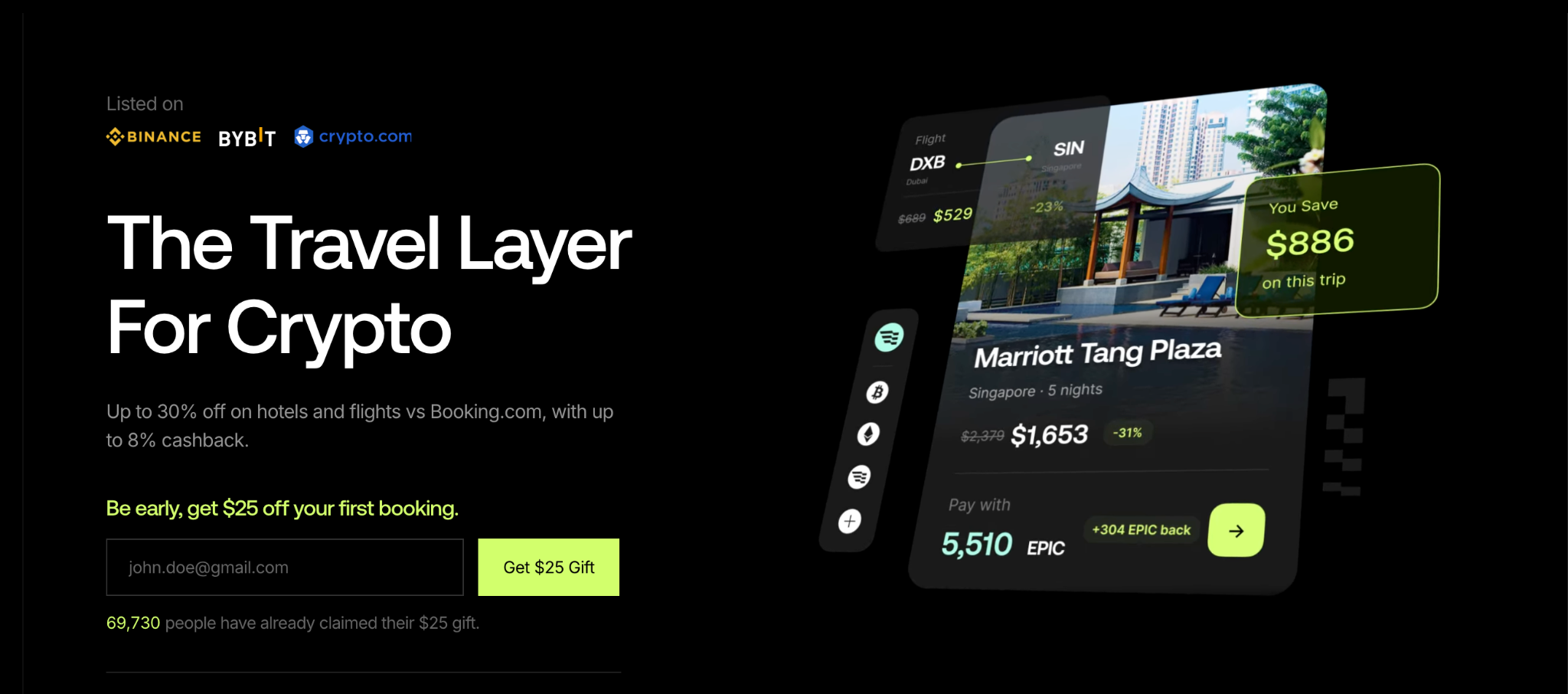
One of the most useful real-world use cases for the JTO crypto coin in 2026 is using it to pay for travel through Epic. Epic is a travel booking platform that supports 200+ cryptocurrencies including JTO.
Epic has a global inventory of over 2 million hotels and flights across 190+ countries, and prices are up to 30% cheaper than Booking.com and Expedia. New users also get $25 off their first booking when they complete their reservation through the platform.
Along with JTO and more than 200 other cryptocurrencies, the platform also supports convenient payment methods like Google Pay and Apple Pay.
Book your next hotel for up to 30% less
Whether you earned JTO through participating in the Jito ecosystem, governance, or crypto trading, using it on Epic allows you to turn your digital assets into real-world experiences while enjoying global travel savings. To start saving on hotels and flights, sign up on Epic now.
2. Participate in Jito DAO Governance and Treasury Decisions
As the native SPL governance token of the Jito Network, JTO gives holders the ability to actively participate in shaping the future of Solana’s infrastructure. Instead of only holding the token, JTO holders can use it to vote on important decisions through the Jito DAO and help guide the direction of the protocol.
Community members can submit proposals and vote on Jito Improvement Proposals (JIPs) that influence how the network develops and operates. Key governance responsibilities include managing the Jito Foundation treasury, deciding how funds are allocated, setting rules for selecting and delegating SOL to validators in the Jito stake pool, adjusting protocol fee structures, and supporting ecosystem growth.
JTO holders also help decide which developers and projects receive ecosystem grants, especially those building new solutions around Jito’s restaking and MEV (Maximum Extractable Value) infrastructure. Through DAO governance, the community plays an important role in making decisions that impact Jito’s long-term growth and decentralization.
3. Provide Liquidity and Earn Yield Across Solana DeFi
JTO plays an important role in the Solana DeFi (decentralized finance) ecosystem, giving token holders multiple ways to put their assets to work beyond simply holding them.
JTO holders can provide liquidity to decentralized exchanges and automated market makers (AMMs) such as Meteora, Orca, and Raydium. By adding JTO to liquidity pools, users help facilitate token swaps across the network and can earn a share of the trading fees generated from those transactions.
In addition, liquidity providers can use structured yield strategies through platforms like Kamino Finance, where their assets can be combined with other Solana ecosystem opportunities to generate additional returns. These strategies allow users to compound their yield while participating in the broader Solana DeFi economy.
4. Use JTO as Collateral in Solana Money Markets
JTO holders can unlock the value of their tokens without needing to sell them by using JTO as collateral in Solana-based lending and money market platforms such as Marginfi, Kamino Lend, and Drift.
By depositing JTO as collateral, users can borrow assets like USDC, PYUSD, or SOL and use those borrowed funds for different purposes. For example, they can create trading strategies, participate in yield farming opportunities, or manage everyday expenses while still keeping ownership of their JTO tokens.
This approach allows users to access liquidity while maintaining exposure to potential future growth in the JTO price. Instead of selling their holdings, they can use their tokens as a financial tool within the Solana DeFi ecosystem.
5. Trade, Speculate, and Arbitrage on Major Crypto Exchanges
Because of its strong position within the Solana ecosystem and its availability on major trading platforms, JTO is actively traded by investors, traders, and crypto enthusiasts around the world. The token is listed on leading centralized and decentralized exchanges, including Binance, Coinbase, Upbit, OKX, Bybit, Bitget, Gate, KuCoin, & Kraken.
Traders use JTO for different strategies, including short-term price speculation, where they try to benefit from market movements, as well as spot and futures arbitrage, where they take advantage of price differences between different markets. Some traders also use JTO for hedging strategies to manage risk while gaining exposure to Solana ecosystem growth.
Is Jito (JTO) Crypto Coin a Good Investment?
Jito has become one of the most important infrastructure projects on Solana, playing a major role in liquid staking and MEV (Maximum Extractable Value) solutions. The network currently handles more than 80% of Solana’s MEV block-building activity and remains one of the leading platforms in terms of liquid staking TVL.
Trading at around $0.58 USD, the token is 89% below its all-time high of $5.61, which was reached shortly after its launch in December 2023. However, JTO has recovered strongly from its lowest price level of around $0.2178 in early February 2026, gaining more than 165% from that bottom.
The recent price momentum was supported by major developments within the Jito ecosystem. These included the launch of Jito’s professional trading terminal, JTX, and the approval of governance proposal JIP-38. This proposal directs 100% of JTX platform revenue toward ongoing market buybacks and token burns for the next year, which could help reduce the circulating supply and potentially support long-term token value.
Looking ahead, market analysts and price models have different expectations for JTO. Current forecasts generally estimate an average trading range of around $0.60 to $0.75 during the rest of 2026. Long-term projections suggest JTO could potentially move toward $1.20 or higher by 2030 if Solana adoption, liquid staking demand, and DeFi growth continue expanding.
On the positive side, JTO has several factors that could support its long-term growth, including strong protocol revenue, expanding restaking opportunities, and token-burning mechanisms connected to actual ecosystem activity. These features create a stronger foundation compared to projects that rely only on speculation.
However, investors should also consider the potential risks. These include possible regulatory changes affecting liquid staking, growing competition from other Solana liquid staking providers, and overall volatility in the broader crypto market.
Jito’s important role in Solana’s transaction infrastructure and MEV ecosystem gives it a strong value proposition, but like all digital assets, JTO carries significant investment risks.
This information is provided for educational purposes only and should not be considered financial advice. Always do your own research and evaluate your risk tolerance before making any trading or investment decisions.
Frequently Asked Questions (FAQs)
1. Is Jito Crypto a Good Investment?
It depends on your risk tolerance, but Jito has strong fundamental value. It is the leading liquid staking and MEV (block-building) network on Solana, handling over 80% of Solana’s MEV traffic. It generates real revenue, burns its own tokens through platform buybacks, and continues to expand its ecosystem. However, like all cryptocurrencies, its price is volatile and influenced by market trends, so it carries investment risk. Always do your own research before investing.
2. How Much is Jito Coin Worth?
Jito (JTO) trades at ~$0.58 USD with a total market capitalization of around $293 million USD, ranking it among the top 101 cryptocurrencies globally.
3. Who Created Jito Crypto?
Jito was created by Lucas Bruder (CEO) and Zano Sherwani (CTO). Lucas is a former Tesla robotics engineer and Coinbase engineer, while Zano worked as a software engineer at Amazon before co-founding Jito Labs in 2021.
4. Is Jito a Solana Project?
Yes. Jito is built specifically for and operates exclusively on the Solana blockchain. It is one of the most essential infrastructure projects in the Solana ecosystem, powering its primary liquid staking token (JitoSOL) and optimizing how transactions are processed on the network.
5. What is the Jito Maximum Supply?
Jito has a fixed maximum supply of 1,000,000,000 (1 billion) JTO tokens. About half of this total supply (~503 million JTO) is currently in active circulation, with the rest set aside for community growth, core contributors, and ecosystem development unlocked over time.
6. Where can I buy JTO token in 2026?
JTO is listed on all major global exchanges for trading, including Binance, Coinbase, Upbit, OKX, Bybit, Bitget, Gate, KuCoin, & Kraken


Mithra Ghosh is a Dubai-based content writer and SEO copywriter with 2+ years of experience crafting search-optimised content across crypto, Web3, and digital finance. She combines strong editorial instincts with a deep understanding of blockchain ecosystems and on-chain trends.
At Epic, she writes about the growing world of crypto-native travel helping readers understand how holding and spending digital assets can unlock smarter, cheaper ways to see the world.



Found a hotel you like? Book it for up to 30% less

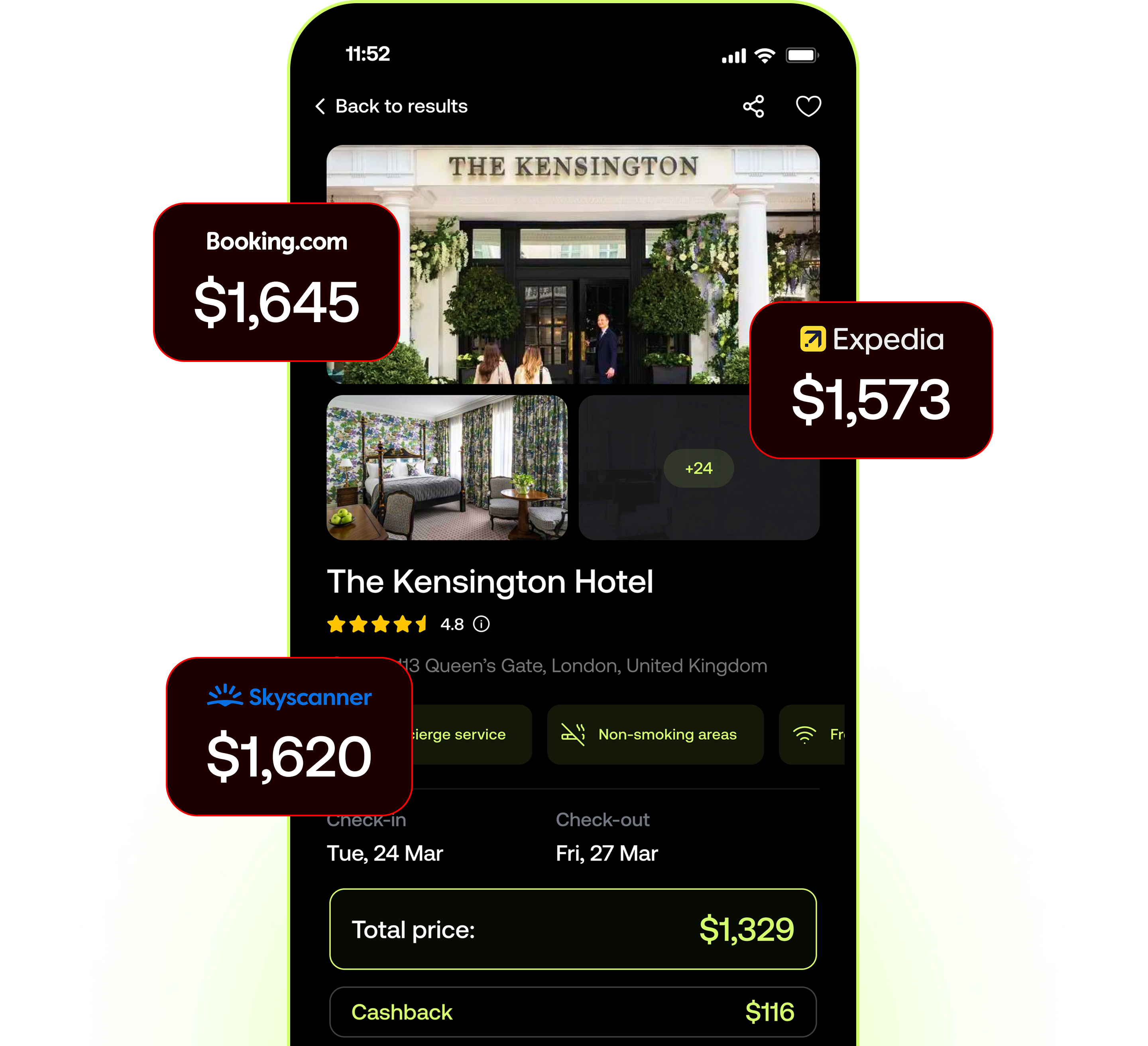
Found a hotel you like? Book it for up to 30% less