Content
EigenCloud (EIGEN) is a crypto coin that powers EigenCloud (previously called EigenLayer). It is built to provide verifiability-as-a-service and restaking infrastructure, making it easier to secure both blockchain applications and off-chain systems.
One of its biggest strengths is solving intersubjective forkable faults. In simple terms, these are situations where you need information from outside the blockchain to decide whether someone acted honestly or maliciously. This allows EIGEN to securely support Actively Validated Services (AVSs), decentralized AI applications, and distributed compute networks.
As of July 2026, EIGEN is trading at $0.20 USD, with a market capitalization of roughly $172 million. It is ranked #133 on CoinMarketCap among all cryptocurrencies worldwide.
Besides buying and holding the token or restaking it to earn infrastructure rewards, EIGEN also has real-world use cases. For example, you can use it to book discounted flights and hotels in more than 190 countries through Epic.
See how much you
could save with $EIGEN
Answer 2 questions to get your personalized
savings estimate.
Question 1 of 2
Where do you want?
Question 2 of 2
How many nights?
Your result
Get similar deals when we go live.
Get $25 off your first trip.
Key Takeaways
- EigenCloud provides verifiability-as-a-service using tools like EigenDA, EigenVerify, and EigenCompute, allowing developers to run scalable off-chain applications while keeping results verifiable on-chain.
- Unlike Ethereum's standard proof-of-stake (PoS), where penalties are enforced automatically by code, EIGEN uses intersubjective staking to help detect and penalize more complex forms of off-chain misconduct that require human or external verification.
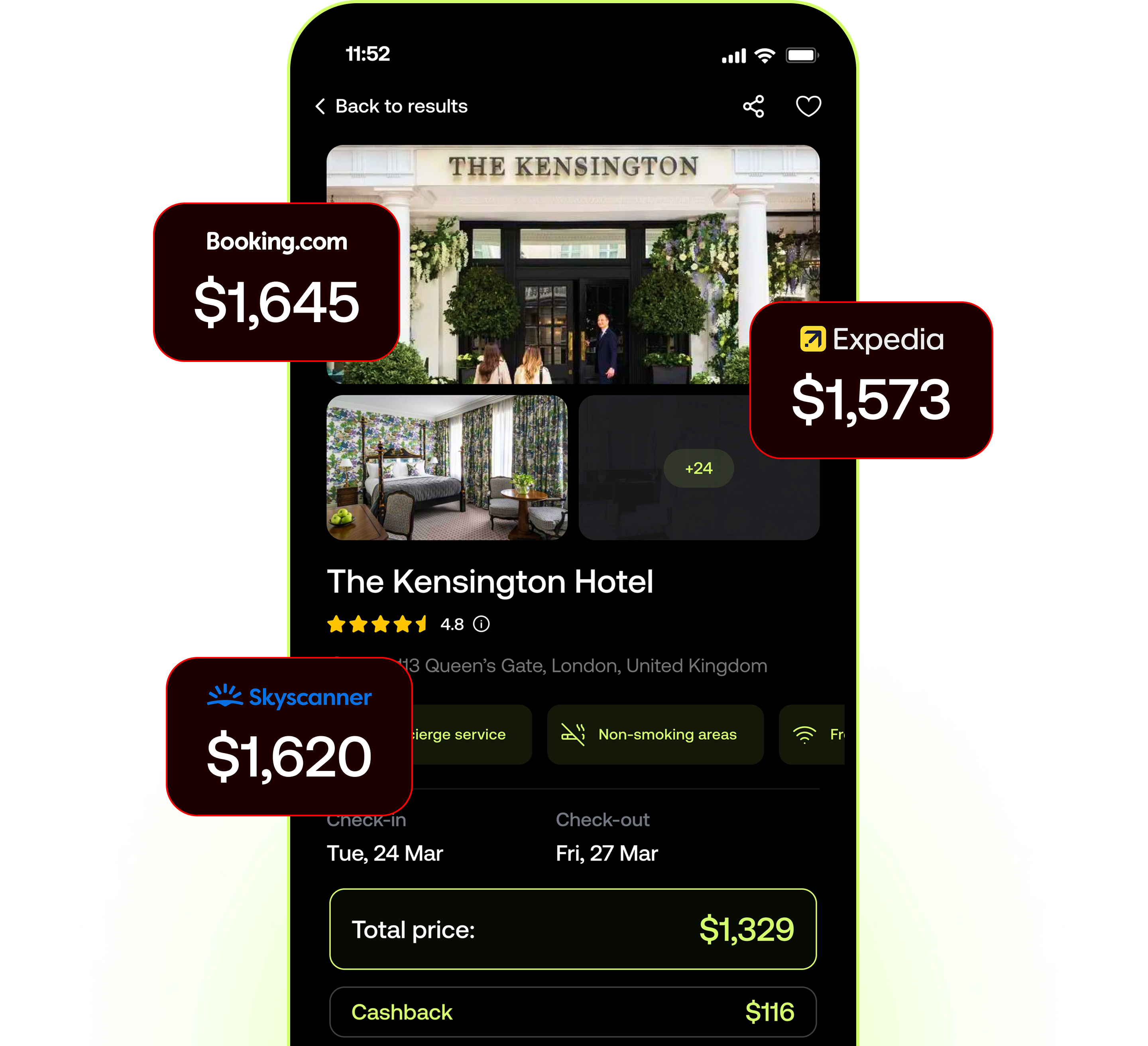
- You can use EIGEN on Epic to book more than 2 million hotels and flights worldwide at up to 30% lower prices than Booking.com and Expedia. New users also get $25 off their first booking.
- EIGEN helps secure Actively Validated Services (AVSs), including zero-knowledge proof systems, decentralized oracles, and cross-chain bridges, without requiring each project to build its own separate validator network.
EigenCloud at a Glance (July 2026)
What is EigenCloud (EIGEN)?
EigenCloud (EIGEN) is the native cryptocurrency of EigenCloud (formerly EigenLayer), a platform that provides shared security and verifiable computing for decentralized applications (dApps), Ethereum rollups, and off-chain services.
In the past, if developers wanted to build a decentralized service, such as a cross-chain bridge or a decentralized oracle, they usually had to create their own validator network and attract participants by offering high token rewards. This was expensive, time-consuming, and often led to fragmented security.
EigenCloud solves this problem through a concept called restaking. Instead of creating a brand-new security network, users can restake their existing Ethereum (ETH) or stake EIGEN tokens to help secure third-party applications known as Actively Validated Services (AVSs). This allows new projects to use Ethereum's existing security rather than building everything from scratch.
The platform was founded by Sreeram Kannan, an associate professor at the University of Washington. His goal was to transform Ethereum's trusted validator network into an open marketplace where developers can access shared security and verifiable computing power for their applications.
EigenCloud has also attracted strong backing from institutional investors, raising more than $170 million from leading venture capital firms, including Andreessen Horowitz (a16z). Today, it plays an important role in helping Ethereum scale while supporting verifiable AI agents, off-chain computation, and other advanced decentralized applications.
How Does EigenCloud Work?
EigenCloud is built around three core technologies that work together to provide secure, scalable, and verifiable computing for decentralized applications. The first is EigenDA (Data Availability), a high-performance data availability layer that helps Layer-2 networks reduce transaction costs by storing data off-chain while keeping it securely verifiable on-chain. The second is EigenCompute, which enables verifiable off-chain execution. This allows decentralized AI models, complex mathematical calculations, automated bots, and other compute-heavy applications to run outside the blockchain without sacrificing security or trust. The third is EigenVerify, a dispute resolution system specifically designed to handle what are known as intersubjective faults, where additional off-chain information is needed to determine whether a participant acted honestly.
To understand why EigenVerify is important, it helps to know what intersubjective faults are. Most blockchain systems rely on mathematical proofs, such as zero-knowledge proofs, to automatically detect problems like double-spending or invalid blocks. However, not every issue can be verified by code alone. For example, an oracle might provide incorrect real-world weather data, or an execution engine could intentionally stop processing tasks. In these situations, people can clearly agree that something went wrong, but the blockchain cannot verify the misconduct without information from outside the network. To solve this, EIGEN uses a dual-token design that allows token holders to fork the token contract and penalize malicious participants responsible for these intersubjective faults. This approach helps keep operators honest while avoiding additional complexity for Ethereum's core consensus layer.
Top 5 Ways to Use EIGEN Crypto Coin in 2026
1. Book Discounted Hotels and Flights on Epic
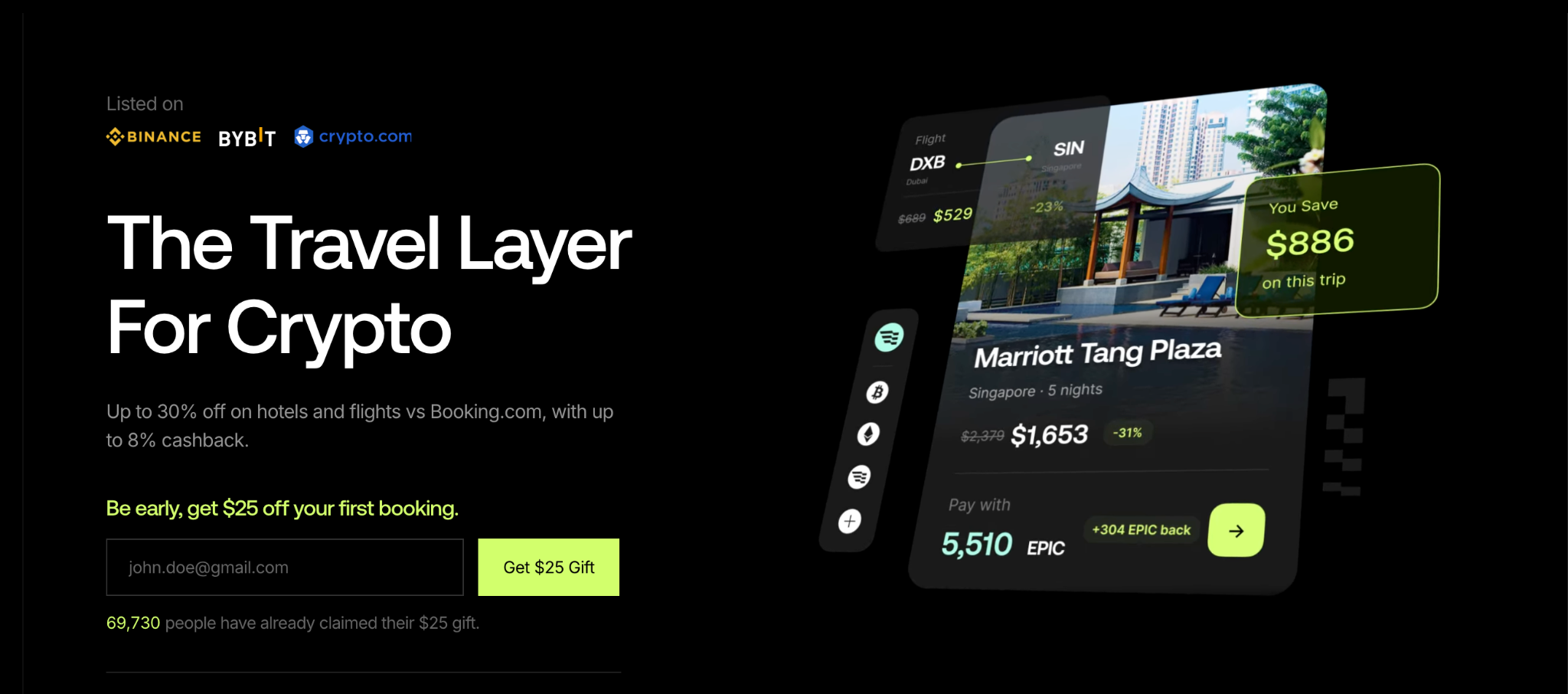
One of the easiest and most practical ways to use your EIGEN tokens in 2026 is to book travel through Epic. As a Web3 travel booking platform, Epic accepts EIGEN along with more than 200 cryptocurrencies, allowing you to pay for trips directly with your crypto instead of converting it into fiat first.
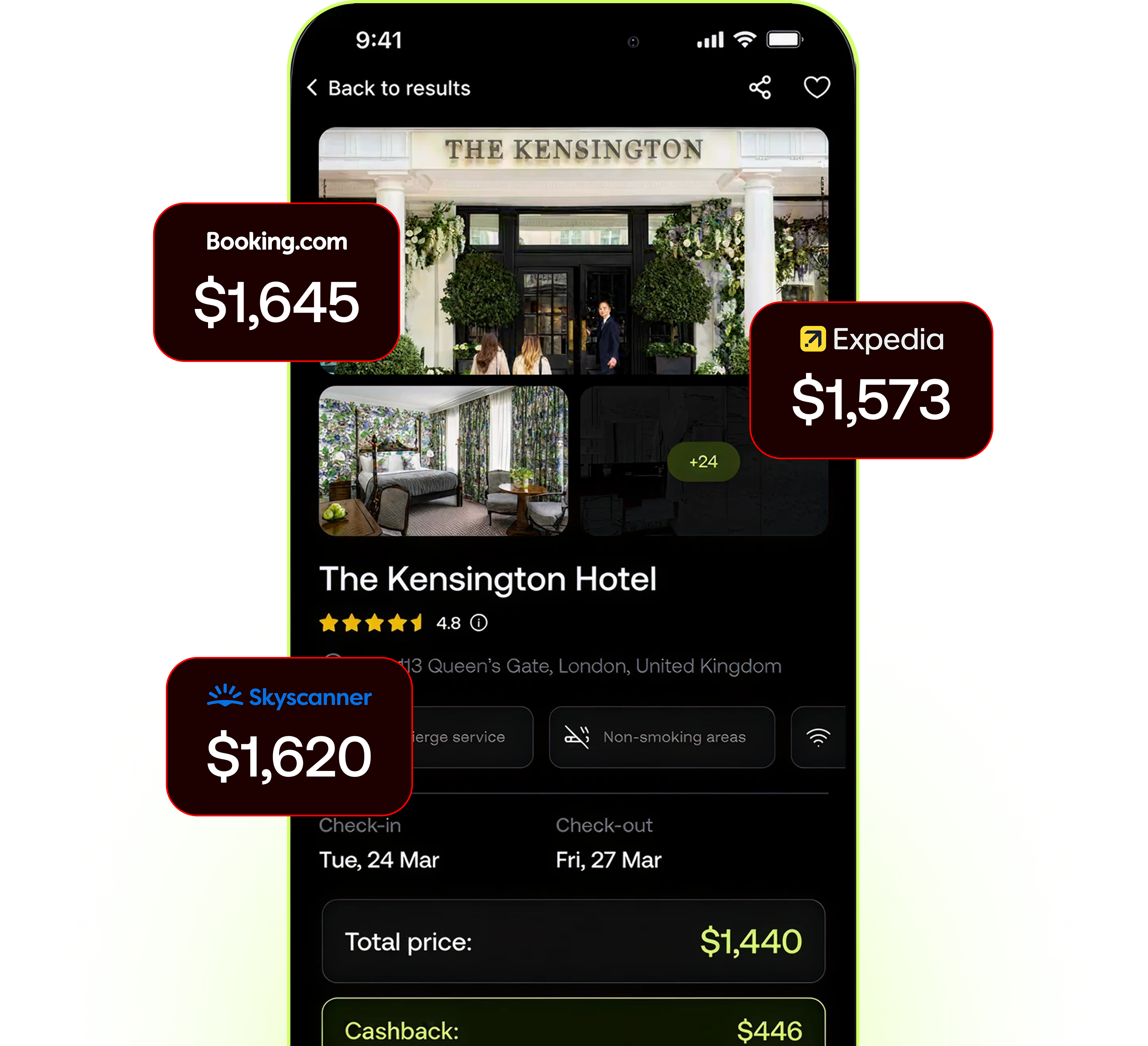
Epic has access to travel options in more than 190 countries, with over 2 million hotels, resorts, and flight options available worldwide. While other crypto-native travel platforms attach a 10-15% crypto premium, prices on Epic are often up to 30% lower than Booking.com and Expedia.
Book your next hotel for up to 30% less
New users also receive $25 off their first hotel or flight booking
Whether you're planning a short weekend getaway or an international vacation, using EIGEN on Epic is a simple way to turn your crypto into real-world travel while saving money on your bookings.
2. Restaking for Dual Yield on Actively Validated Services (AVSs)
EIGEN holders can restake their tokens within the EigenCloud protocol to help secure specialized Actively Validated Services (AVSs). By providing security for services such as off-chain data feeds, blockchain sequencers, and decentralized compute networks, stakers help these applications operate more reliably while earning additional rewards.
Unlike simply holding crypto, restaking allows EIGEN holders to put their tokens to work. In return for contributing security to these networks, stakers can receive usage-based rewards generated by the services they support. This creates an opportunity to earn additional yield on top of regular token ownership while helping strengthen the wider EigenCloud ecosystem.
3. Securing Verifiable AI and Decentralized Compute Workflows
As decentralized AI continues to grow in 2026, ensuring that AI-generated results are accurate and trustworthy has become increasingly important. Through EigenCompute, developers can use EIGEN to reward node operators who provide verifiable AI inference, run autonomous AI agents, and handle off-chain computing tasks.
This system helps prove that AI outputs and computations have not been manipulated or changed during execution. By adding verification and accountability to AI workflows, EigenCloud enables decentralized AI applications to operate in a more transparent, secure, and tamper-resistant way.
4. Direct On-Chain Trading and Liquidity Provision
As a widely supported ERC-20 token, EIGEN can be traded across major cryptocurrency platforms, including centralized exchanges such as Binance, OKX, and Bybit. This makes it easy for users to buy, sell, and manage their EIGEN holdings across different trading platforms.
Beyond simple trading, EIGEN holders can also participate in DeFi (decentralized finance) by providing liquidity to automated market maker (AMM) pools. By pairing EIGEN with assets like ETH or USDT, liquidity providers can earn a share of trading fees generated by users swapping tokens through these pools. Additionally, EIGEN can be used across DeFi platforms as collateral for accessing other financial services, giving the token more utility beyond just holding or trading.
5. Delegating Security to Node Operators
If you don’t want to run your own node or manage the technical requirements, EigenCloud allows you to delegate your EIGEN tokens to professional node operators. These operators take care of the hardware, maintenance, and uptime needed to validate Actively Validated Service (AVS) tasks and keep the network running smoothly.
By delegating your tokens, you contribute your security and voting power to the network without handling the operational work yourself. In return, you can earn a share of the fees generated by the operator you choose. This setup allows EIGEN holders to participate in securing the EigenCloud ecosystem while benefiting from the rewards generated by network activity.
Is EigenCloud (EIGEN) a Good Investment?
Whether EigenCloud (EIGEN) is a good investment depends on your risk tolerance, investment timeline, and confidence in the future growth of Ethereum's restaking ecosystem.
One of EigenCloud's biggest advantages is its position in the Web3 ecosystem. EigenCloud has a first-mover advantage in the restaking sector. Instead of requiring every new blockchain service to build and maintain its own validator network, the platform allows Actively Validated Services (AVSs), such as EigenDA, to use Ethereum's existing security through restaking. This reduces costs for developers while creating ongoing demand for EIGEN, which serves as the platform's main utility and governance token for handling intersubjective tasks.
Industry price forecasts suggest cautious optimism over the long term. Price prediction data reflects a neutral-to-slightly bullish outlook, with algorithmic models estimating that EIGEN could trade between $0.25 and $0.35 over the next few years if adoption continues to grow. Looking further ahead, long-term projections estimate that EIGEN could gradually reach $0.35 to $0.68 by 2030, supported by the expansion of decentralized cloud infrastructure, wider adoption of Actively Validated Services (AVSs), and continued growth of the Web3 ecosystem.
Despite its potential, EIGEN also comes with several important risks. Investors who stake their tokens in the BackingEIGEN (bEIGEN) contract must wait 24 days before they can unstake their assets, which can make it difficult to react quickly during periods of high market volatility. Another challenge is the protocol's intersubjective forking mechanism. The system relies on a unique "slashing-by-forking" approach to resolve disputes that cannot be verified automatically on-chain. While innovative, this mechanism is technically complex and has not yet been fully tested under a large-scale network attack. In addition, future token unlocks and allocations held by the foundation could increase the circulating supply, creating inflationary pressure if demand does not grow at the same pace.
This post is for informational purposes only and does not constitute financial or investment advice. Always do your own research (DYOR) before investing in digital assets.
Frequently Asked Questions
1. Is EigenLayer safe to use?
EigenLayer is generally considered a higher-risk crypto protocol rather than a low-risk one, because restaking is still a relatively new mechanism and users face smart contract, slashing, and correlated-risk exposure. It has had a fairly clean operational record so far, but “safe” in crypto is never absolute, especially when additional rewards come with extra protocol complexity.
2. What is the all-time high of EigenLayer?
EigenLayer’s EIGEN token all-time high is $5.65, reached on Dec 17, 2024.
3. What crypto is EigenLayer?
EigenLayer is an Ethereum-based infrastructure protocol, not a standalone blockchain, and its token is EIGEN. In practice, it lets users restake ETH or liquid staking tokens to help secure other services on Ethereum.
4. How does EigenLayer work?
Users deposit staked ETH or liquid staking tokens into EigenLayer, then opt in to secure AVSs such as data availability layers, bridges, or oracle networks. Operators can run the required software for those services, and restakers earn additional rewards in exchange for taking on extra risk.
5. What are the benefits of EigenLayer?
EigenLayer improves capital efficiency by letting the same staked assets help secure more than one service. It also lowers the barrier for new projects to launch with strong security, because they can borrow Ethereum’s validator trust instead of building a validator set from scratch.
6. What problems does EigenLayer solve?
EigenLayer mainly solves the problem of bootstrapping security for new decentralized services. It also reduces fragmented security across the ecosystem by creating a shared marketplace for trust and validator resources.
7. How does EigenLayer impact Ethereum?
EigenLayer can strengthen Ethereum’s broader ecosystem by making Ethereum-staked capital more useful and by helping new infrastructure launch with inherited security. At the same time, it adds new layers of complexity and correlated-risk exposure, so its impact is both an opportunity and a source of additional risk for Ethereum participants.


Mithra Ghosh is a Dubai-based content writer and SEO copywriter with 2+ years of experience crafting search-optimised content across crypto, Web3, and digital finance. She combines strong editorial instincts with a deep understanding of blockchain ecosystems and on-chain trends.
At Epic, she writes about the growing world of crypto-native travel helping readers understand how holding and spending digital assets can unlock smarter, cheaper ways to see the world.


Found a hotel you like? Book it for up to 30% less

Found a hotel you like? Book it for up to 30% less