Content

Conflux (CFX) is a high-performance, permissionless Layer-1 blockchain built to support decentralized applications (dApps), Web3 infrastructure, and cross-border digital payments without the high fees or slow transaction speeds seen on many older blockchains. It uses a unique Tree-Graph architecture based on a Directed Acyclic Graph (DAG), along with a hybrid Proof-of-Work (PoW) and Proof-of-Stake (PoS) consensus mechanism, allowing the network to process transactions in parallel. Following the Conflux 3.0 upgrade in 2025, the project cites a design throughput of up to 15,000 transactions per second.
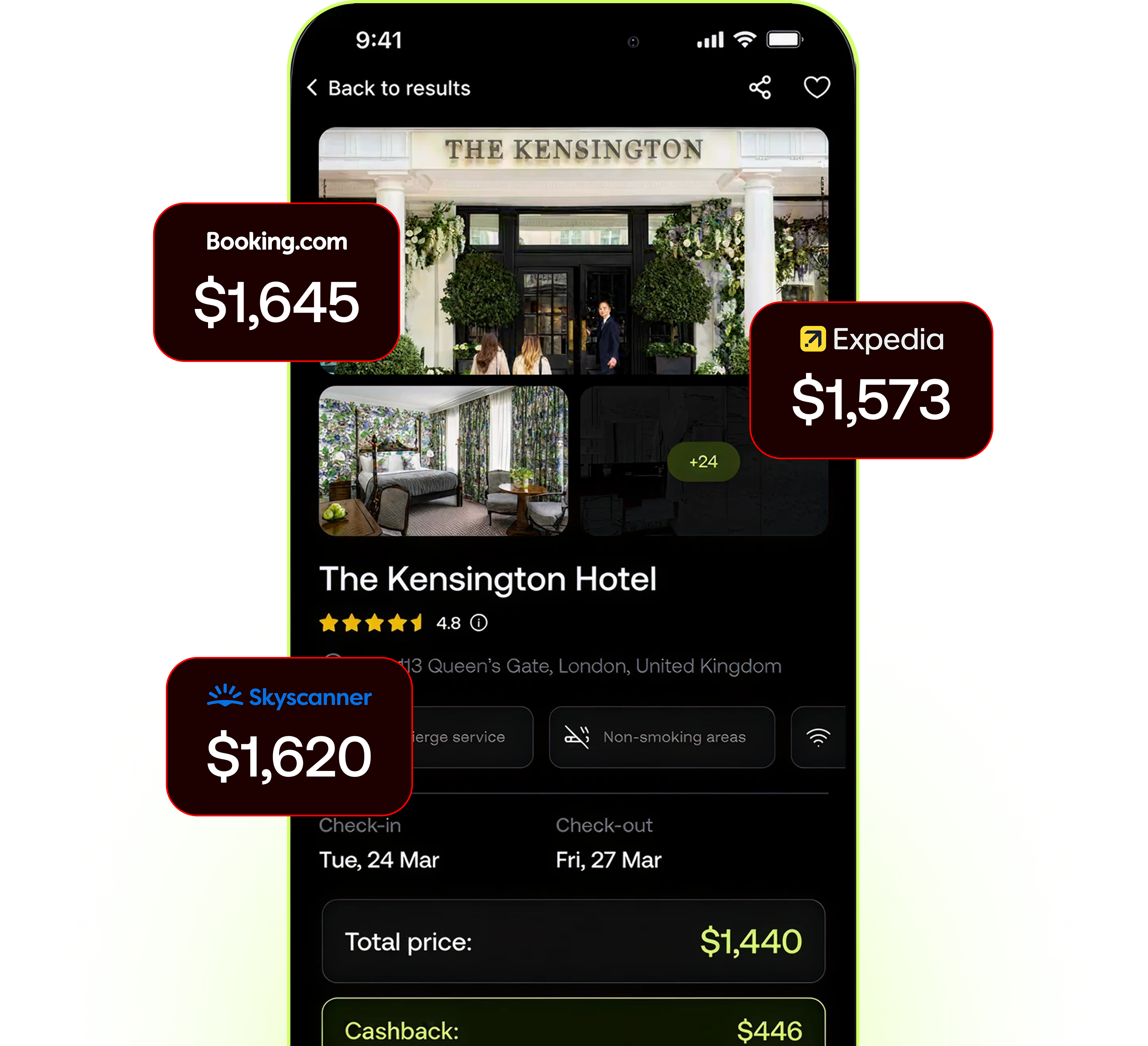
As of August 2026, Conflux (CFX) is trading at around $0.040 USD, with a market capitalization of approximately $214 million, ranking around #114 on CoinMarketCap. Besides being used for gas fees, staking, and governance, the CFX token also has real-world utility. For example, holders can use CFX to book hotels and flights worldwide at up to 30% off through Epic, giving the token practical, real-world utility.
See how much you
could save with $CFX
Answer 2 questions to get your personalized
savings estimate.
Question 1 of 2
Where do you want?
Question 2 of 2
How many nights?
Your result
Get similar deals when we go live.
Get $25 off your first trip.
Key Takeaways
- Instead of discarding multiple valid blocks as "orphan" blocks like traditional blockchains, Conflux keeps them all in a Directed Acyclic Graph (DAG) structure. This allows the network to process multiple blocks at the same time, making it much faster and more efficient.
- Conflux uses a combination of Proof-of-Work (PoW) and Proof-of-Stake (PoS). PoW is responsible for creating and ordering new blocks, while PoS provides a final confirmation layer that protects the network from 51% reorganization attacks. Blocks reach PoS finality within a few minutes.
- The network has two separate environments. Core Space is Conflux's native blockchain with built-in features such as fee sponsorship, while eSpace is fully compatible with the Ethereum Virtual Machine (EVM), allowing Ethereum dApps to run on Conflux with little or no modification.
- Conflux markets itself as a regulatory-compliant public blockchain in China, operating a tokenless version of its chain inside the mainland while CFX trades offshore. It backs the Shanghai Tree-Graph Blockchain Research Institute and announced a blockchain SIM card project with China Telecom in 2023.
- The CFX token powers the entire Conflux ecosystem. It is used to pay network gas fees, stake in the PoS system to earn staking rewards, currently around 7.6% APY according to StakingRewards, vote on governance proposals, and provide storage collateral through Conflux's Storage Rent/Collateral mechanism.
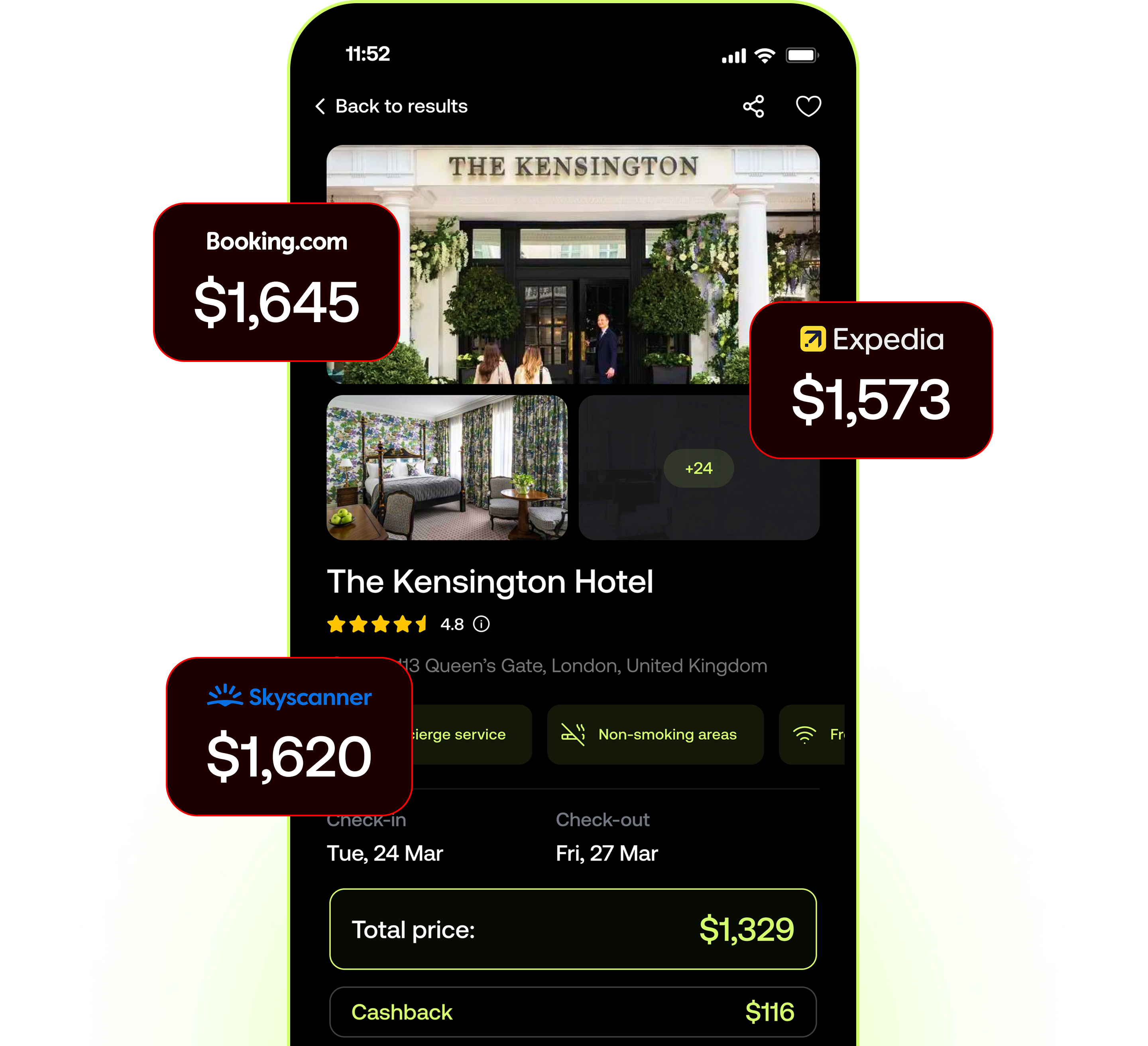
- You can use CFX as a payment method on Epic to book over 2 million hotels and flights across 190+ countries. Sign up on Epic today to unlock travel rates up to 30% cheaper than Booking.com and Expedia, plus $25 off your first booking!
Conflux (CFX) at a Glance (July 2026)
Market data per CoinMarketCap, 8 August 2026.
What Is Conflux (CFX)?
Conflux is a permissionless, high-performance Layer-1 blockchain built to support decentralized applications (dApps), cross-border Web3 services, and enterprise solutions.
To understand what makes Conflux different, it helps to look at how older blockchains work. Networks like Bitcoin and early Ethereum process transactions one block at a time. Miners collect transactions, create a block, and add it to a single chain. If two miners produce blocks at the same time, only one is accepted, while the other is discarded as a fork or uncle block. This wastes computing power and limits the number of transactions the network can handle.
Conflux takes a different approach. Instead of throwing away valid blocks, it allows multiple blocks to be created and confirmed at the same time across different branches of the network. Its unique algorithm then organizes these blocks into a single, conflict-free transaction history, so no valid work is wasted.
By processing blocks in parallel, Conflux can achieve much higher throughput and better efficiency than traditional linear blockchains, making it well suited for modern Web3 applications and large-scale blockchain adoption.
How Conflux Works
Hybrid Consensus
Conflux uses a hybrid consensus system that combines Proof-of-Work (PoW) and Proof-of-Stake (PoS) to improve both security and performance.
- Proof-of-Work (PoW): Miners continuously create new blocks in parallel using a PoW algorithm. This allows anyone to participate in securing the network and helps keep the blockchain decentralized.
- Proof-of-Stake (PoS) - Hydra Upgrade (February 2022): CFX holders can stake their tokens in 1,000 CFX units to run PoS nodes, or deposit into third-party PoS pool contracts such as PHX, Nucleon or ABC PoS Pool. Staked CFX is subject to a 13-day lock plus a one-day unstaking period. A PoS committee regularly reviews the Tree-Graph and approves important checkpoints. Once a block receives PoS finality, it becomes permanent and cannot be reversed. This protects the network from 51% mining attacks and prevents large blockchain reorganizations.
Tree-Graph Structure
One of Conflux's biggest innovations is its Tree-Graph, a type of Directed Acyclic Graph (DAG) ledger. In a traditional blockchain, every new block connects to just one previous block, creating a single chain. Conflux works differently:
- Every block connects to one parent block, creating the main tree.
- At the same time, it can also reference multiple other valid blocks that were created simultaneously across the network.
Instead of throwing away these valid blocks, Conflux keeps them all as part of the Tree-Graph. This means the computing power spent creating those blocks isn't wasted. Instead, it increases the network's speed, efficiency, and security.
GHAST
To organize all the blocks in the Tree-Graph into one clear transaction history, Conflux uses a consensus algorithm called GHAST (Greedy Heaviest Adaptive SubTree).
GHAST acts as the network's rulebook by deciding the correct order of transactions. Here's how it works:
- Subtree Weighting: Instead of simply counting how many blocks exist, GHAST measures the total mining work behind each subtree to decide which branch has the strongest support.
- Protection Against Liveness Attacks: If someone tries to confuse the network by hiding blocks or manipulating block weights, GHAST automatically adjusts its weighting and difficulty rules. This helps the network quickly agree on the correct blockchain.
- Deterministic Transaction Ordering: GHAST creates one final, conflict-free order for every transaction across all branches. If two transactions attempt to spend the same funds, the valid transaction that appears first is accepted, while the later double-spend attempt is automatically rejected.
EVM Compatibility and Smart Contracts
Conflux uses a Dual-Space Architecture, giving developers both native performance and full Ethereum compatibility.
Core Space is Conflux's native blockchain environment. It supports Solidity smart contracts (with some Conflux-specific features), uses cfx: wallet addresses, and includes useful built-in tools like the Fee Sponsorship Mechanism, which allows smart contract creators to pay gas fees for users. This makes decentralized applications easier for newcomers to use because they don't always need to hold CFX just to pay transaction fees.
eSpace is Conflux's Ethereum Virtual Machine (EVM)-compatible environment. It works with popular Ethereum tools such as MetaMask, Hardhat, Ethers.js, and Remix, making it easy for Ethereum developers to move their dApps to Conflux.
Although it feels like using Ethereum, eSpace offers much lower transaction fees and roughly 1.2-second block times, considerably faster than Ethereum's, though slower than Conflux Core Space, which produces blocks every 0.5 seconds.
Conflux also supports cross-space atomic calls, allowing assets to move safely between Core Space and eSpace without relying on external third-party bridges.
Cross-Chain Protocol
Conflux is designed to work with other blockchain networks through built-in cross-chain technology.
- Cross-Chain Bridges: Conflux retired its original ShuttleFlow bridge in November 2023 and replaced its successor, the Zero Gravity portal, with KinetFlow in November 2025. The network also integrates LayerZero V2 and Hyperlane for connectivity to other chains. These upgrades improve security and make it easier to transfer assets between different blockchains.
- Native Cross-Space Bridge: Conflux also includes an on-chain bridge that lets users securely move CFX and other supported tokens between Core Space and eSpace on a 1:1 basis, without needing external bridge providers.
The CFX Token
What Is CFX Used For?
CFX is the native token of the Conflux network and plays an important role in keeping the blockchain running. Here are its main uses:
- You can use CFX as a payment method on Epic to book over 2,000,000 hotels and flights across 190+ countries worldwide. By booking travel through Epic with CFX or 200+ other supported cryptocurrencies, users enjoy travel prices up to 30% cheaper than Booking.com and Expedia, plus $25 off their first booking upon signing up.
Book your next hotel for up to 30% less
- CFX is used to pay transaction fees on both Core Space and eSpace whenever users send tokens or interact with smart contracts.
- When users or developers store data on the blockchain, they must lock 1 CFX for every 1,024 bytes of data as collateral. This system encourages efficient use of storage. If the stored data or smart contract state is later deleted, the locked CFX is returned to the owner, helping prevent unnecessary blockchain growth.
- Users can stake their CFX in the Proof-of-Stake (PoS) system to help secure the network. In return, they earn staking rewards, currently around 7.6% APY according to StakingRewards, funded through the protocol's reward system. The rate floats inversely with the total amount of CFX staked.
- CFX also gives holders voting rights in the Conflux DAO. The more CFX a user locks, the greater their voting power when important decisions about the network are made.
Token Issuance
Unlike cryptocurrencies with a fixed supply, CFX is uncapped, there is no maximum supply, and the amount in existence increases over time through protocol issuance. Around 5.80 billion CFX has been issued to date, of which roughly 573 million has been burned. New tokens are created in two main ways:
- PoW Mining Rewards: New CFX is awarded to Proof-of-Work (PoW) miners each time they successfully create a new block, rewarding them for contributing computing power to the network.
- PoS Staking Rewards: CFX is also distributed to Proof-of-Stake (PoS) validators who help secure the network and confirm transaction finality.
Token Burning
To help balance inflation, Conflux permanently removes some CFX from circulation through token burning. This happens in two ways:
- Sponsored Storage Collateral: When storage collateral is paid by a sponsor, a proportion of the principal, currently 78%, is permanently burned and converted into non-transferable storage points. A share of every transaction's base fee is also burned.
- DAO-Approved Community Burns: The Conflux DAO can vote to burn additional tokens when needed. For example, in May 2025 the community approved and executed a burn of 76 million CFX to offset new issuance from both mining and staking rewards, alongside a plan to stake 500 million CFX.
DAO Governance
Conflux is governed by the Conflux DAO, giving the community a direct role in shaping the future of the network.
To participate, users lock their CFX for one of three fixed periods: one quarter (91 days), six months, or one year. Voting power scales with the term, one quarter gives 0.25 votes per CFX, six months 0.5, and one year a full vote. DAO members can vote on important decisions, including:
- How rewards are divided between PoW miners and PoS validators.
- Transaction fee rules and blockchain storage pricing.
- Funding for ecosystem grants, new projects, and future protocol upgrades.
Conflux Ecosystem
The Conflux ecosystem includes a range of tools and applications designed to make it easier for users, developers, and businesses to interact with the network. Some of the key platforms include Fluent Wallet, ConfluxHub, and Swappi.
Fluent Wallet
Fluent Wallet is the browser extension wallet named in Conflux's own documentation for managing Core Space accounts. Note that its public development has shifted toward mobile, and a separate Conflux Wallet desktop and mobile app appeared in February 2026. It allows users to manage assets, connect with dApps, and interact with both sides of the Conflux ecosystem. Key features include:
- Multi-Space Management: Fluent Wallet supports both Core Space and eSpace in one interface. Users can easily switch between native Conflux addresses (cfx:...) and Ethereum-style addresses (0x...) without needing separate wallets.
- dApp Connectivity: The wallet can work as an EVM provider for decentralized applications while maintaining compatibility with standard Web3 tools and protocols.
ConfluxHub
ConfluxHub serves as the central platform for managing financial and cross-chain activities within the Conflux ecosystem. It provides several important features, including:
- Governance voting interfaces that allow users to participate in network decisions.
- Ecosystem rewards and airdrop distribution for community incentives.
- Asset transfers between Core Space, eSpace, and external blockchain networks.
ConfluxHub acts as a gateway where users can access many of the network's main services from one place.
Swappi
Swappi is the leading Automated Market Maker (AMM) decentralized exchange (DEX) operating on Conflux eSpace. Its main features include:
- Token Swaps: Users can exchange different tokens directly through decentralized trading pools.
- Liquidity Pools: Users can provide liquidity to help power trades and earn rewards.
- LP Yield Farming: Liquidity providers can earn additional returns by participating in farming programs.
- PPI Staking: Users can stake Swappi's native PPI token to earn rewards.
Because Swappi runs on Conflux eSpace, it benefits from the network's low transaction costs and fast 1.25-second block times. This allows users to trade quickly and cheaply, providing a trading experience similar to centralized exchanges while keeping the benefits of decentralization.
Is Conflux (CFX) a Good Investment?
Whether Conflux (CFX) is a good investment in 2026 depends on your investment goals and risk tolerance. One of its biggest advantages is its strong position in the Asian market. Conflux positions itself as a regulatory-compliant public blockchain in China, running a tokenless version of its chain inside the mainland while CFX itself trades offshore. It announced a blockchain SIM card project with China Telecom in 2023 and secured provincial and municipal endorsements in Shanghai and Hunan in 2019 and 2020. Investors should note that none of these has produced publicly reported adoption figures since.
From a technical perspective, Conflux also stands out. Its hybrid Proof-of-Work (PoW) and Proof-of-Stake (PoS) consensus system, combined with its Tree-Graph architecture, allows the network to process transactions quickly while maintaining strong security and decentralization. The project also includes deflationary mechanisms, such as DAO-approved token burns and storage collateral requirements, which help reduce the impact of new token issuance over time.
However, there are risks to consider. Cryptocurrency regulations can change quickly, especially across Asian markets, and any major policy shifts could affect Conflux's growth. The project positions itself against Layer-2 networks like Arbitrum, Optimism, and Base, as well as high-performance Layer-1 blockchains such as Solana, Sui, and Aptos. The gap is substantial: Conflux holds roughly $5.7 million in total value locked, against Solana's $4.7 billion, Base's $4.6 billion, Arbitrum's $1.2 billion and Aptos's $60 million.
Recent developments include the Conflux 3.0 network upgrade in September 2025, which focused on EVM compatibility and account abstraction; AxCNH, an offshore yuan stablecoin issued by AnchorX with Conflux technical support under a Kazakhstan licence, currently around $5 million in circulation; a listing on Hong Kong-licensed HashKey Exchange in February 2026; and a June 2026 partnership with Fireblocks covering stablecoin settlement and real-world asset markets. A further hardfork, v3.1.0, is scheduled for late August 2026.
This content is for educational purposes only and should not be considered financial advice. Always do your own research before investing in any cryptocurrency.
Frequently Asked Questions
1. What is the price of Conflux?
As of August 2026, Conflux (CFX) is trading at approximately $0.040 USD, with a circulating market capitalization of around $214 million USD. (Note: Crypto prices fluctuate continuously; always check live market tracking sites like CoinMarketCap or CoinGecko for real-time rates).
2. Is CFX a Chinese coin?
Conflux was founded by researchers with ties to Tsinghua University's Yao Class, and Turing Award winner Prof. Andrew Chi-Chih Yao serves as its Chief Scientist. Its China-side research arm is the Shanghai Tree-Graph Blockchain Research Institute, while founding academic lead Prof. Fan Long is based at the University of Toronto. It is often called "China's public blockchain" because the project markets itself as a regulatory-compliant public chain in China, though that compliance rests on a tokenless mainland deployment, since cryptocurrency trading and mining remain banned there.
3. Is CFX a stablecoin?
No, CFX is not a stablecoin. It is the native utility and governance cryptocurrency of the Conflux blockchain. Its value is determined by market supply and demand, meaning its price fluctuates rather than being pegged to a fiat currency like the US dollar. Its all-time high and low were $1.70 in March 2021 and $0.02191 in January 2023, respectively.
4. How secure is the Conflux network?
The Conflux network achieves high security by using a hybrid Proof-of-Work (PoW) and Proof-of-Stake (PoS) model. PoW Layer handles block propagation and prevents Sybil attacks via the GHAST (Greedy Heaviest Adaptive SubTree) protocol, which automatically adjusts difficulty to neutralize attack vectors. Whereas the PoS layer adds finality checking, so that once blocks are committed by stakers they cannot be reversed by a 51% mining attack. Finality takes a few minutes rather than being instant.
5. How does Conflux compare to Ethereum?
Conflux differs from Ethereum primarily in its architecture and performance. Conflux uses a Directed Acyclic Graph (DAG) Tree-Graph structure that allows parallel block processing, with a design throughput of up to 15,000 transactions per second following the Conflux 3.0 upgrade, and PoS finality reached within minutes. Ethereum processes transactions sequentially and handles roughly 15-30 TPS natively on Layer 1. Conflux uses a hybrid Proof-of-Work (PoW) + Proof-of-Stake (PoS) model, whereas Ethereum operates on pure Proof-of-Stake. Conflux offers full Ethereum Virtual Machine compatibility via its eSpace environment, allowing developers to port Solidity smart contracts and use tools like MetaMask without changing code.
6. Where is Conflux based?
Conflux Foundation, Ltd. publishes a Singapore contact address, though its jurisdiction of incorporation is not stated publicly. Its principal China-side research arm is the Shanghai Tree-Graph Blockchain Research Institute, and founding academic lead Prof. Fan Long is based at the University of Toronto. The project originated in research by computer scientists with ties to Tsinghua University's Yao Class, with Turing Award winner Prof. Andrew Chi-Chih Yao serving as Chief Scientist.
7. What is Conflux crypto?
Conflux (CFX) is a scalable, permissionless Layer-1 public blockchain crypto coin designed to support high-speed decentralized finance (DeFi), cross-border trade, and enterprise dApps. It is known for marketing itself as a regulatory-compliant public blockchain operating within mainland China.
8. Where can I buy Conflux?
You can buy CFX on major crypto exchanges, including Binance, HTX, OKX, Upbit, Gate.io, Bitget, KuCoin, MEXC, and Kraken.


Mithra Ghosh is a Dubai-based content writer and SEO copywriter with 2+ years of experience crafting search-optimised content across crypto, Web3, and digital finance. She combines strong editorial instincts with a deep understanding of blockchain ecosystems and on-chain trends.
At Epic, she writes about the growing world of crypto-native travel helping readers understand how holding and spending digital assets can unlock smarter, cheaper ways to see the world.

Found a hotel you like? Book it for up to 30% less

Found a hotel you like? Book it for up to 30% less