Content
Altlayer (ALT) is a crypto coin, a decentralised infrastructure protocol that simplifies launching and securing custom rollups Layer-2 blockchains that scale applications. It does this through Restaked Rollups, which use restaking mechanisms from protocols like EigenLayer to provide enhanced security, decentralization, and crypto-economic fast finality without developers building their own validator networks.
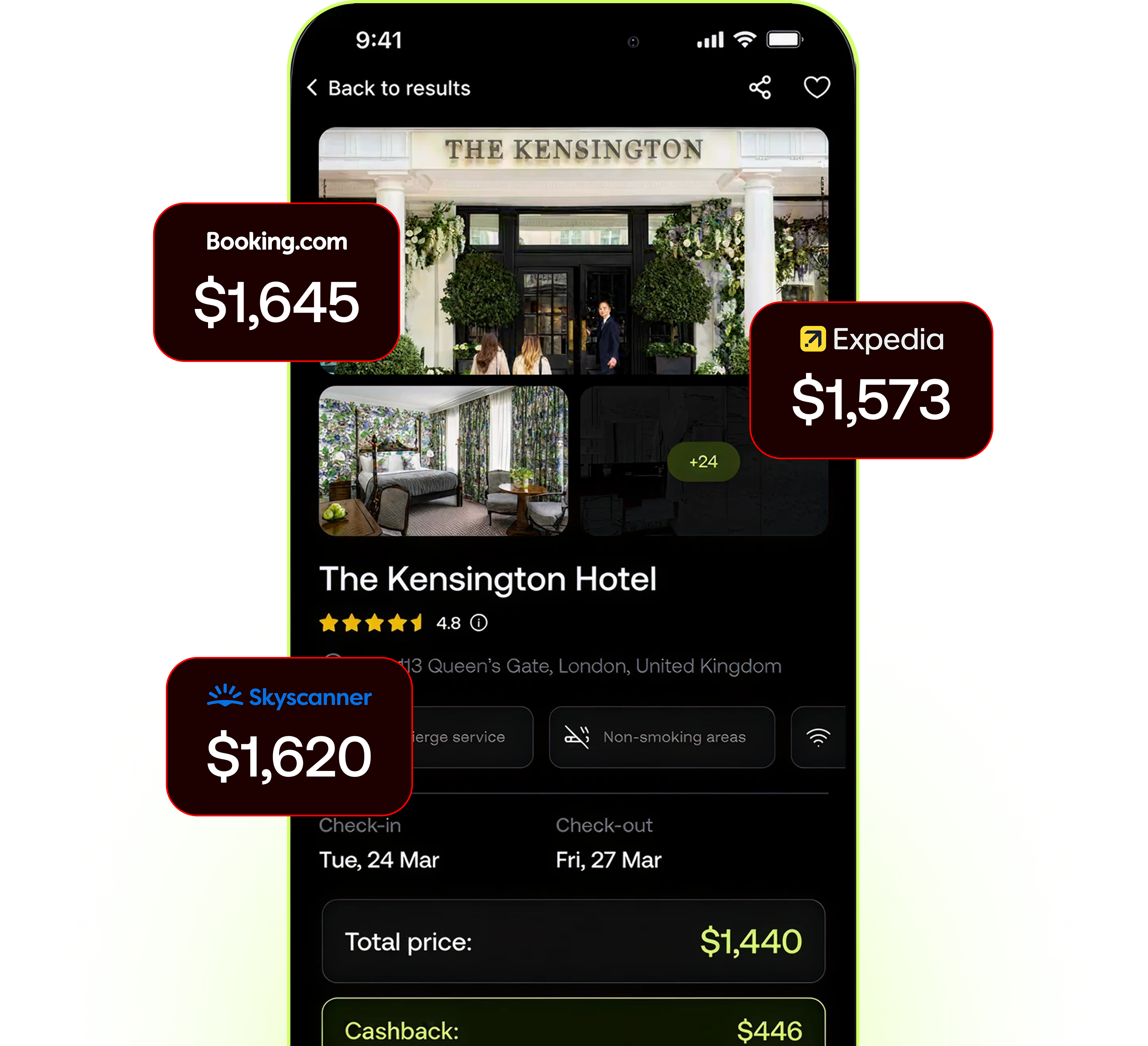
At the time of writing (August 2026), ALT trades near $0.0058, with a market capitalization of roughly $38.6 million and a rank of #405 on CoinMarketCap. Rollups built on Altlayer can leverage any rollup stack including OP Stack, Arbitrum Orbit, Polygon CDK, and ZK Stack, allowing developers to deploy application-specific blockchains faster and more securely than before. Beyond speculation, ALT has practical utility across paying for network services, earning staking rewards, and governance voting. Additionally, for travelers who already hold ALT or other cryptocurrencies, Epic lets you book hotels and flights with up to 30% savings compared to Booking.com and Expedia and a $25 discount on your first trip upon sign-up.
See how much you
could save with $ALT
Answer 2 questions to get your personalized
savings estimate.
Question 1 of 2
Where do you want?
Question 2 of 2
How many nights?
Your result
Get similar deals when we go live.
Get $25 off your first trip.
Key Takeaways
- Altlayer introduced Restaked Rollups in 2024, allowing any rollup to bootstrap security through Ethereum-restaked assets instead of building from scratch.
- The protocol supports deployment across 45+ chains, including Ethereum, Polygon, and various Layer-2s, making it ecosystem-agnostic rather than chain-specific.
- ALT token raised $22.8 million in private sales from tier-one investors including Polychain Capital, Binance Labs, Jump Crypto, and Gavin Wood.
- The three core services VITAL (block verification), MACH (faster finality), and SQUAD (decentralized sequencing) address distinct rollup security and performance needs.
- Travelers holding ALT can book hotels and flights on Epic with up to 30% savings versus Booking.com and Expedia, plus a $25 discount on first booking at sign-up.
ALT at a Glance (August 2026)
What Is Altlayer?
Altlayer is an open protocol designed to lower the barrier to entry for developers launching secure, scalable rollups. Traditionally, building a rollup requires spinning up validator infrastructure, securing it independently, and managing state verification all high-friction tasks. Altlayer eliminates much of this overhead through two innovations.
First, it offers a Rollup-as-a-Service (RaaS) launchpad. Developers describe their rollup requirements and deploy using existing rollup stacks (OP Stack, Arbitrum Orbit, Polygon CDK, ZK Stack, and others). This cuts deployment time from weeks to hours.
Second, it addresses the security problem through Restaked Rollups. New rollups typically launch with weak validator networks and limited economic security. Altlayer lets them borrow security from Ethereum through restaking: operators can deposit ETH or other Ethereum-based assets into EigenLayer, then use that stake to validate and secure Altlayer rollups. This means a new rollup gets Ethereum-grade security without needing its own massive validator set.
The network was founded by Jia Yaoqi (CEO), Dorothy Liu, Tan Jun Hao, and Aparna Narayanan. It raised $22.8 million across two private sale rounds from investors including Polychain Capital, Binance Labs, Jump Crypto, Breyer Capital, and notable individuals like Gavin Wood (Ethereum co-founder), Sean Neville (Circle co-founder and USDC architect), and Ryan Selkis (Messari founder).
Altlayer solves a real pain point: scaling innovation happens at the rollup layer now, but launching a rollup is still expensive and risky. It abstracts that complexity away, making rollup deployment as accessible as deploying a smart contract.
How Does Altlayer Work?
Altlayer coordinates three layers: the RaaS layer (deployment), the restaking layer (security), and the service layer (performance).
The RaaS Layer
Developers define their rollup using a no-code dashboard or configuration file specifying CPU, memory, storage, and which rollup stack to use. Altlayer's infrastructure handles the rest: node deployment, state management, and integration with the broader ecosystem. The developer's rollup is live and tied to Ethereum or another settled chain within minutes.
The Restaking Layer
Once a rollup is live, its security still depends on validators. Rather than recruiting and incentivizing a new set of validators, Altlayer lets the rollup inherit security from Ethereum through EigenLayer. Operators who have staked ETH in EigenLayer can "restake" that same ETH into the rollup's Actively Validated Service (AVS). If they validate correctly, they earn rewards. If they misbehave or sign conflicting states, their stake gets slashed. This crypto-economic security is much cheaper than building validator infrastructure from scratch.
The Service Layer: VITAL, MACH, and SQUAD
Altlayer offers three vertically integrated services built on top of restaking:
- VITAL is an Actively Validated Service where operators verify blocks and states committed by the rollup sequencer. If they detect fraud, they raise fraud proof challenges. This is block-level security.
- MACH provides faster finality. Normally, rollup finality depends on how long it takes the settlement layer (Ethereum) to confirm blocks. MACH lets operators restake assets to "back" claims about the rollup state, enabling sub-second finality without waiting for Ethereum's own block times.
- SQUAD offers decentralized sequencing with economic backing. Most rollups have a single sequencer that orders transactions and extracts MEV (Miner Extractable Value). SQUAD distributes sequencing across a restaked operator set, eliminating single points of failure and bad MEV extraction.
ALT is the fuel token. Network participants pay fees in ALT for RaaS services, operators can earn ALT as rewards for validation and sequencing, and ALT holders govern the protocol. The tokenomics tie usage directly to token demand: more rollups launched = more fees paid in ALT; more operator work = more ALT earned; more governance activity = more voting power concentrated in active holders.
Top 5 Ways to Use Altlayer Crypto Coin (ALT)
1. Book Discounted Hotels and Flights with ALT On Epic
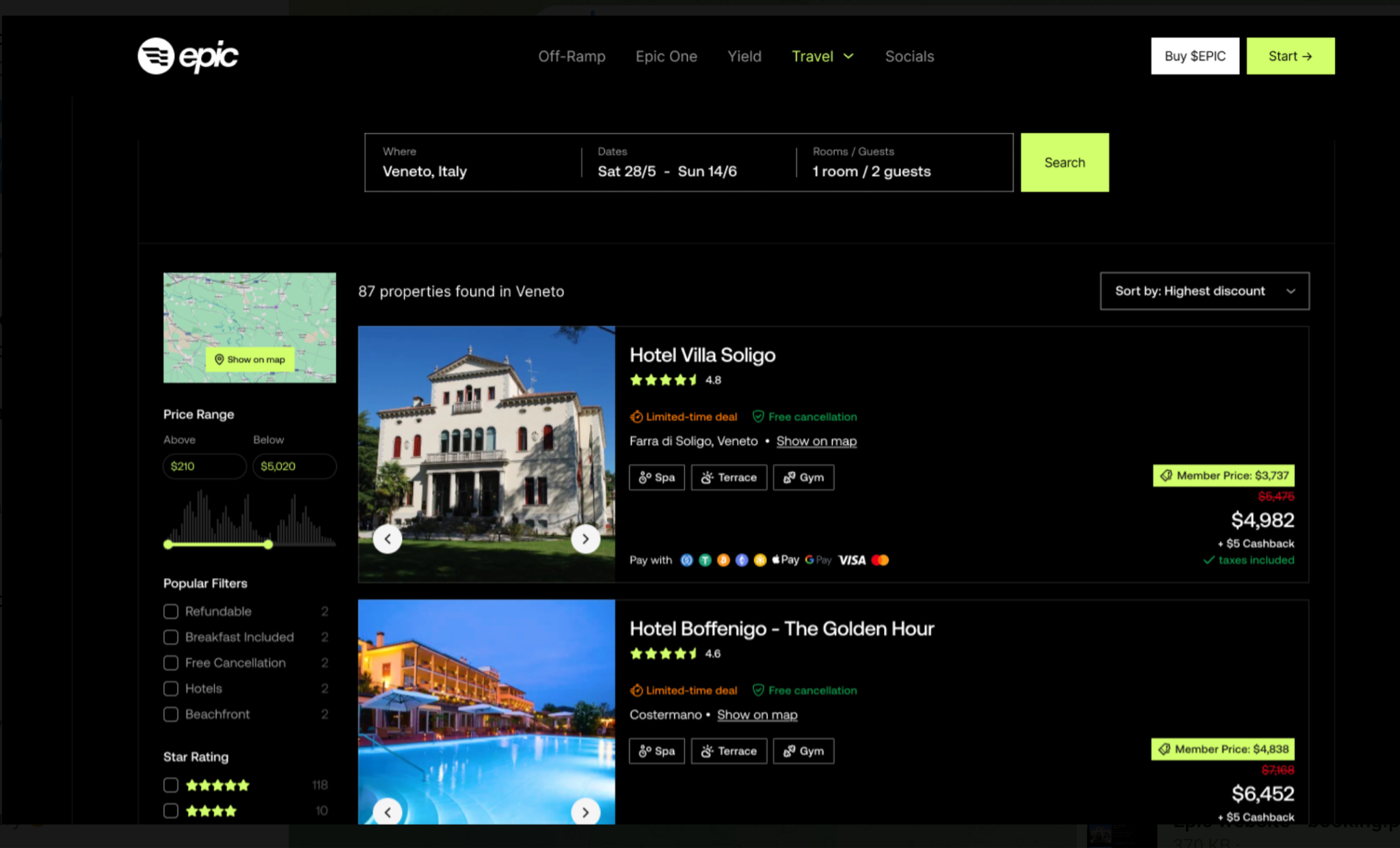
The easiest and most direct way to use your ALT is on Epic, where you don't need to cash out to fiat first, and you don't pay premium markups.
Book hotels and flights directly with ALT on Epic at up to 30% below Booking.com and Expedia. While most crypto travel platforms charge a 10-15% markup at checkout, Epic charges none. This means every ALT you spend goes toward your booking, not fees.
Book your next hotel for up to 30% less
The platform launches soon. Join the early access list now and get $25 off your first booking.
2. Pay for Rollup Infrastructure and Services
ALT is the primary payment token for Altlayer RaaS services. If you're a developer launching a rollup or a project needing decentralized sequencing and verification, you pay in ALT for VITAL, MACH, and SQUAD services. This is the core utility: ALT spent on these services directly ties the token to protocol activity. Unlike many crypto tokens, ALT demand isn't speculative—it flows from real infrastructure spending.
3. Stake ALT for Operator Rewards
ALT holders can stake their tokens to become operators in the Altlayer network. Operators validate blocks through VITAL, back finality claims in MACH, or provide decentralized sequencing in SQUAD. Rewards are earned in ALT, and the rate depends on network usage: more rollups using the network = more validation work = higher operator earnings. Staking ties reward to actual protocol activity.
To stake, you need to run operator software (more technical than delegated staking on other protocols) or delegate your ALT to an existing operator through a crypto wallet. Unstaking periods and lock-ups vary by service; check Altlayer's documentation for your specific use case.
4. Vote on Network Governance
ALT holders participate in on-chain governance, voting on protocol parameters, fee structures, funding programs, and strategic decisions about which rollup stacks to prioritize. Governance is non-trivial at Altlayer: past votes have determined whether to integrate new rollup stacks, how to allocate treasury resources, and which services to launch first. Real developer and user interests shape the protocol's direction.
Governance votes are weighted by staked ALT, and voting power is not delegated by default. To participate, you must stake ALT and actively cast votes, or you can delegate your voting power to a representative.
5. Trade ALT
ALT is listed on major exchanges including Binance, Crypto.com, Bybit, Gate, and OKX. It trades against USD, USDT, and BTC pairs with daily volume typically between $2 million and $8 million. Traders treat ALT as an infrastructure play in the rollup-scaling narrative. It tends to move with broader Layer-2 and scaling sentiment, particularly around Ethereum ecosystem adoption and restaking protocol maturity (EigenLayer's growth directly impacts Altlayer's security model).
Within the Ethereum ecosystem, ALT also trades on decentralized exchanges like Uniswap via ERC-20 bridges.
Is Altlayer a Good Investment?
Whether ALT is a good investment depends on your risk tolerance and conviction in rollup infrastructure as an essential part of blockchain scaling.
The bull case rests on real fundamentals. Rollups are already the dominant scaling solution for Ethereum and other Layer-1s. Altlayer's RaaS launchpad directly addresses a pain point: developers want to deploy rollups faster and more cheaply. The restaking innovation means new rollups can access Ethereum security without building their own validator networks. Adoption by major projects like Cyber (a social Layer-2) and gaming rollups shows ecosystem traction. Funding from tier-one investors and the team's technical credibility add credibility.
The risks are concrete. ALT trades roughly 99% below its 2024 all-time high of $0.6881. Competitors like Optimism, Arbitrum, and others have larger ecosystems and the first-mover advantage in RaaS. Restaking is still an emerging security model if EigenLayer faces setbacks or slashing events, Altlayer's security model loses a key pillar. The protocol relies heavily on Ethereum and EigenLayer; if either faces adoption headwinds, Altlayer does too. Governance remains concentrated among early token holders, which can slow protocol evolution or favor insiders.
This is not financial advice. Crypto is volatile. Always do your own research and never invest more than you can afford to lose.
FAQs
1. Is Altlayer a good investment?
Altlayer offers real infrastructure utility, is backed by tier-one investors, and addresses genuine rollup developer needs. But ALT is a small-cap token trading 99% below its all-time high with meaningful competition. Treat it as a high-risk bet on the rollup-scaling narrative and do your own research before buying.
2. What is Altlayer?
Altlayer is a decentralized protocol that simplifies launching and securing custom rollups through a Rollup-as-a-Service launchpad and Restaked Rollups. It lets developers deploy rollups across 45+ chains using existing stacks like OP Stack and Arbitrum Orbit while borrowing security from Ethereum through EigenLayer restaking.
3. Who founded Altlayer?
Altlayer was co-founded by Jia Yaoqi (CEO), Dorothy Liu (Head of Growth), Tan Jun Hao (Head of Product Engineering), and Aparna Narayanan (Head of Communications). The team raised $22.8 million from Polychain Capital, Binance Labs, Jump Crypto, and prominent crypto figures including Gavin Wood.
4. Can you spend ALT on real things?
Yes. Epic, a crypto travel platform launching soon, accepts ALT for hotels and flights at up to 30% below Booking.com and Expedia. Sign up early and your first booking is $25 off.
5. Can I earn ALT with my own equipment?
Yes, but it's technical. You can run Altlayer operator software to validate blocks (VITAL), secure finality (MACH), or provide sequencing (SQUAD) and earn ALT rewards. This requires dedicated hardware and operator knowledge. Alternatively, you can stake ALT and delegate to an existing operator to earn a portion of their rewards.
6. Where can you buy ALT?
ALT is available on major exchanges including Binance, Crypto.com, Bybit, Gate, MEXC. Within Ethereum and other Layer-2s, it also trades on decentralized exchanges like Uniswap.
7. What is the max supply of ALT?
ALT has a maximum supply of 10 billion coins, with approximately 6.64 billion circulating as of August 2026. The remaining supply is held by team, investors, and allocated to incentive programs and treasury. ALT is not burned; supply is fixed.


Mithra Ghosh is a Dubai-based content writer and SEO copywriter with 2+ years of experience crafting search-optimised content across crypto, Web3, and digital finance. She combines strong editorial instincts with a deep understanding of blockchain ecosystems and on-chain trends.
At Epic, she writes about the growing world of crypto-native travel helping readers understand how holding and spending digital assets can unlock smarter, cheaper ways to see the world.

Found a hotel you like? Book it for up to 30% less

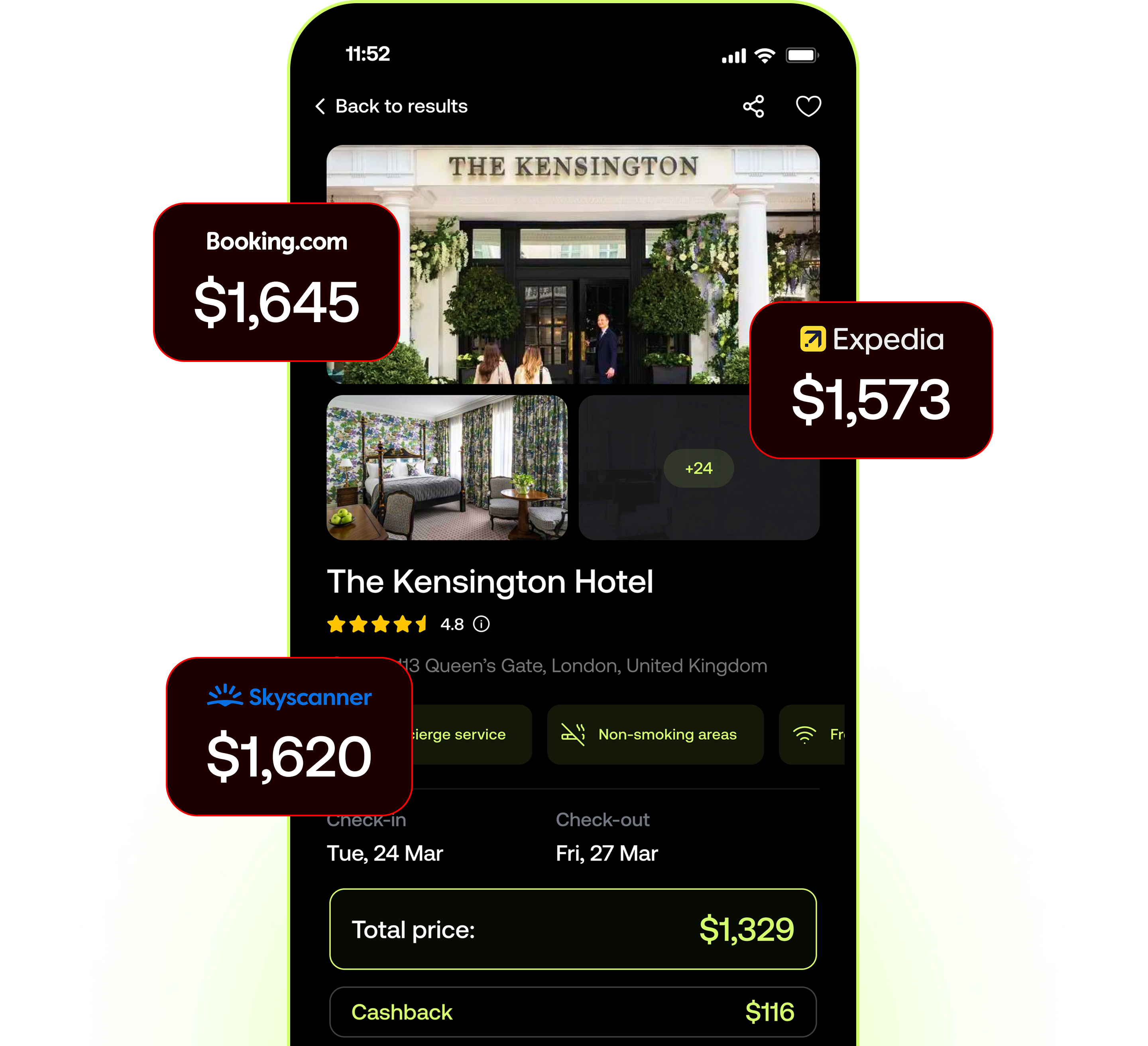
Found a hotel you like? Book it for up to 30% less