Content
Akash Network (AKT) is a crypto coin that powers a decentralised marketplace where users can buy and sell cloud computing resources peer-to-peer. Unlike centralized cloud providers that control pricing and access, Akash operates on a reverse-auction model where providers compete to win your computing jobs, typically delivering 60 to 85% cost savings compared to AWS, Google Cloud, or Microsoft Azure.
The network has matured beyond its 2020 launch. It now supports enterprise-grade GPUs including NVIDIA H100 and H200 chips, runs real production workloads for companies like Razer, and recently launched a native token burn mechanism that ties cryptocurrency scarcity to actual network adoption. For most users, the most practical benefit remains speed and cost. This includes paying for computers, earning staking rewards, voting on the network's future, and booking discounted hotels and flights on Epic.
See how much you
could save with $AKT
Answer 2 questions to get your personalized
savings estimate.
Question 1 of 2
Where do you want?
Question 2 of 2
How many nights?
Your result
Get similar deals when we go live.
Get $25 off your first trip.
Key Takeaways
- Akash Network has operated continuously since 2020 as the longest-running decentralised compute marketplace, with approximately 60 active providers managing 10,000 v CPUs and 249 GPUs
- Starting in March 2026, the Burn-Mint Equilibrium model automatically removes AKT from circulation whenever it is spent on compute, directly linking token economics to network usage
- The platform now runs mission-critical infrastructure, including H100 and H200 GPUs suitable for AI model training and deployment, offering viable competition for price-sensitive enterprises
- AKT holders can book hotels and flights on Epic at up to 30% below Booking.com prices. Get $25 off your first booking.
- Additional utility includes staking for network security rewards, on-chain governance voting, and secondary market trading
Akash Network At a Glance (July 2026)
What Is Akash Network?
Akash Network functions as an open computational marketplace. Rather than renting servers from a centralized company that holds all pricing power, users lease capacity directly from a global network of providers. These providers range from professional data centre operators to individuals with spare GPU resources. No single entity controls infrastructure, sets prices, or can censor deployments.
The network targets a specific market inefficiency. Three corporations dominate the $500 billion global cloud industry. When AI adoption created sudden demand for high-end GPU capacity, these incumbents responded with long waitlists, approval processes, and premium pricing. Meanwhile, underutilised server capacity sat idle worldwide. Akash bridges that gap by connecting stranded supply to urgent demand, functioning as what many describe as the Airbnb model for computing infrastructure.
Built on the Cosmos SDK in 2020 under the stewardship of Greg Osuri and Overclock Labs, the network has transitioned from experimental protocol to production infrastructure. Razer deployed distributed consumer GPUs across Akash to power its viral AI generation campaign. Thousands of blockchain validators rely on it for node hosting. AI teams routinely use Akash to fine-tune large language models without the cost or commitment of centralised cloud lock-in.
How Akash Network Actually Works
Akash uses an economic model that inverts traditional cloud pricing. On AWS or Azure, the provider sets the price, and you accept it. On Akash, you set the maximum price, and providers bid below it to win your business.
The three-step lease process:
- Tenant defines the job: You write a simple configuration specifying CPU cores needed, memory, storage, GPU type, and your maximum willing price.
- Providers submit competitive bids: Network providers respond with offers below your ceiling. The lowest qualified bid typically wins, though you retain the right to select a different provider.
- Lease executes on-chain: Once you accept, a smart contract formalises the agreement. Your workload spins up on the provider's hardware within minutes.
The financial model is why Akash works. A general-purpose cloud instance costing $100 per month on AWS typically runs $15 to $40 on Akash, depending on provider density in your region. In 2026, Akash added full virtual machine support, enabling enterprises to migrate legacy applications alongside modern containerised workloads.
AKT powers this entire ecosystem. Users pay for compute in AKT or USDC stablecoin. Validators stake AKT to secure the network against fraud. Token holders govern the protocol through on-chain voting. The watershed moment came in March 2026: the Burn-Mint Equilibrium activated, meaning every AKT spent on compute leaves circulation permanently. This is rare in crypto. Most tokens face dilution over time. AKT's scarcity is now mechanically tied to whether the network sees genuine adoption.
Five Ways to Put Your AKT to Use
1. Book Discounted Hotels and Flights with AKT on Epic
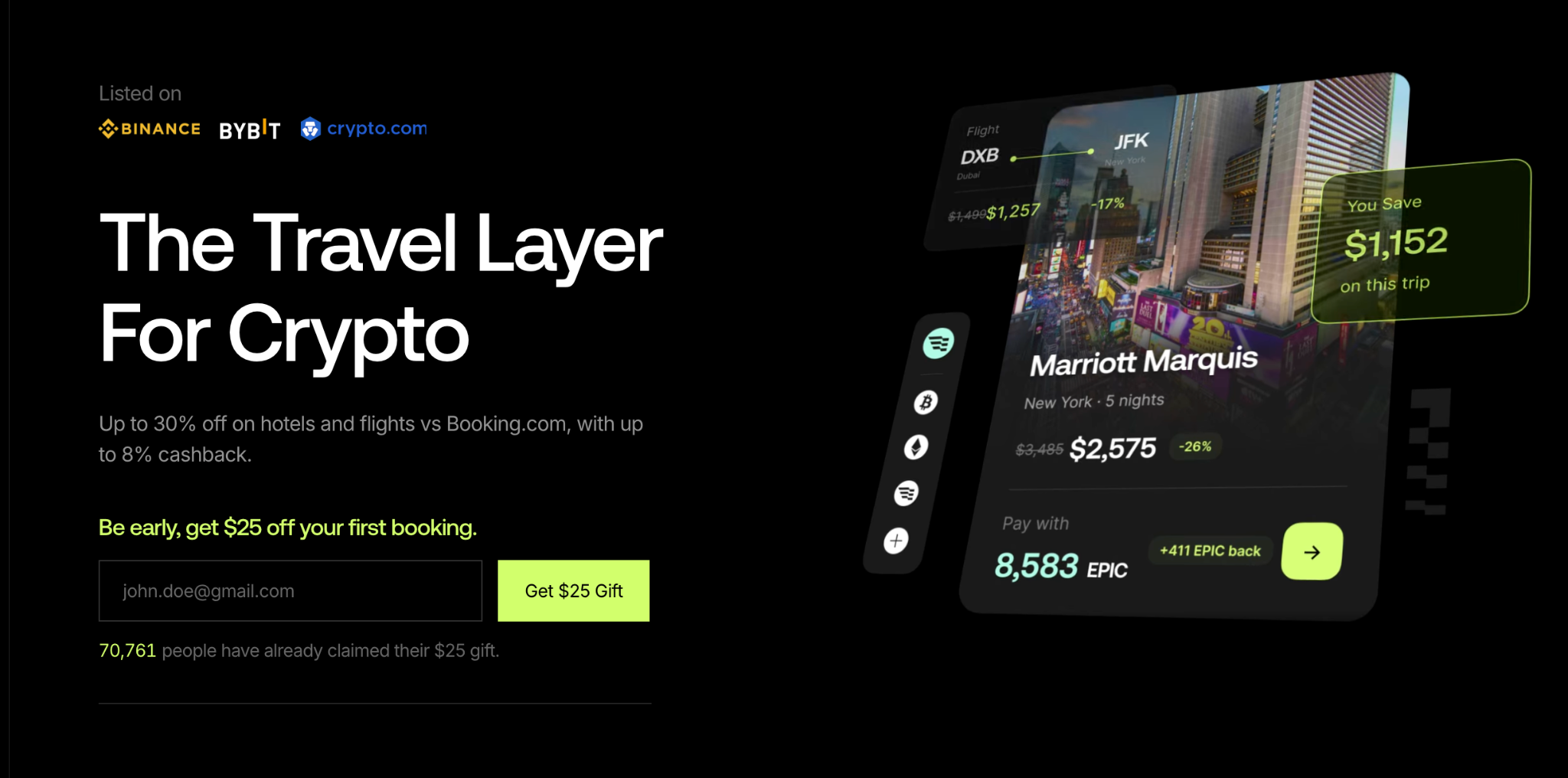
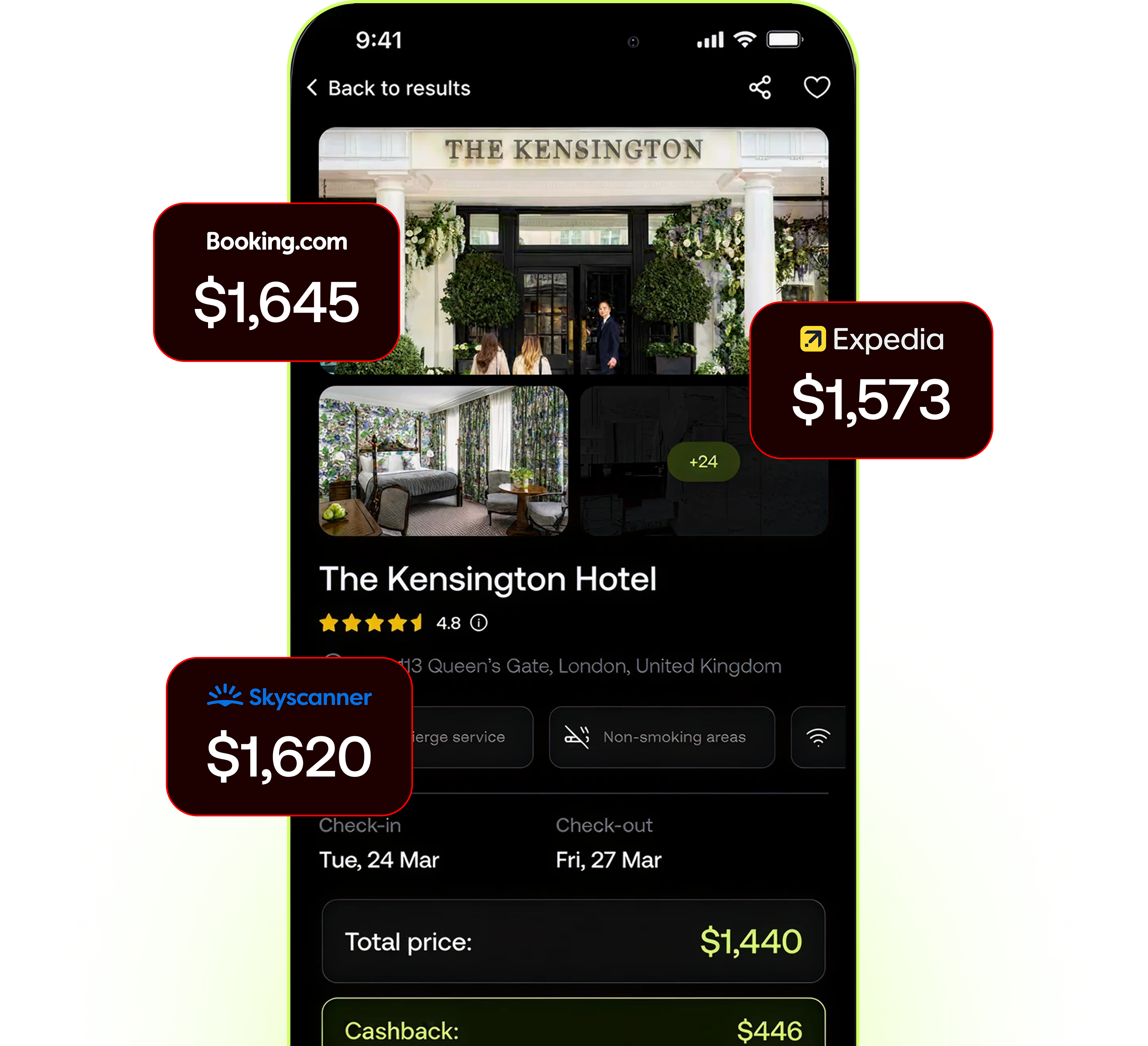
This is by far the best way to put your AKT to work. This offers the most accessible method for spending AKT without cashing out to fiat or paying a 10-15% crypto premium with crypto-native booking travel platforms. When you plan your next trip, book hotels and flights directly with Epic using AKT and get up to 30% below Booking.com.
Epic is a crypto-native travel platform that operates in more than 190 countries. It offers access to over 2 million hotels and flights worldwide and supports 200+ cryptocurrencies such as XRP, BTC, USDT and ETH, along with traditional payment methods like Google Pay, Apple Pay, and Visa/Mastercard.
Since Epic avoids the high markups often added by traditional travel booking platforms, users can save up to 30% when paying with AKT compared to booking the same hotel or flight through Booking.com or Expedia.
Book your next hotel for up to 30% less
Early access users also get $25 off their first booking, helping reduce travel costs. For frequent travellers, this use case alone makes holding AKT a worthwhile investment.
2. Deploy Workloads at Transparent Costs
The primary use case remains deploying applications and training infrastructure on the decentralised network. Developers host web services, run blockchain validator nodes, and execute AI model fine-tuning on H100 and H200 GPUs at 60 to 85% below centralized cloud rates. Conversely, anyone with capable hardware can run the provider software and generate revenue by leasing idle capacity. The Akash at Home program extends this opportunity to consumer-grade GPUs like the RTX 4090 and RTX 5090, though acting as a provider requires more technical expertise than simple staking.
3. Stake AKT and Collect Staking Rewards
AKT holders can delegate tokens to a network validator through a Cosmos-compatible wallet such as Keplr or Leap to secure the network and earn approximately 3.6% annual percentage yield in additional AKT. Rewards can be claimed and immediately re-delegated to compound returns. One operational detail: unstaking locks tokens for 21 days during an unbonding period when they earn nothing. Plan your liquidity accordingly.
4. Participate in Network Governance
Staked AKT simultaneously functions as voting weight in Akash governance, which carries real consequences. The community has voted on over 300 on-chain proposals since launch, including decisions on token economics, fee structures, and which infrastructure initiatives receive funding. The most significant current debate involves whether to migrate Akash from the Cosmos blockchain to a higher-throughput chain, with Solana as the leading technical alternative. AKT holders will collectively decide this architectural future.
5. Trade AKT on Centralised and Decentralised Markets
AKT is listed on major exchanges including Coinbase, Kraken, Crypto.com, KuCoin, and Gate.io, with active USD, USDT, and BTC trading pairs. Daily trading volume typically ranges between $4 million and $13 million. Within the Cosmos ecosystem, Osmosis serves as the primary decentralised exchange. Traders often benchmark AKT against the broader DePIN (Decentralised Physical Infrastructure) sector and AI infrastructure narratives, so price movement correlates with crypto market sentiment around these themes.
Investment Considerations
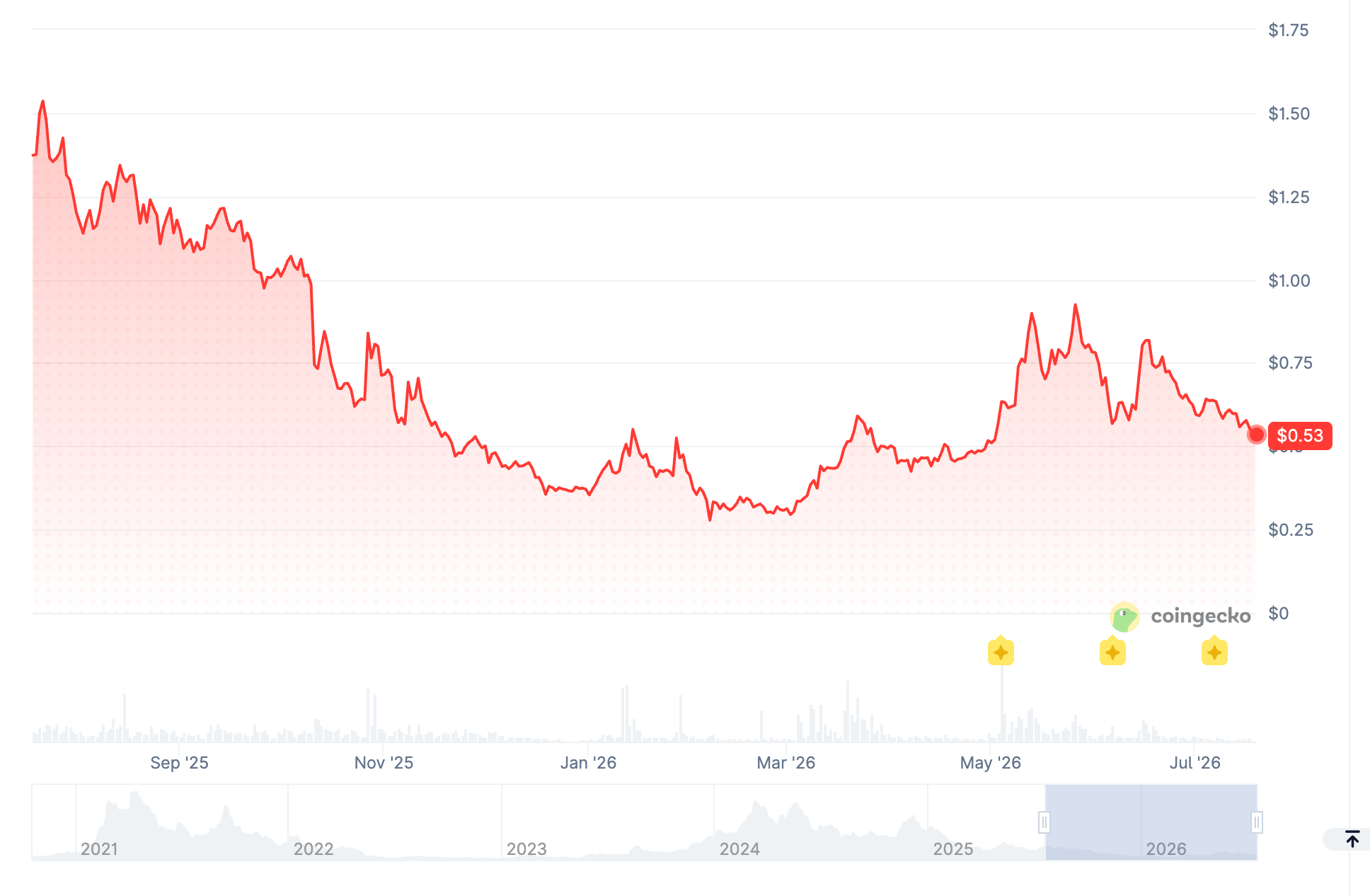
Akash Network (AKT) price history shows a sharp decline from September 2025 through January 2026, followed by a recovery phase into mid-2026. Current price stands at $0.53 as of July 2026, approximately 93% below the all-time high of $8.08 set in April 2021.
Whether AKT represents a sound investment depends on your risk tolerance and conviction around decentralised infrastructure. The bullish case is unusually concrete for cryptocurrency. Akash reports real revenue ($3.15 million in 2025, up 128% year-over-year), maintains actual production users, holds the longest operational track record in decentralised compute, and deploys a deflationary mechanism that directly responds to usage.
The risks are equally tangible. AKT trades approximately 90% below its April 2021 all-time high of $8.08. Direct competitors like Render and io.net pursue the same AI compute narrative with substantially larger marketing budgets. Provider count declined through early 2026 even as network usage recovered, signalling possible profitability pressures. The unresolved chain migration debate introduces medium-term architectural uncertainty. Enterprise customers remain cautious about service guarantees on decentralised infrastructure lacking formal SLAs.
Frequently Asked Questions
1. Is Akash Network a sound investment?
Akash possesses verified revenue, operational products, and a deflationary burn mechanism as of 2026. However, AKT remains a volatile small-cap asset trading far below its all-time high. Evaluate it as a high-risk investment in speculative infrastructure and perform thorough research before committing capital.
2. What problem does Akash Network solve?
Akash Network addresses GPU scarcity and pricing power concentration in cloud computing. It connects unused data centre capacity globally to users who need computing resources, facilitating price discovery through competition rather than corporate rate-setting.
3. Who leads Akash Network development?
Greg Osuri, CEO of Overclock Labs, co-founded the protocol. The network itself operates through decentralised on-chain governance by AKT token holders rather than centralised corporate control.
4. Can I actually spend AKT on real purchases?
Yes. Book hotels and flights on Epic using AKT at prices up to 30% below Booking.com. New users receive $25 off their first booking.
5. Can I earn AKT using my personal computer?
Yes, but it requires technical setup. Anyone with capable hardware can run Akash's provider software to lease computing capacity and earn AKT revenue. The process is more technically involved than staking but can generate income from otherwise idle GPU resources. Consumer-grade GPUs, including the RTX 4090 are supported through the Akash at Home program.
6. Where do I purchase AKT tokens?
AKT is available on Coinbase, Kraken, Crypto.com, KuCoin, and Gate.io. The Osmosis decentralised exchange also offers AKT trading for users within the Cosmos ecosystem.
7. What is the maximum AKT supply?
AKT has a maximum programmable supply of 388.5 million tokens. Approximately 292 million currently circulate. Since March 2026, AKT used for compute fees is permanently burned, reducing effective supply as network usage grows.
8. When did Akash Network launch?
Akash Network launched its mainnet in 2020, making it the longest continuously operating decentralised compute marketplace. The network runs across 60 active providers managing shared computing infrastructure.


Mithra Ghosh is a Dubai-based content writer and SEO copywriter with 2+ years of experience crafting search-optimised content across crypto, Web3, and digital finance. She combines strong editorial instincts with a deep understanding of blockchain ecosystems and on-chain trends.
At Epic, she writes about the growing world of crypto-native travel helping readers understand how holding and spending digital assets can unlock smarter, cheaper ways to see the world.

Found a hotel you like? Book it for up to 30% less

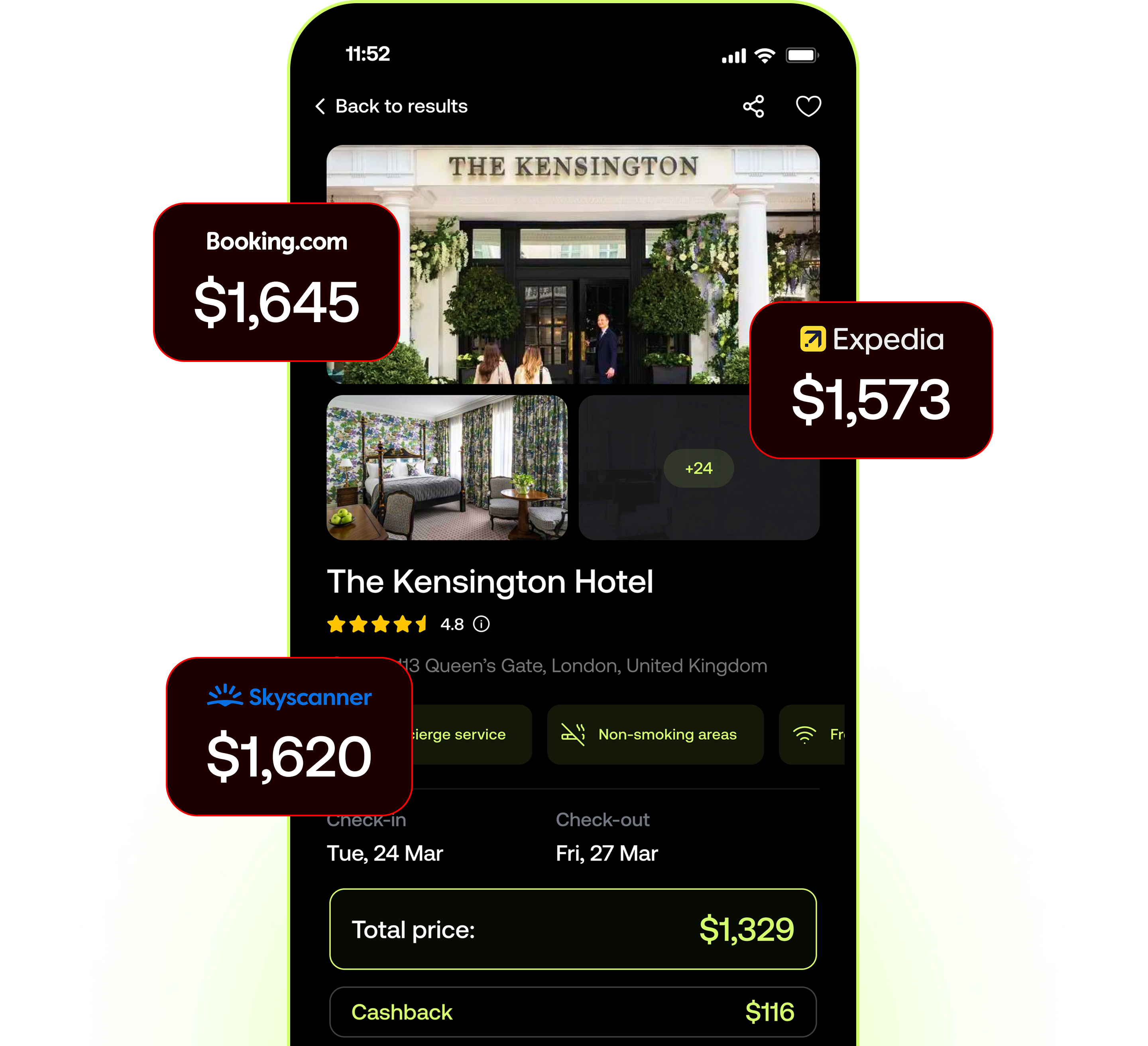
Found a hotel you like? Book it for up to 30% less