Content

OpenGradient (OPG) is the native token of a decentralised AI infrastructure network built on Base, with cross-chain deployments on BNB Chain and Mantle. The project runs a Hybrid AI Compute Architecture that lets applications and agents outsource AI workloads to a network of GPU and TEE nodes, with OPG used across inference payments, node staking and governance.
But earning or acquiring OPG is easier than finding places to actually spend it. Direct merchant acceptance is still limited, which means holders need practical ways to put their tokens to use.
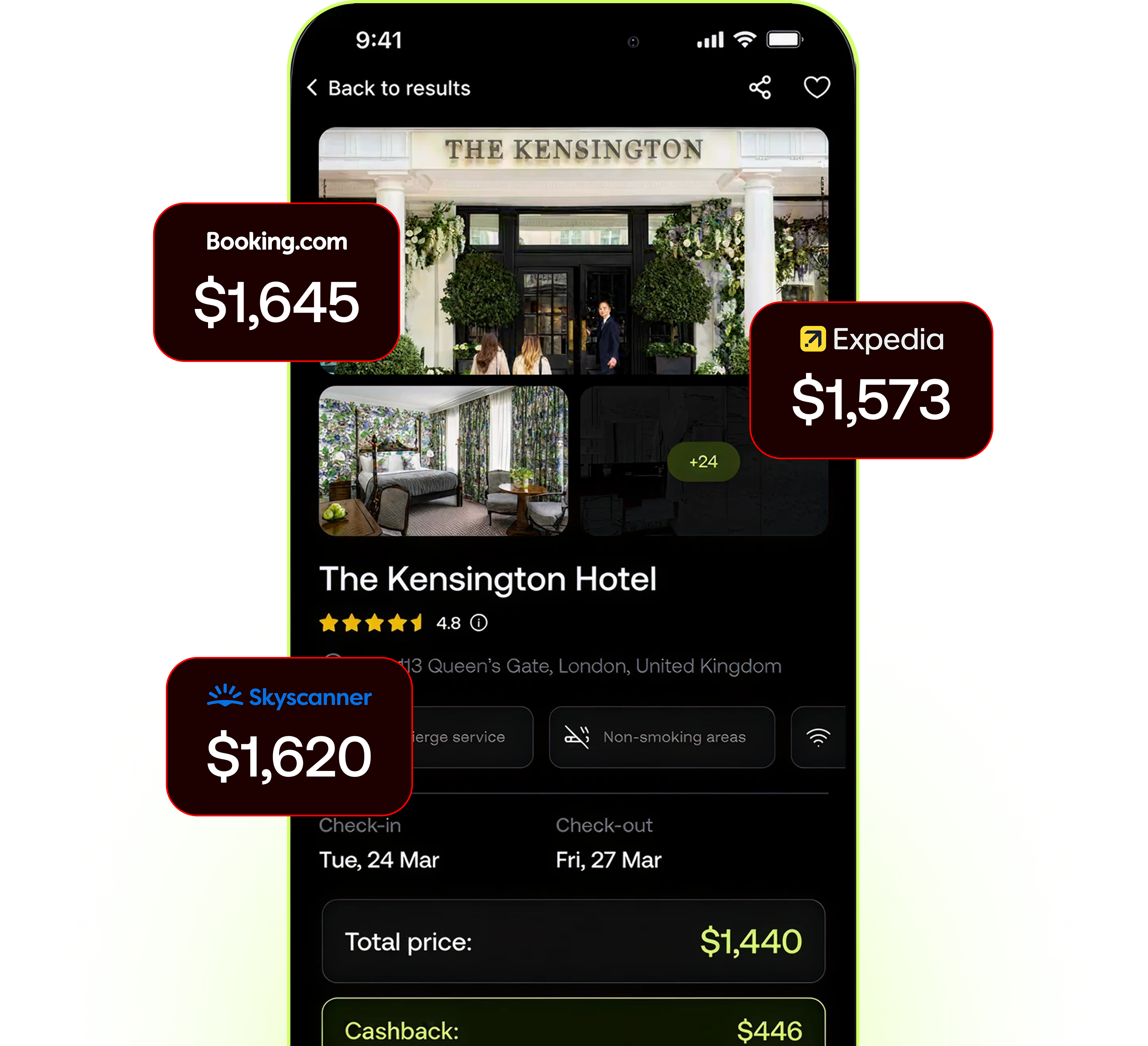
One of the most useful options is travel. You can use your OPG to book hotels and flights on Epic at rates of up to 30% below Booking.com, and get $25 off your first booking. Below, we cover five practical ways to spend or use OPG in 2026.
See how much you
could save with $OPG
Answer 2 questions to get your personalized
savings estimate.
Question 1 of 2
Where do you want?
Question 2 of 2
How many nights?
Your result
Get similar deals when we go live.
Get $25 off your first trip.
1. Book Discounted Hotels and Flights With OPG on Epic
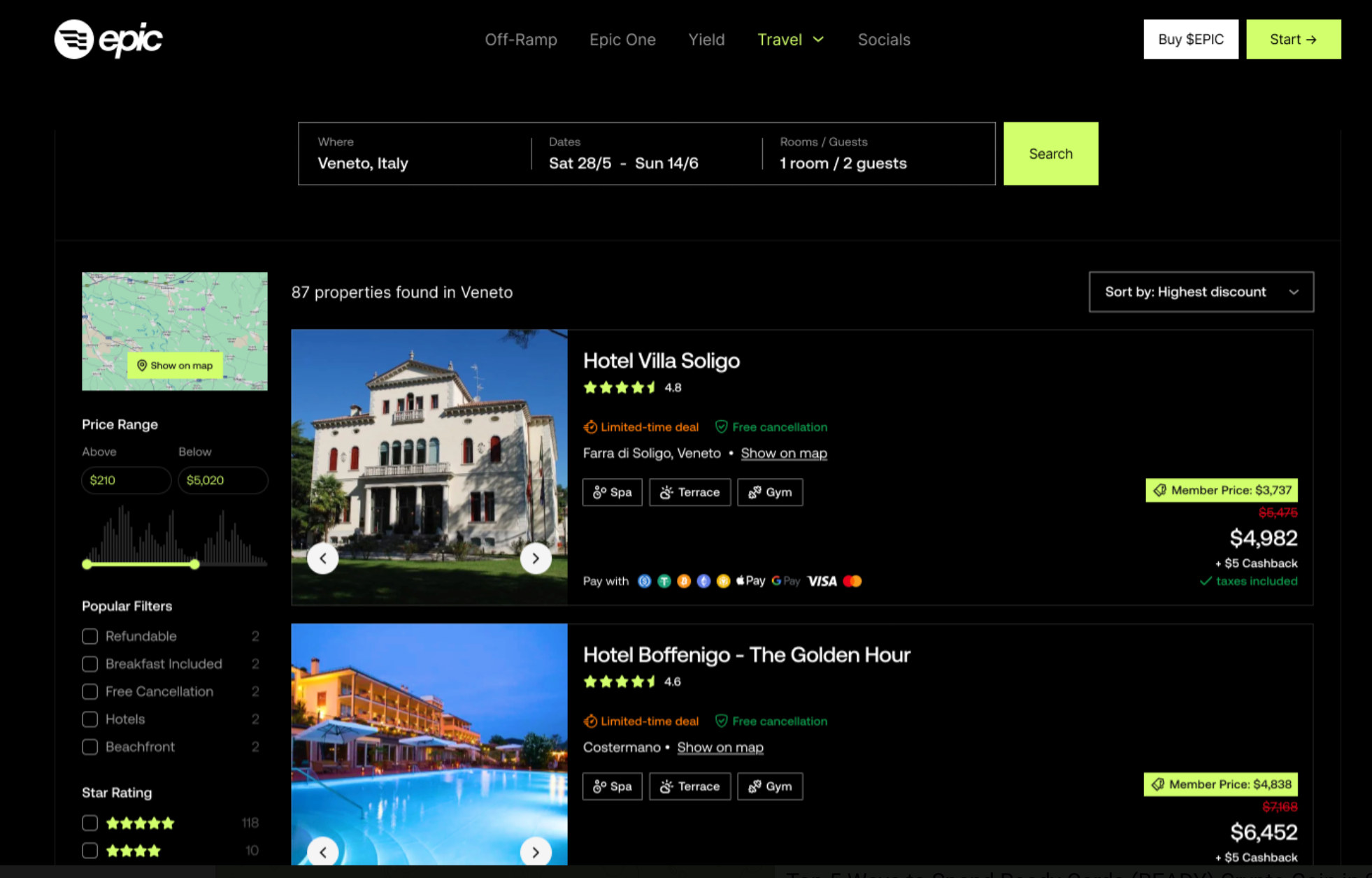
Travel is one of the simplest ways to put OPG to use in 2026. Epic accepts 200+ cryptocurrencies, including OPG, and lets you book hotels and flights with crypto. Prices can be up to 30% lower than Booking.com, giving OPG holders a practical way to use their tokens for a real trip.
Book your next hotel for up to 30% less
The booking process is straightforward and feels similar to using Booking.com or Expedia. If it’s your first time using Epic, you can also get $25 off your first booking.
2. Pay for Verifiable AI Inference and Model Hosting on OpenGradient
The strongest native use for OPG is inside OpenGradient's own network, where the token serves as the economic engine for verifiable AI compute. It splits into two connected activities: paying for inference through the Model Hub and staking to secure the network. Both consume or lock OPG, and both feed back into the compute economy.
On the payments side, OpenGradient's Model Hub is an open marketplace hosting thousands of AI models. Developers and end users pay OPG per request to run inference on those models, and payments settle natively through the x402 protocol on Base using Permit2, which gates LLM and machine-learning queries behind a wallet signature rather than an API key.
Every inference call generates a cryptographic proof (a zkML proof or TEE attestation) that is verified at the consensus level before results are committed on-chain. This is what solves the AI black-box problem for on-chain apps: instead of blindly trusting a centralised API, smart contracts and autonomous agents receive a verifiable receipt that the correct model produced the output.
On the network side, node operators stake OPG to run inference nodes, data nodes and validator nodes, earning rewards for correctly serving and verifying requests. Model creators also earn OPG when their published models are used. Token holders can vote on governance proposals covering upgrades and protocol policy through the OpenGradient Foundation.
If you hold OPG and want to actually deploy it inside the ecosystem, running inference on the Model Hub or delegating into a node is the strongest first move you can make.
3. Buy Physical Collectibles With OPG on Polkastarter
If you would rather turn some of your OPG into something physical, collectibles are another option.
Polkastarter operates a crypto-native marketplace for real-world collectibles, including graded Pokémon cards, sealed trading-card products, retro video games and other memorabilia. These are physical products rather than NFTs: depending on the listing and delivery option, the item can be shipped to the buyer or held in custody.
If you're holding OPG and want to use some of it to buy collectibles, the process is fairly simple:
- Swap your OPG for a supported asset on Uniswap or Binance, with USDC or ETH being the most straightforward options.
- Use the swapped asset to pay for your chosen collectible at checkout.
Since OPG is an ERC-20 token with Base as its reference network, swapping it is quick and comes with the low gas fees Base is known for. For collectors who already hold crypto, this can be a convenient alternative to converting everything to fiat first and then buying through a traditional collectibles marketplace.
Polkastarter also gives you access to a range of graded Pokémon cards, sealed products and other collectibles, making it an interesting option if you want to turn some of your crypto gains into physical assets.
If you've been actively trading OPG and want to diversify beyond crypto, collectibles can be worth exploring. Unlike tokens, physical collectibles have their own collector and resale markets, so their value isn't directly tied to the crypto market.
Browse the Polkastarter marketplace to explore the collectibles currently available.
4. Buy Gift Cards, eSIMs and Everyday Products With OPG
Bitrefill and Coinsbee are two popular crypto-commerce platforms for spending crypto on everyday products and services. However, OPG isn't currently available as a direct payment option on either platform.
The good news is that there's a simple workaround. Instead of trying to spend OPG directly, you can:
- Swap your OPG for BTC, USDT or USDC using Uniswap or your preferred exchange.
- Use the swapped crypto to pay for your purchase on Bitrefill or Coinsbee.
Once you've done that, you can use your crypto for much more than just trading. Depending on what's available in your region, you can buy:
- Gift cards for Amazon, Uber, Walmart, Steam and other retailers.
- Gaming credits for PlayStation, Xbox, Nintendo eShop and Steam.
- Food delivery from services such as DoorDash and Uber Eats.
- Subscriptions for Netflix, Spotify, Disney+ and more.
- eSIM data plans for travel across 190+ countries.
- Mobile top-ups for prepaid numbers in different countries.
Bitrefill's UPI option can also make things more convenient, since you don't necessarily need to rely on a card for every purchase.
For now, converting OPG into a more widely supported cryptocurrency is probably the easiest way to turn your OPG holdings into something you can actually spend. It may take an extra step, but it gives OPG holders access to a much wider range of everyday purchases while direct support for smaller AI infrastructure tokens remains limited.
5. Load a Crypto Debit Card for Merchant Spending
The fifth practical option is a crypto debit card. Cards from Crypto.com Visa, Bybit Card and Wirex let you top up a supported balance (typically USDT or USDC) and spend it anywhere Visa or Mastercard is accepted, from physical retail and restaurants to online checkout.
OPG is not a direct card-loading asset on any major issuer, so the flow is:
- Swap OPG into USDC or USDT on Uniswap or Binance.
- Transfer the stablecoin to your card provider's wallet.
- Spend as usual at the point of sale.
The trade-off is real. You lose some OPG exposure and pay a small swap and network fee, but you gain access to the roughly 150 million Visa and Mastercard merchants worldwide. For OPG holders who want to actually use their gains offline, whether that is coffee, groceries, fuel or a meal out, this is the only route today that behaves like a normal card.
OpenGradient itself does not run a merchant checkout or point-of-sale product. OPG primarily serves as the payment, staking and governance token inside the OpenGradient network, so external merchant spending currently depends on the swap-and-load workflow above. USDC on Base is the cleanest bridge for OPG holders, thanks to Base's low gas fees and deep stablecoin liquidity.
Explore Supported Epic Travel Tokens:
- What is Stargate (STG)? Top 5 Ways to Use STG Crypto Coin in 2026
- What is Kyber Network (KNC)? Top 5 Ways to Use KNC Crypto Coin in 2026
- What is Akash Network Coin (AKT): Top 5 Ways to Use It in 2026
Frequently Asked Questions
1. What is OpenGradient (OPG) crypto?
OpenGradient is a decentralised AI infrastructure network that hosts, executes and verifies AI models at scale, operating as an AI coprocessor for blockchains, applications and autonomous agents. OPG is its native ERC-20 token, used for verifiable inference payments, node staking, governance and ecosystem incentives.
2. Where can I buy OPG?
OPG is listed for spot trading on Binance, Bybit, Upbit, Bithumb, MEXC, Gate, LBank, Hotcoin and Coinbase. On-chain, it trades on Uniswap on Base, with cross-chain access via OFT deployments on BNB Chain and Mantle.
3. Can I pay for hotels with OPG?
Yes, Epic accepts 200+ cryptocurrencies for hotel and flight bookings. Book hotels and flights priced up to 30% less than Booking.com. New users get $25 off their first booking.
4. What network is OPG on?
OPG is an ERC-20 token on Base. Its reference contract address is 0xfbc2051ae2265686a469421b2c5a2d5462fbf5eb, with OFT deployments extending it to BNB Smart Chain and Mantle.
5. Does OPG have any real-world utility?
Yes. OPG is used to pay for verifiable AI inference and model hosting on the OpenGradient Model Hub via the x402 protocol, to stake and secure the network as an inference, data or validator node, to reward model creators when their models are used, and to vote on governance proposals through the OpenGradient Foundation.


Mithra Ghosh is a Dubai-based content writer and SEO copywriter with 2+ years of experience crafting search-optimised content across crypto, Web3, and digital finance. She combines strong editorial instincts with a deep understanding of blockchain ecosystems and on-chain trends.
At Epic, she writes about the growing world of crypto-native travel helping readers understand how holding and spending digital assets can unlock smarter, cheaper ways to see the world.


Found a hotel you like? Book it for up to 30% less

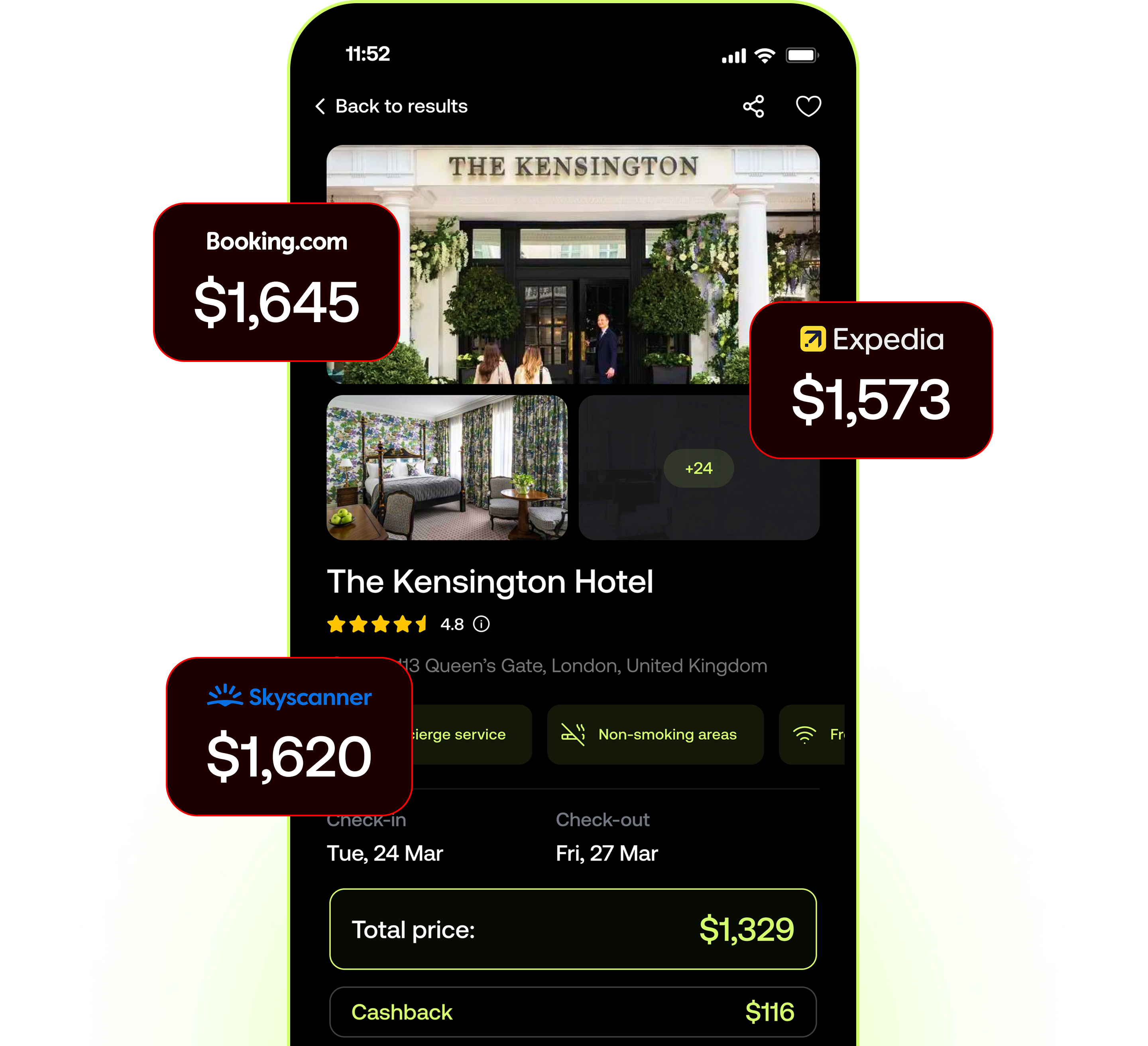
Found a hotel you like? Book it for up to 30% less