Content
Ergo (ERG) is a proof-of-work smart contract blockchain combining Bitcoin-style security with an extended UTXO model for programmable financial applications. Launched in 2019 without a pre-mine, ICO or venture allocation, it was co-founded by Alexander Chepurnoy and Dmitry Meshkov.
ERG is the network's native utility and settlement token. It pays transaction fees, supports SigmaUSD reserves, covers storage rent and rewards miners securing the network through Autolykos v2. Babel Fees also allow users to pay fees in supported Ergo assets while ERG handles settlement.
Buying ERG is easy, but direct merchant acceptance is limited outside Ergo’s ecosystem. Travel is one of the most practical routes: Epic supports 200+ cryptocurrencies, offers flights and hotels up to 30% cheaper than Booking.com, and gives new users a $25 off their first booking. Here are five practical ways to use ERG in 2026.
See how much you
could save with $ERG
Answer 2 questions to get your personalized
savings estimate.
Question 1 of 2
Where do you want?
Question 2 of 2
How many nights?
Your result
Get similar deals when we go live.
Get $25 off your first trip.
1. Book Discounted Hotels and Flights With ERG on Epic
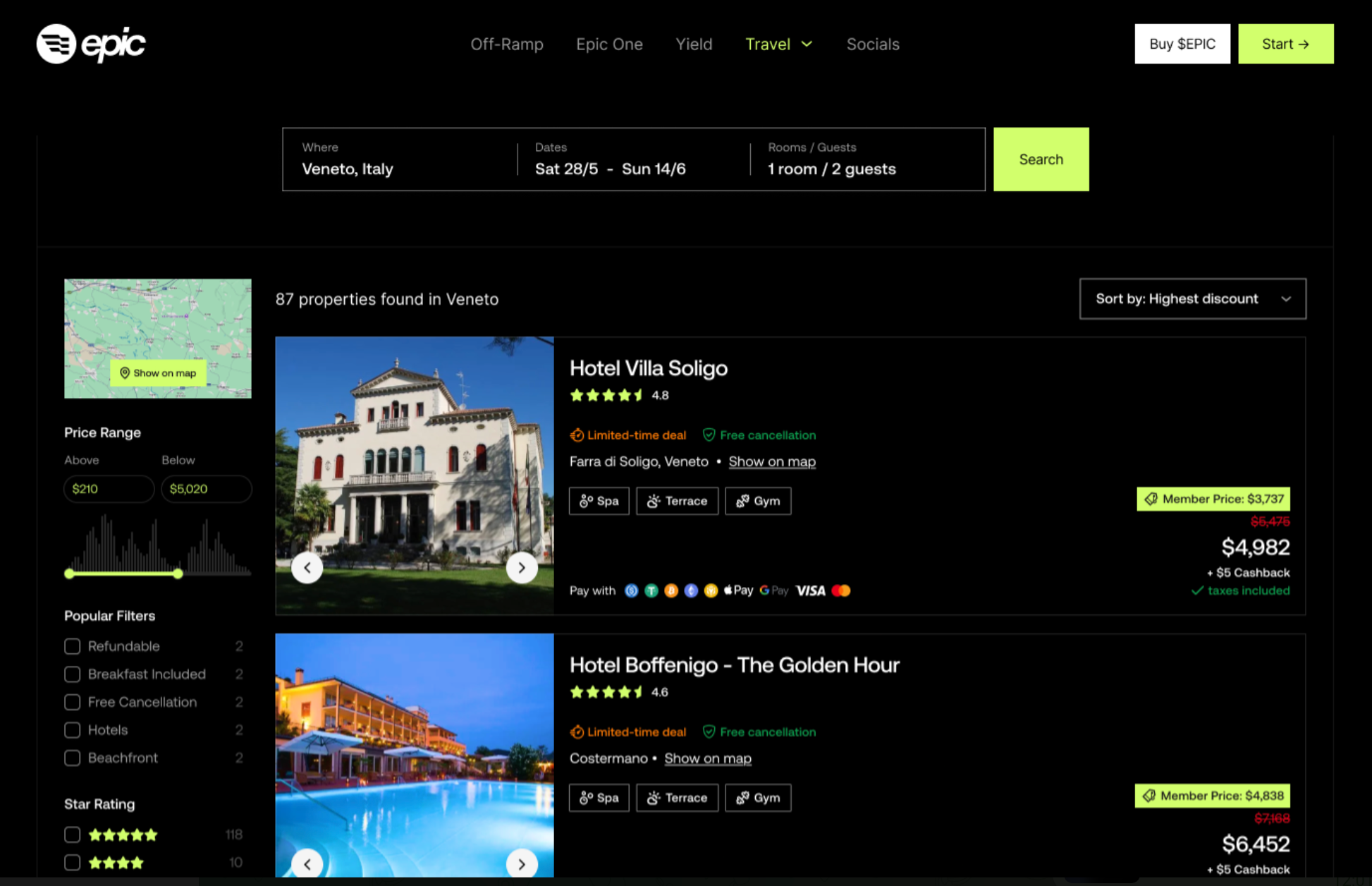
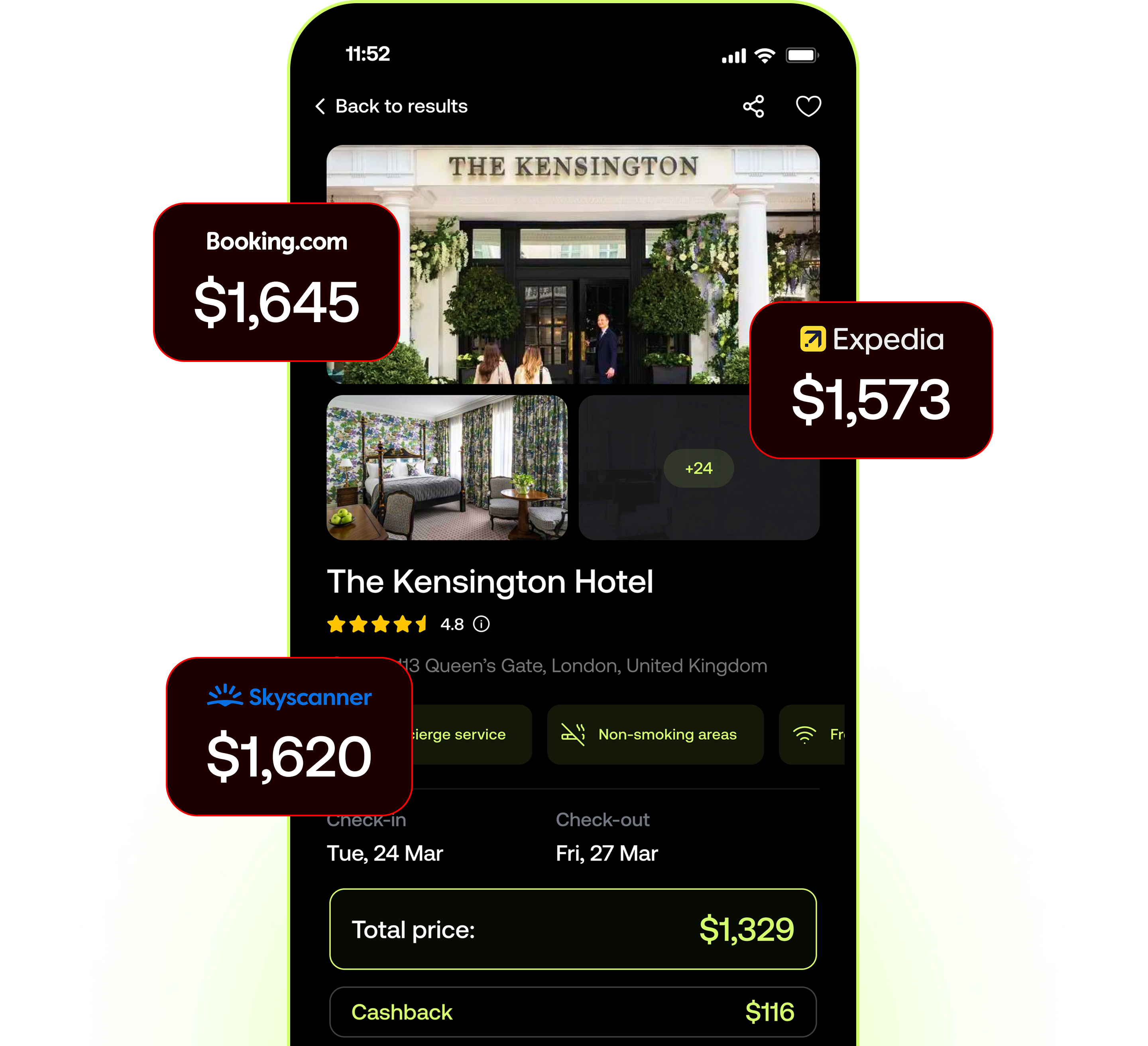
Travel is one of the easiest ways to turn a crypto balance into real-world spending. Epic lets you book flights and hotels with 200+ cryptocurrencies, along with Visa, Mastercard, Apple Pay and Google Pay at checkout. Flights and hotels can be up to 30% cheaper than Booking.com, with no extra processing fee for crypto payments.
For ERG held in an Ergo wallet, you’ll need to use a supported payment route to complete the booking.
Book your next hotel for up to 30% less
Not signed up yet? Sign up and claim $25 off your first booking.
2. Mint SigmaUSD, Provide Liquidity on Spectrum and Mine ERG
The best places to actually use ERG are inside its own ecosystem, and they group into three routes: collateralising a stablecoin. SigmaUSD is Ergo's flagship stablecoin, built on the AgeUSD protocol and overcollateralized by design. Depositing ERG lets you mint SigUSD (the peg-tracking position) or SigmaRSV (the reserve position, which captures fees as the system operates).
The mechanism uses reserve ratios rather than individual liquidations, so it holds up under conditions that would break liquidation-based lending markets. Gluon, a newer protocol, sits on top of these primitives and adds further hardening.
Adding liquidity. Spectrum, previously known as ErgoDEX, is Ergo's non-custodial exchange. It runs AMM pools alongside order-book functionality and offers cross-chain trading into Cardano. Contributing ERG to a pool earns a slice of swap fees, but impermanent loss remains the standard risk anytime the paired asset drifts away from ERG in price.
Mining. Because Ergo secures its chain with proof-of-work, staking in the Ethereum sense isn't possible. Mining is. The Autolykos v2 algorithm is memory-hard and specifically engineered to resist ASICs, meaning consumer GPUs remain viable and joining a pool is open to anyone with a rig. Emissions follow a deflationary schedule, and after EIP-27 the block reward dropped to 6 ERG while the tail was extended out to roughly 2045.
Beyond those three, your balance also gives you a voice in the community's governance and treasury discussions. Anyone who prefers their ERG contributing rather than sleeping should start here.
3. Buy Physical Collectibles With ERG on Polkastarter
Polkastarter is a marketplace of physical collectibles: graded Pokémon cards, sealed booster boxes, retro video games, sports memorabilia and similar goods. Each listing is a genuine physical item rather than an NFT, and once you buy, the seller either ships it out or keeps it in professional custody depending on the arrangement.
ERG isn't accepted natively at checkout, so the flow runs in two steps:
- Trade ERG for USDT or ETH on Spectrum, or through a centralized venue such as Kraken, KuCoin, MEXC or Gate.io.
- Pay for your item at Polkastarter checkout with the resulting stablecoin or ETH balance.
Rosen Bridge is worth mentioning here too, since it opens up native routes into Cardano and Bitcoin if either of those chains suits your wallet better for the swap leg. Anyone already sitting on crypto will find this considerably faster than cashing out to a bank account and then buying through a legacy grading marketplace. There's also a diversification angle worth noting: collectibles trade on secondary markets with their own cycles that don't move tick-for-tick with crypto prices.
Check out Polkastarter marketplace to see what's currently available.
4. Buy Gift Cards, eSIMs and Everyday Stuff With ERG
Bitrefill and Coinsbee lead the field when it comes to converting crypto into daily-life purchases. Neither one processes ERG at the checkout page, but a workaround exists and it's not fiddly:
- Swap ERG into BTC, USDT or ETH using Spectrum or another exchange you trust.
- Pay for whatever you need on Bitrefill or Coinsbee with the resulting balance.
The moment that swap clears, a substantial catalogue becomes reachable. Depending on where you live, options include:
- Retailer vouchers from Amazon, Uber, Walmart, Steam and hundreds of others.
- Gaming top-ups spanning PlayStation, Xbox, Nintendo eShop and Steam.
- Balance credits for DoorDash and Uber Eats.
- Streaming and subscription refills for Netflix, Spotify, Disney+ and similar services.
- eSIM plans covering more than 190 countries.
- Mobile top-ups for prepaid numbers across the globe.
Bitrefill's UPI support is a helpful feature, sparing users the card-entry step on every purchase.
Routing ERG through a heavily traded stablecoin remains the shortest distance between a mid-cap PoW token and real purchasing power. That extra swap step is trivial once you've done it once, and the range of goods it unlocks is far beyond what direct acceptance for ERG would ever cover.
5. Load a Crypto Debit Card for Everyday Spending
Option five leans on debit cards. Crypto.com Visa, Bybit Card and Wirex all let you fund a card with USDT or USDC and then transact anywhere Visa or Mastercard is honoured, whether that's an e-commerce basket or a corner-shop terminal.
None of them accept ERG deposits directly, so the sequence looks like this:
- Move ERG into USDT via Spectrum or through a centralized exchange like Kraken, KuCoin or Bybit.
- Send the USDT to whichever deposit address your card provider gives you.
- Tap or swipe the card as usual once the balance settles.
There's a real cost to this route. You give up any further upside on ERG, and swap fees plus network costs come out of the total. In exchange you gain access to somewhere around 150 million Visa and Mastercard merchants worldwide. For genuinely spending crypto on the sorts of things everyday life throws at you (petrol, groceries, the occasional dinner out) a preloaded card lands closer to a mainstream payment experience than any other crypto option currently offers.
One clarification: Ergo doesn't operate its own card programme or merchant gateway. ERG's role is native to the Ergo ecosystem as a mining reward, DeFi collateral and governance asset, which is why anything spent outside that ecosystem gets there via the swap-and-load flow above. USDT remains the most liquid connective tissue between an alternative layer-1 and daily commerce.
Explore Supported Epic Travel Tokens:
Frequently Asked Questions
1. What is Ergo (ERG) crypto?
Ergo is a proof-of-work smart contract platform that went live in July 2019, blending Bitcoin's security principles with an extended UTXO model that supports programmable financial contracts. ERG is its native asset, used to settle transaction fees, back SigmaUSD collateral, cover storage rent and Babel fees, and reward miners running the Autolykos v2 algorithm.
2. Where can I buy ERG?
You'll find ERG listed on Kraken, KuCoin, MEXC, Gate.io, Bitget and Bybit. For on-chain trading, Spectrum is the native Ergo DEX, and Rosen Bridge lets you move into ERG from Cardano and Bitcoin.
3. Can I pay for hotels with ERG?
Yes, Epic supports 200+ cryptocurrencies for flight and hotel bookings at rates up to 30% below Booking.com, plus a $25 off first-booking for new users. If ERG isn't among the natively accepted assets at checkout, one quick swap into a supported token bridges the gap.
4. What network is ERG on?
Ergo operates on its own layer-1 chain, secured by the ASIC-resistant Autolykos v2 proof-of-work algorithm, with a maximum supply capped at 97,739,925 ERG. Rosen Bridge connects it to Cardano and Bitcoin, allowing wrapped ERG and other assets to move between ecosystems.
5. Who founded Ergo crypto?
Ergo was co-founded by Alexander Chepurnoy and Dmitry Meshkov, with the mainnet going live in July 2019. Chepurnoy previously worked as a core developer at IOHK, the company behind Cardano, and was an early contributor to Chainlink. Meshkov brings a background in cryptography and computer science. The project launched fairly, without a pre-mine, an ICO or venture capital allocations.


Mithra Ghosh is a Dubai-based content writer and SEO copywriter with 2+ years of experience crafting search-optimised content across crypto, Web3, and digital finance. She combines strong editorial instincts with a deep understanding of blockchain ecosystems and on-chain trends.
At Epic, she writes about the growing world of crypto-native travel helping readers understand how holding and spending digital assets can unlock smarter, cheaper ways to see the world.



Found a hotel you like? Book it for up to 30% less

Found a hotel you like? Book it for up to 30% less